
SEWAGE WATER TREATMENT: CLEAN WATER STARTS HERE
Engage With Us
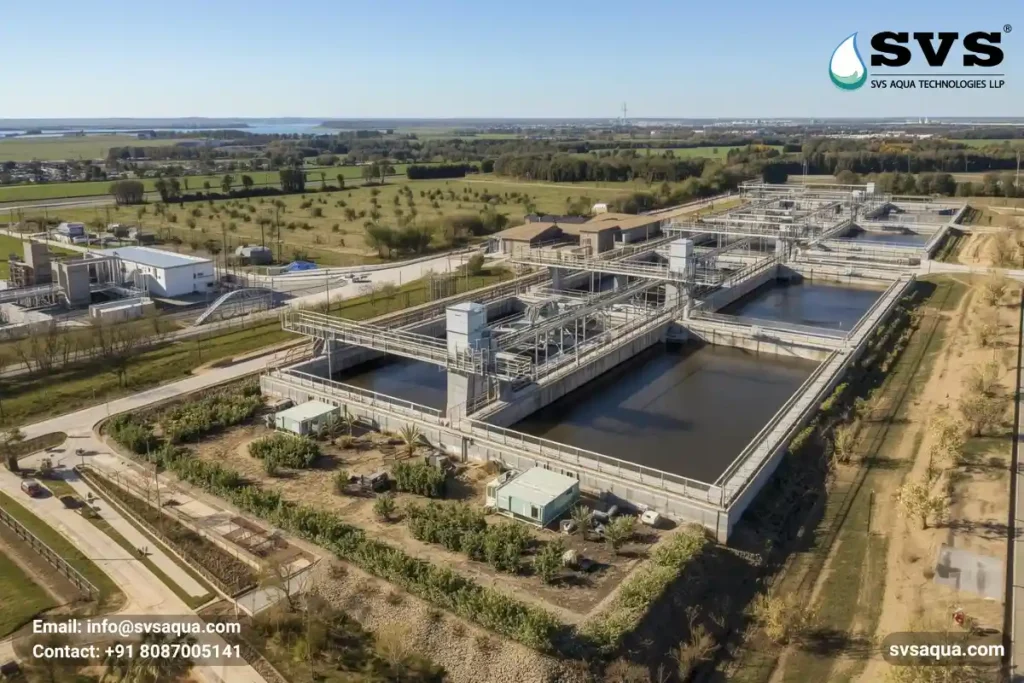
Every drop of water we use — whether at home, in offices, or in factories — eventually turns into wastewater. This wastewater carries dirt, soap, chemicals, and other impurities. If it is released directly into the environment, it can pollute rivers, harm aquatic life, and create serious health problems. That’s why sewage wastewater treatment is so important.
At SVS Aqua, we help businesses, communities, and industries treat and reuse their wastewater safely through modern and efficient wastewater treatment plants.
Let’s break down what sewage wastewater treatment means, how it works, and why it matters.
Engage With Us
WHAT IS SEWAGE WATER TREATMENT?
Sewage wastewater treatment refers to the procedure of purifying wastewater to ensure it can be safely recycled or returned to the environment. This process eliminates solids, harmful microorganisms, organic waste, and chemicals from the water.
This treatment process is usually carried out in a sewage treatment plant. These plants are designed to handle domestic wastewater, water that comes from households, apartments, offices, and public facilities.
The main goal is simple: to make dirty water clean again.
WHY IS SEWAGE TREATMENT NECESSARY?
The reality is that untreated sewage poses significant risks. It harbors bacteria, viruses, and harmful substances that can adversely affect both human health and the environment.
When wastewater undergoes proper treatment, it contributes to:
- Safeguarding the environment – Clean water helps to prevent pollution in rivers, lakes, and soil.
- Enhancing public health – This reduces the transmission of waterborne diseases.
- Conserving water – Treated water can be repurposed for gardening, flushing toilets, or industrial applications.
- Preserving ecological balance, clean water is vital for sustaining healthy aquatic ecosystems.
- As global water scarcity intensifies, wastewater treatment facilities are becoming indispensable for cities, industries, and communities alike.
How a Wastewater Treatment Plant Works
A wastewater treatment plant goes through a few main stages to purify water:
- Preliminary Treatment: This is the first step, where large items like plastics, stones, or cloth pieces are removed using screens and filters.
- Primary Treatment: Here, heavy solids settle at the bottom while oils and grease float on top. These are removed, leaving behind partially cleaned water.
- Secondary Treatment:In this biological stage, microorganisms break down organic waste and harmful bacteria. This makes the water much cleaner.
- Tertiary Treatment: This final stage involves advanced filtration and disinfection using chemicals or modern technologies like chlorine dioxide or UV systems. The goal is to make the water safe enough to be released into the environment or reused.
At SVS Aqua, we specialize in designing and supplying these sewage treatment water plants with a focus on sustainability and long-term reliability.
INDUSTRIAL WASTEWATER TREATMENT
Industries generate significant wastewater across sectors such as manufacturing, food processing, textiles, and pharmaceuticals. In contrast to domestic sewage, industrial wastewater treatment requires specialised attention due to the presence of chemicals, heavy metals, and other contaminants.
SVS Aqua offers tailored industrial wastewater treatment solutions based on the specific industry and the types of pollutants involved.
Our approach encompasses:
- Chemical treatment aimed at eliminating toxins
- Biological treatment designed for organic waste
- Filtration and disinfection processes for either reuse or safe disposal
- Regardless of whether it is a small factory or a large industrial facility, our systems guarantee adherence to pollution control regulations while reducing water wastage.
WHY OPT FOR SVS AQUA?
At SVS Aqua, we hold the conviction that access to clean water is not merely a necessity; it is a responsibility. Our team specialises in creating wastewater treatment systems for sewage that are simple to maintain, energy-efficient, and economically viable.
Here are the factors that differentiate us:
- Tailored Solutions: We develop plants tailored to your unique flow, spatial, and water quality requirements.
- Sustainable Practices: Our systems prioritise water recycling and aim for minimal environmental impact.
- Professional Assistance: We offer comprehensive support from installation through maintenance.
- Established Technology: We employ cutting-edge disinfection methods such as chlorine dioxide to guarantee safe and dependable water purification.
APPLICATIONS OF TREATED WATER
Once wastewater is treated, it doesn’t have to go to waste. It can be reused for:
- Gardening and landscaping
- Toilet flushing
- Cooling towers in industries
- Construction and cleaning activities
Reusing treated water not only reduces water bills but also conserves natural resources.
THE FUTURE OF WASTEWATER MANAGEMENT
The need for clean water is increasing, as is the significance of wastewater treatment. From urban areas to rural communities, and from industrial facilities to hospitality establishments, there is a collective emphasis on water recycling and systems that achieve zero liquid discharge. With heightened awareness and appropriate technology, it is possible to convert wastewater into an asset.
At SVS Aqua, we aim to ensure that wastewater treatment is accessible, efficient, and sustainable across all sectors, as every drop is important.
For a better and healthier future, sewage wastewater treatment is now required. Treating and reusing water is the way forward, whether it’s through an industrial wastewater treatment system for enterprises or a sewage treatment plant for residential usage.
SVS Aqua may assist if you’re searching for dependable, effective, and reasonably priced wastewater treatment options.
FAQ's FOR SEWAGE WASTEWATER TREATMENT
Sewage wastewater treatment is the process of cleaning used water from homes, offices, and industries to remove harmful substances before releasing it back into the environment.
It helps protect our environment and public health by preventing pollution of rivers, lakes, and groundwater. Clean water also supports plants, animals, and safe reuse.
It depends on the size of the plant and the amount of sewage, but typically the process can take several hours to a few days.
The cost varies with the system type and capacity. While there is an initial setup cost, proper treatment saves money in the long run by protecting the environment and reducing water wastage.
They can be managed by local municipalities, industries, or private companies that specialize in wastewater management.
Must Read

Equipment Sanitation: Guide to Clean Industrial Equipment
Chlorine Dioxide Uses in Water Treatment

Disinfection of Drinking Water: Ensuring Safe Water for Every Home
Water Disinfection Systems, Water Treatment Products