
Drinking Water Disinfection Standards in India
- What Are Drinking Water Disinfection Standards?
- BIS Drinking Water Standards: The Foundation
- Why Disinfection Matters?
- Safe Drinking Water Guidelines in India
- The Drinking Water Treatment Process
- Disinfection Chemicals for Potable Water
- SVS Aqua Approach to Water Disinfection
- Understanding Water Quality Reports
- Common Water Problems in India
- Home Water Safety Tips
- How SVS Aqua Ensures Compliance
- The Future of Water Disinfection
- Why Standards Matter to You
- Questions to Ask Your Water Supplier
- Take Control of Your Water Quality
- Get Safe Water Today
- FAQ's
Engage With Us
Clean drinking water is not a luxury—it is a necessity for a healthy life. But how can we be sure the water we drink every day is truly safe? In India, drinking water quality is regulated through strict standards designed to protect public health.
Let’s understand drinking water disinfection standards in India simply and practically.
Engage With Us
What Are Drinking Water Disinfection Standards?
Drinking water disinfection standards are a set of rules that ensure water is free from harmful microorganisms and unsafe chemicals. These standards help prevent waterborne diseases and long-term health risks.
In India, these guidelines are defined and monitored by the Bureau of Indian Standards (BIS).
Think of these standards as safety checkpoints—water must pass every test before it reaches your glass.
BIS Drinking Water Standards: The Foundation
The Bureau of Indian Standards publishes IS 10500. This document defines what makes water safe to drink.
Key Parameters BIS Monitors:
- Physical Quality: Water should be clear, colourless, and odourless. No visible particles floating around.
- Chemical Safety: Limits on harmful substances like lead, arsenic, and fluoride. These can cause serious health problems.
- Biological Purity: Zero tolerance for disease-causing bacteria, viruses, and parasites.
- pH Levels: Water should be neither too acidic nor too alkaline. The safe range is 6.5 to 8.5.
Why Disinfection Matters?
Raw water contains invisible dangers. Bacteria, viruses, and parasites cause diseases like:
- Cholera
- Typhoid
- Dysentery
- Hepatitis
- Diarrhea
Disinfection kills these harmful organisms. It’s the final shield between contamination and your health.
Safe Drinking Water Guidelines in India
The government provides clear guidelines for water safety:
- No Harmful Bacteria: Water must be completely free from E. coli and coliform bacteria.
- Limited Chemicals: Every chemical has a maximum safe limit. For example, arsenic should not exceed 0.01 mg/L.
- Regular Testing: Water suppliers must test samples frequently. Public water systems need daily checks.
- Proper Treatment: All water sources must undergo approved treatment processes before distribution.
- Residual Disinfectant: Treated water should contain a small amount of disinfectant. This keeps water safe during storage and transport.
The Drinking Water Treatment Process
Understanding how water becomes safe helps you appreciate these standards.
Step 1: Screening
Large debris, such as leaves, sticks, and trash, is removed first. Screens catch these materials.
Step 2: Coagulation
Special chemicals make tiny particles stick together. These clumps are easier to remove.
Step 3: Sedimentation
Water sits quietly in tanks. Heavy particles sink to the bottom. Clean water stays on top.
Step 4: Filtration
Water passes through sand, gravel, and charcoal layers. These filters catch remaining particles and some bacteria.
Step 5: Disinfection
This is a crucial step. Chemicals or other methods kill remaining germs.
Step 6: Storage
Clean water is stored safely before reaching your home. A small number of disinfectants remain to prevent new contamination.
Disinfection Chemicals for Potable Water
Different methods kill germs in water. Here are the most common:
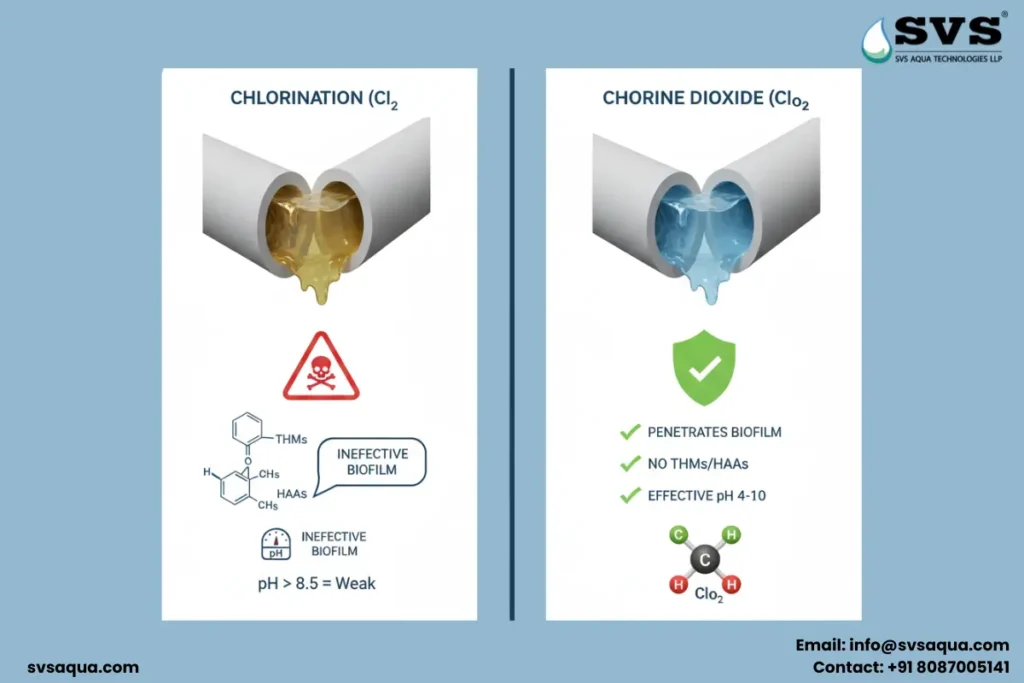
- Chlorination
- What it is: Adding chlorine to water.
- How it works: Chlorine destroys bacteria, viruses, and parasites.
- Advantages: Cheap, effective, and protective residue.
- BIS Standard: 0.2 to 1 mg per litre of residual chlorine.
- Most Indian water treatment plants use chlorination.
- Chlorine Dioxide
- What it is: A powerful disinfectant related to chlorine.
- How it works: Kills germs without creating harmful byproducts.
- Advantages: More effective against certain parasites.
- Usage: Growing in popularity for large water systems.
- Ozone Treatment
- What it is: Using ozone gas to purify water.
- How it works: Ozone breaks down bacteria and viruses instantly.
- Advantages: No chemical residue or taste.
- Limitations: More expensive. Doesn’t protect water after treatment.
- UV Disinfection
- What it is: Ultraviolet light exposure.
- How it works: UV rays damage germ DNA, making them harmless.
- Advantages: No chemicals are added. Fast and effective.
- Limitations: Doesn’t remove chemicals. No residual protection.
SVS Aqua Approach to Water Disinfection
At SVS Aqua, we follow BIS drinking water standards strictly. Our commitment to safe drinking water goes beyond compliance.
- Advanced Treatment Systems: We use multi-barrier approaches. Multiple treatment steps ensure complete safety.
- Regular Quality Testing: Our labs test water multiple times daily. We check all BIS parameters and more.
- Modern Disinfection: We combine traditional chlorination with advanced methods. This gives maximum protection.
- Transparent Reporting: We share test results with our customers. You always know what you’re drinking.
- Continuous Monitoring: Automatic sensors watch water quality 24/7. Any deviation triggers immediate action.
Understanding Water Quality Reports
Water suppliers provide quality reports. Here’s how to read them:
- TDS (Total Dissolved Solids): Should be below 500 mg/litre. Lower is often better for taste.
- Turbidity: Measures cloudiness. Should be less than 1 NTU.
- pH: Should fall between 6.5 and 8.5.
- Chlorine Residual: Indicates active disinfection. Should be 0.2 to 1 mg/litre.
- Bacteria Count: Must be zero for E. coli and coliform bacteria.
Common Water Problems in India
Different regions face different challenges:
- High Fluoride: Common in Rajasthan, Gujarat, and Andhra Pradesh. Causes dental and skeletal problems.
- Arsenic Contamination: Found in parts of West Bengal and Bihar. It’s extremely dangerous.
- Hard Water: High calcium and magnesium in many areas. Not harmful, but causes scaling.
- Bacterial Contamination: Frequent areas with poor sanitation infrastructure.
- Nitrate Pollution: Agricultural runoff affects rural water sources.
Proper disinfection and treatment address these issues.
Home Water Safety Tips
Even with good municipal water, take these precautions:
- Boil if Unsure: Boiling for 10 minutes kills most germs.
- Clean Storage Tanks: Dirty tanks require recontamination clean water. Clean them every six months.
- Check Pipes: Old, corroded pipes add contaminants. Replace damaged plumbing.
- Use Quality Filters: Choose filters certified for Indian standards.
- Test Regularly: Get your water tested annually, especially from private sources.
How SVS Aqua Ensures Compliance
We don’t just meet standards. We exceed them.
- State-of-the-Art Labs: Our testing facilities use the latest equipment. We detect even trace amounts of contaminants.
- Trained Professionals: Our water treatment experts have years of experience. They understand both science and practical applications.
- Quality Certifications: All our processes are certified by relevant authorities.
- Emergency Protocols: If any parameter fails, we have immediate response procedures.
- Customer Education: We help customers understand water quality. Knowledge empowers better decisions.
The Future of Water Disinfection
Technology keeps improving:
- Smart Monitoring: Sensors that detect contamination instantly.
- Advanced Filtration: Membranes that remove even smaller particles.
- Sustainable Chemicals: Eco-friendly disinfectants with better performance.
- Solar Disinfection: Using solar energy for chemical-free treatment.
SVS Aqua stays ahead of these developments. We adopt proven innovations quickly.
Why Standards Matter to You
These standards aren’t just paperwork. They protect your family’s health every day.
- Prevents Disease: Proper disinfection stops waterborne illnesses.
- Long-term Health: Removing chemicals prevents chronic conditions.
- Peace of Mind: You drink confidently, knowing water is safe.
- Economic Benefits: Healthy families save on medical expenses.
Questions to Ask Your Water Supplier
Be an informed consumer. Ask these questions:
- Do you follow BIS drinking water standards?
- How often do you test water quality?
- What disinfection method do you use?
- Can I see recent test reports?
- What do you do if tests fail?
- How do you handle emergencies?
Good suppliers welcome these questions.
Take Control of Your Water Quality
You can make wise decisions if you are aware of disinfection standards. Water sources are easier for you to assess. You are aware of the appropriate questions to pose.
This is made easy using SVS Aqua. Complex sciences are what we do. Your water is pure and safe.
Every BIS recommendation is followed in our treatment procedures. The minimum requirements are exceeded by our testing. We are steadfast in our dedication to your well-being.
Whether you require water for your house, place of business, or community, we provide reliable quality.
Get Safe Water Today
Water quality shouldn’t be compromised. Your health is worthy of the best.
All Indian disinfection regulations are met and exceeded by the water treatment solutions offered by SVS Aqua. We use both contemporary technology and tried-and-true techniques.
Reach out to SVS Aqua now. Let’s talk about the water you need.
We’ll test your existing water, fully explain the findings, and suggest the best course of action for remediation.
Disinfection is the first step towards safe drinking water. Make sure it meets the highest requirements.
FAQ's
Drinking water disinfection standards in India are guidelines set by the Bureau of Indian Standards (BIS) to ensure water is safe from harmful bacteria, viruses, and chemicals.
IS 10500 is the Indian standard that defines acceptable limits for physical, chemical, and microbiological parameters in drinking water.
Disinfection kills disease-causing microorganisms such as bacteria and viruses, preventing waterborne diseases like cholera and typhoid.
Common disinfectants include chlorine, chlorine dioxide, ozone, and UV treatment, depending on water quality and system requirements.
BIS recommends a residual chlorine level between 0.2 and 1 mg per liter to ensure continued protection.
Must Read

What is Filter Bed Sanitation & Why It Is Important in Water Treatment
Chlorine Dioxide Uses in Water Treatment

EN 14476 Certified Virucidal Tablets for Effective Virus Protection
Chlorine Dioxide Uses in Water Treatment