
Pathogen Control in Water Treatment: Essential Strategies for Safe Water
- Understanding Waterborne Pathogens
- Bacteria Removal from Water: Multi-Barrier Approaches
- Virus Disinfection in Water: Targeting the Smallest Threats
- Safe Water Disinfection Systems: Design Principles
- Microbial Control in Wastewater: Protecting Environmental and Public Health
- Waterborne Disease Prevention: An Integrated Approach
- Advanced Technologies for Enhanced Pathogen Control
- SVS Aqua Technologies: Your Partner in Pathogen Control
- FAQs
Engage With Us
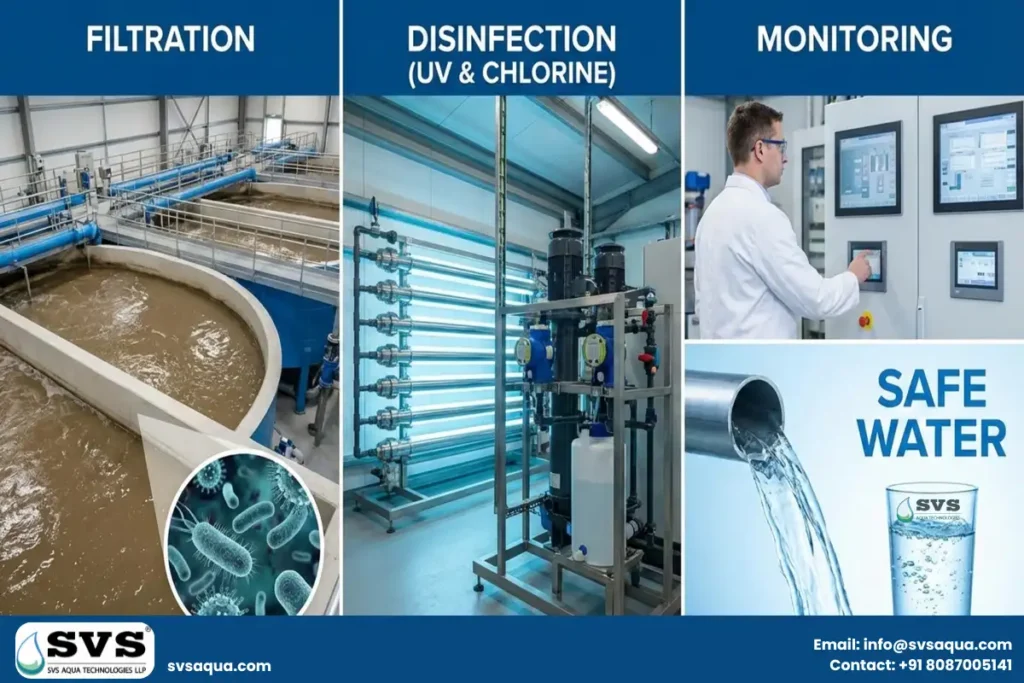
Access to clean, pathogen-free water is fundamental to public health and modern civilisation. As waterborne diseases continue to pose significant health risks globally, effective pathogen control in water treatment has become more critical than ever. At SVS Aqua Technologies, we understand that comprehensive microbial control forms the backbone of safe water systems for communities, industries, and commercial establishments.
- Understanding Waterborne Pathogens
- Bacteria Removal from Water: Multi-Barrier Approaches
- Virus Disinfection in Water: Targeting the Smallest Threats
- Safe Water Disinfection Systems: Design Principles
- Microbial Control in Wastewater: Protecting Environmental and Public Health
- Waterborne Disease Prevention: An Integrated Approach
- Advanced Technologies for Enhanced Pathogen Control
- SVS Aqua Technologies: Your Partner in Pathogen Control
- FAQs
Engage With Us
Understanding Waterborne Pathogens
Waterborne pathogens include bacteria, viruses, protozoa, and other microorganisms that can cause serious illness when present in drinking water or inadequately treated wastewater. Common culprits include E. coli, Salmonella, Giardia, Cryptosporidium, and various enteric viruses. These microscopic threats can enter water sources through sewage contamination, agricultural runoff, industrial discharge, or natural environmental conditions.
The World Health Organization estimates that contaminated water causes hundreds of thousands of deaths annually, making waterborne disease prevention not just a technical challenge but a humanitarian imperative. Effective treatment systems must address multiple pathogen types simultaneously, as each presents unique removal and inactivation challenges.
Bacteria Removal from Water: Multi-Barrier Approaches
Bacterial contamination represents one of the most common water quality concerns. Effective removal of bacteria from water requires a multi-barrier treatment approach that combines physical, chemical, and biological processes.
- Filtration Technologies
Physical filtration serves as a primary barrier against bacterial pathogens. Advanced filtration systems, including sand filters, membrane filtration, and ultrafiltration, can remove bacteria based on size exclusion. Membrane technologies, particularly microfiltration and ultrafiltration, provide exceptional bacterial removal rates, often achieving log reductions of 4 to 6, meaning they remove 99.99% to 99.9999% of bacteria present.
- Coagulation and Flocculation
Before filtration, coagulation and flocculation processes aggregate bacteria into larger particles that are easier to remove. Chemical coagulants destabilise bacterial cells, causing them to cluster together and settle out of suspension or become trapped in filter media more effectively.
- Biological Treatment
In wastewater treatment specifically, biological processes play a crucial role in microbial control. Activated sludge systems, biofilters, and constructed wetlands harness beneficial microorganisms to outcompete and consume pathogenic bacteria, reducing their concentrations before final disinfection.
Virus Disinfection in Water: Targeting the Smallest Threats
Viruses present unique challenges in water treatment due to their microscopic size and resistance to certain treatment processes. Effective virus disinfection in water requires specialised approaches that go beyond simple filtration.
- Chemical Disinfection
Chlorination remains the most widely used method for virus inactivation. When properly applied, chlorine-based disinfectants effectively destroy viral particles by damaging their protein coats and genetic material. However, factors like pH, temperature, contact time, and organic matter content significantly influence disinfection efficacy. At SVS Aqua Technologies, we design chlorination systems with precise control mechanisms to maintain optimal conditions for virus inactivation.
- UV Disinfection
Ultraviolet light disinfection has emerged as a highly effective technology for virus control. UV light at specific wavelengths (typically 254 nanometers) damages viral DNA and RNA, preventing replication. UV systems offer several advantages, including no chemical residuals, rapid treatment, and effectiveness against chlorine-resistant pathogens. Modern UV reactors can achieve impressive virus log reductions while maintaining compact footprints and low operational costs.
- Ozone Treatment
Ozone is a powerful oxidising agent that effectively inactivates viruses through oxidation of viral capsids and genetic material. Ozone treatment works rapidly and leaves no harmful residuals, as excess ozone naturally decomposes to oxygen. This technology particularly excels in treating water with high viral loads or when dealing with chlorine-resistant viral strains.
Safe Water Disinfection Systems: Design Principles
Implementing safe water disinfection systems requires careful consideration of multiple factors to ensure consistent pathogen control without creating secondary water quality issues.
- Disinfection Byproduct Management
While disinfection is essential, chemical disinfectants can react with natural organic matter to form disinfection byproducts (DBPs) like trihalomethanes and haloacetic acids. Safe disinfection system design minimises DBP formation through optimised dosing, contact time management, and pre-treatment strategies that remove organic precursors before disinfection.
- Residual Maintenance
For distribution systems, maintaining appropriate disinfectant residuals ensures continued protection against pathogen regrowth and recontamination. Safe water disinfection systems incorporate monitoring and control technologies that maintain residuals within optimal ranges, high enough to provide protection but low enough to avoid taste, odour, and health concerns.
- Redundancy and Reliability
Critical water treatment facilities require redundant disinfection capabilities to ensure continuous operation. Backup systems, emergency power supplies, and automated monitoring with fail-safe shutdown mechanisms protect public health even during equipment failures or power outages.
Microbial Control in Wastewater: Protecting Environmental and Public Health
Wastewater treatment poses unique challenges for controlling pathogens, as the influent contains high levels of various microorganisms.
Effective microbial management in wastewater is essential for safeguarding both environmental water quality and public health, especially in regions where treated effluent is released into sensitive water bodies or repurposed for irrigation or industrial use.
- Primary and Secondary Treatment
Traditional wastewater treatment significantly decreases pathogen levels through sedimentation and biological methods. Primary treatment eliminates pathogens associated with particulates, while secondary biological treatment further diminishes microbial loads via competition, predation, and environmental stressors affecting pathogens.
- Tertiary Disinfection
For wastewater that necessitates advanced treatment, tertiary disinfection guarantees that pathogen levels comply with strict discharge or reuse regulations. Techniques such as chlorination, UV irradiation, or advanced oxidation processes serve as the final safeguard against microbial contamination in treated effluent.
- Biosolids Treatment
The appropriate treatment of biosolids (sewage sludge) is vital for thorough microbial control. Methods such as anaerobic digestion, composting, and thermal treatment lower pathogen concentrations in biosolids to levels that are safe for land application or disposal.
Hydrolyzed metals that precipitate as hydroxides are often used as coagulants in conventional drinking water treatment. These processes require addition of chemicals such as hydrated lime to the water to attain the optimum pH for the minimum solubility of the target contaminants and optimal formation of floc particles. The hydroxide compounds formed are generally sticky, gelatinous particles that are easily trapped on the filter media and once there, may not always be easily removed by normal cleaning procedures.
Waterborne Disease Prevention: An Integrated Approach
Effective prevention of waterborne diseases involves more than just the operations of treatment plants; it also includes the protection of source water, the integrity of distribution systems, and the implementation of monitoring programs.
- Source Water Protection
Safeguarding water sources from contamination diminishes the pathogen load on treatment facilities and enhances safety margins. Effective watershed management, sanitary surveys, wellhead protection zones, and the adoption of agricultural best management practices all play a vital role in maintaining source water quality.
- Distribution System Integrity
Despite thorough treatment, pathogens may infiltrate water supplies through weaknesses in the distribution system, such as cross-connections, main breaks, or instances of low pressure. Ensuring positive pressure, enforcing cross-connection control measures, and performing regular inspections of the system are essential to prevent contamination after treatment.
- Water Quality Monitoring
Thorough monitoring programs are crucial for identifying treatment failures or system vulnerabilities before they lead to widespread health issues. Indicator organisms, such as total coliforms and E. coli, serve as early warnings for potential pathogen presence, while real-time monitoring of turbidity, chlorine residual, and other parameters facilitate immediate process control.
Advanced Technologies for Enhanced Pathogen Control
Innovation continues to advance pathogen control capabilities, offering improved performance, efficiency, and sustainability.
- Membrane Bioreactors
Membrane bioreactors combine biological treatment with membrane filtration in a single process, achieving excellent pathogen removal while maintaining compact footprints. These systems are particularly valuable for decentralised treatment applications or water reuse scenarios requiring high-quality effluent.
- Advanced Oxidation Processes
Technologies like UV/hydrogen peroxide, ozone/hydrogen peroxide, and photocatalysis generate highly reactive hydroxyl radicals that rapidly destroy pathogens and micropollutants. These advanced oxidation processes provide robust disinfection while minimising harmful byproduct formation.
- Electrochemical Disinfection
Emerging electrochemical technologies generate disinfectants in situ through electrolysis, eliminating the need for chemical storage and handling. These systems offer precise control and can be particularly effective for small-scale or remote applications.
SVS Aqua Technologies: Your Partner in Pathogen Control
At SVS Aqua Technologies, we recognize that effective pathogen control requires expertise, quality equipment, and comprehensive system design tailored to specific water quality challenges and regulatory requirements. Our approach integrates proven technologies with innovative solutions to deliver safe water disinfection systems that protect public health while optimizing operational efficiency and sustainability.
Whether you need bacteria removal from water for industrial processes, virus disinfection in water for drinking water supplies, or microbial control in wastewater for environmental protection, our team provides the technical knowledge and equipment solutions to meet your needs. We work closely with municipalities, industries, and commercial facilities to design, implement, and support water treatment systems that consistently deliver pathogen-free water.
FAQs
Pathogen control in water treatment is the process of removing or killing harmful microorganisms such as bacteria, viruses, and protozoa to make water safe for drinking, industrial use, or discharge.
Wastewater treatment uses a combination of biological treatment, filtration, and final disinfection to reduce harmful microorganisms before the treated water is released or reused safely.
Yes, when wastewater undergoes proper microbial control and disinfection, it can be safely reused for irrigation, industrial processes, or non-potable applications, depending on regulations
By removing or inactivating harmful microorganisms, pathogen control prevents the spread of diseases caused by contaminated water, ensuring safer drinking water and cleaner environments.
SVS Aqua Technologies provides reliable disinfection solutions and water treatment systems designed to effectively control pathogens, ensuring safe, compliant, and high-quality water for various applications.
Must Read

Drinking Water Disinfection Standards in India
Water Disinfection Systems, Water Treatment Products

What is Filter Bed Sanitation & Why It Is Important in Water Treatment
Chlorine Dioxide Uses in Water Treatment