
Water Disinfection Chemicals for Drinking Water: Types and Safer Solutions
- Why Water Disinfection Is Critical for Safe Drinking Water
- Common Disinfectants Used in Drinking Water Treatment
- Chlorine Dioxide (ClO₂) in Drinking Water
- Why Chlorine Dioxide Is Considered Safer
- Chlorine Dioxide and Drinking Water Standards in India
- Applications of Chlorine Dioxide in India
- Choosing the Right Water Disinfection Chemical
- FAQs
Engage With Us
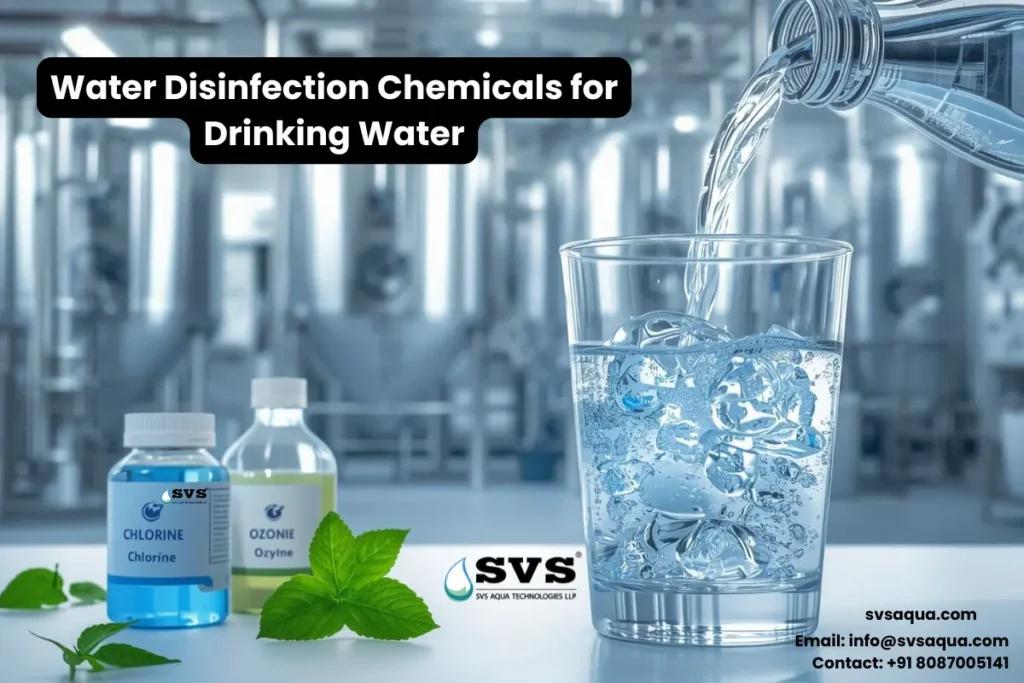
Safe drinking water is essential for public health, yet maintaining consistent water quality
remains a challenge across India. Municipal supplies, residential systems, and industrial facilities rely on water disinfection chemicals for drinking water to control harmful microorganisms that may be present in untreated sources.
These systems use chemicals in safe drinking water to reduce the risk of waterborne diseases and support compliance with quality standards.
Understanding how different disinfection approaches work helps decision-makers select the right treatment methods based on safety, effectiveness, and operational needs.
- Why Water Disinfection Is Critical for Safe Drinking Water
- Common Disinfectants Used in Drinking Water Treatment
- Chlorine Dioxide (ClO₂) in Drinking Water
- Why Chlorine Dioxide Is Considered Safer
- Chlorine Dioxide and Drinking Water Standards in India
- Applications of Chlorine Dioxide in India
- Choosing the Right Water Disinfection Chemical
- FAQs
Engage With Us
Why Water Disinfection Is Critical for Safe Drinking Water
Water drawn from surface sources, borewells, or storage tanks often contains bacteria.
contamination. Without proper chemical treatment for drinking water, these microorganisms can cause serious waterborne diseases.
Effective disinfection helps to:
- Inactivate harmful bacteria and viruses
- Reduce bacterial regrowth during storage and distribution
- Support compliance with drinking water quality standards
As water supply systems expand and distribution networks become more complex, effective disinfection practices play a crucial role in maintaining water quality
Common Disinfectants Used in Drinking Water Treatment
Different water disinfection chemicals are used depending on water quality, infrastructure, and safety requirements.
Chlorine
Chlorine has been widely used for decades in drinking water for disinfection.
Benefits:
- Effective against most bacteria and viruses
- Economical and easily available
- Provides residual protection in pipelines
Challenges:
- Reacts with organic matter to form harmful by-products
- Causes strong taste and odour issues
- Less effective against certain parasites
Bleaching Powder (Calcium Hypochlorite)
Bleaching powder is commonly used in smaller or rural water systems.
Benefits:
- Easy to transport and apply
- Strong disinfecting action
Challenges:
- Difficult dosage control
- Leaves residues in water
- Short shelf life
Ozone
Ozone is a powerful oxidant used in advanced water treatment systems.
Benefits:
- Highly effective disinfectant
- Improves taste and odour
Challenges:
- High operational and setup cost
- No residual disinfection
- Requires technical expertise
Ultraviolet (UV)Treatment
UV systems disinfect water by inactivating microorganisms.
Benefits:
- No chemical addition
- Effective against bacteria and viruses
Challenges:
- No residual protection
- Performance drops in cloudy water
- Depends on uninterrupted power supply
Chlorine Dioxide (ClO₂) in Drinking Water
Chlorine dioxide (ClO₂) is one of several water purification chemicals used in drinking water treatment systems.
Chlorine dioxide works effectively at low doses and shows limited reactivity with organic matter.
This makes it suitable for diverse water conditions commonly found across India.
Key Characteristics of Chlorine Dioxide (ClO₂):
- Chlorine Dioxide destroys micro-organisms by penetrating their cell walls and disrupting
- Essential biological functions. It remains effective across a wide pH range, ensuring consistent disinfection even when water quality varies.
Why Chlorine Dioxide Is Considered Safer?
Based on industry usage and regulatory acceptance, Chlorine Dioxide offers several
advantages over conventional disinfectants:
- Produces significantly fewer harmful disinfection by-products
- Effective against bacteria, viruses, and protozoa
- Does not impart strong taste or odor to water
- Works efficiently at low concentrations
- Helps control biofilms in pipelines
These characteristics are why chlorine dioxide is used in many drinking water treatment systems.
Chlorine Dioxide and Drinking Water Standards in India.
Chlorine dioxide is permitted for use in drinking water under recognised safety standards. In India, its application forms part of the regulated water treatment solutions India follows to meet quality requirements.
Certified manufacturers supplying chlorine dioxide follow recognised quality and compliance standards for drinking water applications. These standards help ensure that treatment meets safety requirements for human consumption.
Applications of Chlorine Dioxide in India
Chlorine Dioxide is used across multiple sectors, including:
- Municipal drinking water supply systems
- Industrial water treatment systems
- Packaged drinking water plants
- Hospitals and healthcare facilities
- Residential and commercial water systems
This range of applications reflects its adaptability across different water treatment settings
Choosing the Right Water Disinfection Chemical
Choosing a suitable disinfectant depends on:
- Source water quality
- Scale of water treatment
- Regulatory requirements
- Operational safety
- Long-term health considerations
Many organisations now review their disinfection approach to balance safety, efficiency, and long-term impact.
Ensuring safe drinking water requires more than just disinfection; it also depends on choosing the right approach. Chlorine, ozone, ultraviolet treatment and chlorine dioxide each play a role in drinking water treatment. With fewer harmful by-products and consistent effectiveness, chlorine dioxide has become a preferred option for drinking water treatment across India. Understanding these options helps organisations build safer and more reliable water systems for the future
FAQs
Chemical treatment helps prevent waterborne diseases by controlling bacteria, viruses, and other pathogens throughout storage and distribution.
Common disinfectants include chlorine, bleaching powder, ozone, ultraviolet treatment, and chlorine dioxide, each suited to different water conditions.
Chlorine dioxide produces fewer harmful by-products, does not affect taste or odor significantly, and remains effective across varying water quality levels.
Yes, chlorine dioxide is permitted under recognised drinking water standards when used within approved safety limits.
It is used in municipal water systems, packaged drinking water plants, hospitals, industries, and commercial water treatment applications.
Must Read
Pathogen Control in Water Treatment: Essential Strategies for Safe Water
Water Disinfection Systems

Drinking Water Disinfection Standards in India
Water Disinfection Systems, Water Treatment Products