
Chlorine Dioxide Tablets for Odour Removal in Water & Industrial Systems
Engage With Us
Unpleasant odour in water systems and industrial environments is more than just an inconvenience — it is often a sign of microbial contamination, organic buildup, or chemical imbalance.
In India, effective water quality management is becoming increasingly important due to rapid industrialisation, urbanisation, and stricter environmental regulations. Bad odour in water tanks, pipelines, cooling towers, and process systems is commonly caused by bacteria, algae, hydrogen sulfide (H₂S), and other organic compounds.
Chlorine dioxide tablets for odour removal offer a practical and effective solution. These tablets eliminate odour at the source while improving hygiene, system efficiency, and overall water quality.
Engage With Us
What Are Chlorine Dioxide Tablets?
Chlorine dioxide tablets are solid formulations that release chlorine dioxide gas when dissolved in water. Chlorine dioxide is a powerful oxidising agent widely used for disinfection and deodorisation.
These chlorine dioxide deodorisation tablets are designed to control microbial growth and eliminate unwanted odour in water systems.
These tablets are commonly used in
- Drinking water treatment
- Storage tanks and pipelines
- Cooling towers
- Industrial process water systems
- Wastewater treatment
Among the various uses of chlorine dioxide tablets, odour control in water systems is one of the most important and practical applications.
How Do Chlorine Dioxide Tablets Work?
Chlorine dioxide works through a strong oxidation process.
Here’s a simplified explanation:
- The tablet is added to water according to the recommended dosage.
- It dissolves and releases chlorine dioxide.
- The released compound targets bacteria, algae, and odour-causing molecules.
- It breaks down sulphides, phenols, hydrogen sulfide (H₂S), and other organic compounds responsible for foul smells.
- The result is cleaner, fresher water without heavy chemical residue.
Unlike conventional chlorine, chlorine dioxide works effectively across a wide pH range and does not form harmful chlorinated by-products. This makes it highly effective for hydrogen sulfide odour removal and wastewater odour control.
Key Benefits of Chlorine Dioxide Tablets
- Effective Odour Elimination
It addresses the root cause of unpleasant smells rather than masking them. It removes the actual substances and bacteria that cause bad smells. It doesn’t just cover up the odour– it helps stop it from coming back
- Broad Spectrum Action
It works against bacteria, biofilm, algae, and other microbial growth that often cause odour.
- Suitable for Multiple Applications
Chlorine dioxide tablets for water odour are practically useful in storage tanks, borewell systems, and distribution lines where still water can develop smell issues
- Industrial Efficiency
For factories and processing plants, chlorine dioxide tablets for industrial odour control help maintain hygienic production conditions and reduce complaints related to foul smell.
- Controlled & Measured Dosing
Tablet form allows easier handling and accurate dosing compared to liquid or powder chemicals.
Chlorine Dioxide Tablets Application Guide
While usage depends on system size and contamination level, the general process is
- Determine the volume of water to be treated.
- Follow recommended dosage guidelines.
- Dissolve the tablet in water or use as per system design.
- Allow adequate contact time for effective treatment.
- Monitor water quality parameters regularly.
For best results, dosing and monitoring should follow technical guidance and industry standards. Always ensure safe handling practices during application.
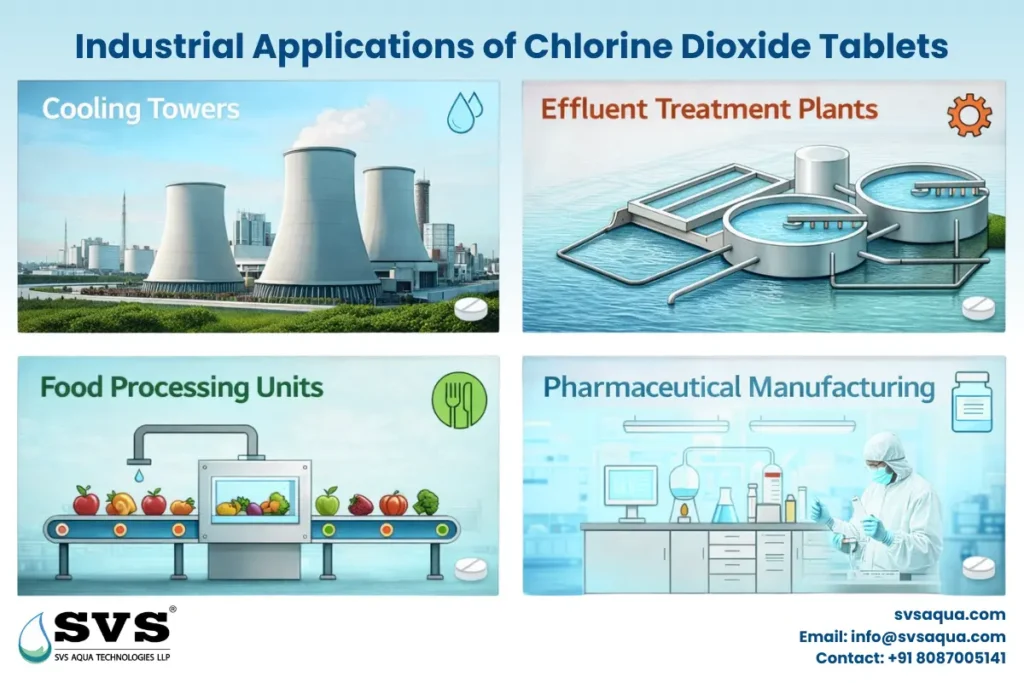
Industrial Applications of Chlorine Dioxide Tablets
Odour problems in industrial settings are often caused by water contamination, organic waste buildup, or microbial growth.
Common industrial areas where treatment is required include:
- Cooling towers and circulation systems
- Food and beverage processing units
- Textile and chemical industries
- Pharmaceutical manufacturing
- Effluent treatment plants
In such environments, chlorine dioxide tablets for industrial odour control help maintain cleaner systems by addressing the root cause of contamination. This supports smoother operations, better hygiene and improved compliance with environmental standards.
Quality Considerations When Selecting Chlorine Dioxide Tablets
When choosing chlorine dioxide tablets for water or industrial treatment, consider:
- Tablet concentration and formulation stability
- Controlled and consistent chlorine dioxide release
- Manufacturing purity standards
- Clear dosage instructions
- Suitability for Indian water and industrial conditions
Selecting high-quality products ensures consistent performance and long-term protection.
Odour in water and industrial systems should not be ignored, as it often indicates underlying contamination. Addressing the root cause is essential for maintaining hygiene, safety, and operational efficiency.
Chlorine dioxide tablets offer a reliable method to neutralise odour-causing compounds while supporting better water quality. With proper application and compliance, they can serve as an effective solution for both water treatment and industrial environments in India.
For more information on product specifications and usage recommendations, visit our product page or contact us.
FAQ's
Yes, when used at recommended dosages and in accordance with regulatory guidelines, they are safe for water treatment applications.
Yes. Chlorine dioxide is highly effective against hydrogen sulfide and other sulfur-based compounds responsible for rotten egg smell.
Results depend on contamination levels, but noticeable improvement is often observed within hours of proper application.
Yes, they are widely used for wastewater odour control and effluent treatment systems.
Food processing, pharmaceuticals, textiles, chemical manufacturing, cooling towers, and municipal water treatment plants.
Must Read

Water Disinfection Chemicals for Drinking Water: Types and Safer Solutions
Water Disinfection Systems
Pathogen Control in Water Treatment: Essential Strategies for Safe Water
Water Disinfection Systems