
On-Site Water Treatment Demonstration Using CDD 5000
Water treatment plants handling surface and mixed raw water sources are increasingly facing complex and interrelated water quality challenges. Seasonal variation, sewage ingress, and industrial contamination significantly reduce the effectiveness of conventional chlorination systems.
During an on-site technical assessment at the water treatment facility, the following critical problems were identified:
Identified Water Quality Problems
- Ammonia Presence in Raw Water
- Ammonia in the inlet water was reacting with chlorine, leading to chloramine formation
- Reduced free chlorine residual and compromised disinfection efficiency
- Persistent taste and odour complaints
- Colour Issues
- High apparent and true colour due to organic matter and sewage mixing
- Poor treated water aesthetics and reduced consumer acceptability
- Odour Problems
- Offensive odours caused by organic decomposition, sewage ingress, and algal activity
- Ineffective removal through conventional chlorination
- Micro‑Algae and Cyanobacteria Growth
- Visible algal growth in open water and treatment units
- Risk of algal toxin release affecting liver and neurological health
- Filter choking and operational instability
- Sewage Ingress and Organic Load
- Intermittent sewage contamination is increasing the COD/BOD load
- Higher microbial activity and disinfectant demand
- Stress on existing treatment infrastructure
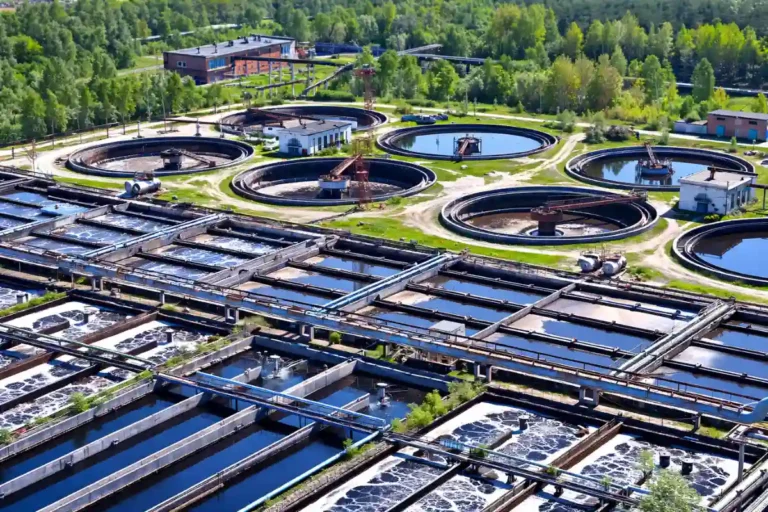
Existing Options Considered
The plant was operating with conventional and well-known treatment approaches; however, each option presented limitations:
- Continued chlorine gas dosing
While effective for basic disinfection, performance was highly sensitive to ammonia presence, with ongoing odour complaints, handling risks, and limited impact on algae, spores, and biofilms.
- Shock or high-dose chlorination
This approach required operational disruption, provided no sustained residual benefit, and increased risks related to corrosion and disinfection by-products.
- Process upgrades or new equipment
Capital-intensive solutions with longer implementation timelines make them less suitable for immediate problem resolution.
These limitations highlighted the need for a solution that could improve water quality without system modification or operational disruption.
Our Solution
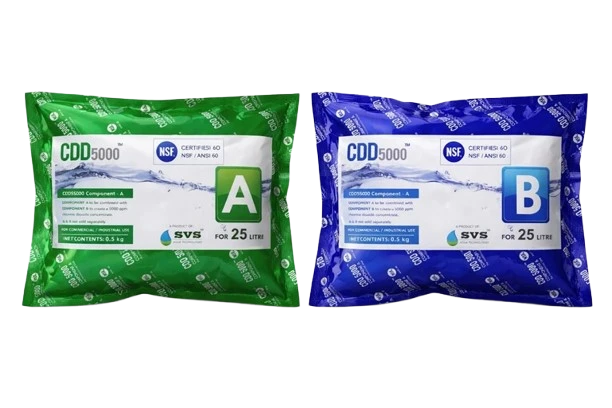
SVS Aqua Technology LLP implemented a practical, on-site disinfection solution using CDD 5000, designed to address the identified water quality challenges without altering the existing treatment infrastructure. The demonstration was carried out under real operating conditions within the live plant environment.
CDD 5000 was selected due to its high effectiveness at very low concentrations, particularly for algae control and stabilisation of open water and pond-exposed areas. Its selective oxidative action allows it to target algae, microbial contamination, and odour-causing compounds without being consumed by ammonia, unlike conventional chlorine.
Key features of the implemented solution included:
- High effectiveness at very low dosing levels
- Strong oxidation of algae, microorganisms, and odour-causing compounds
- Compatibility with existing treatment systems
- No increase in chemical stress on infrastructure
- Seamless integration into the plant’s ongoing operations
The objective was to validate actual field performance, rather than relying on theoretical or laboratory data.
Results and Observations
The on-site demonstration delivered clear, observable, and measurable improvements during normal plant operation.
Visual and Operational Improvements:
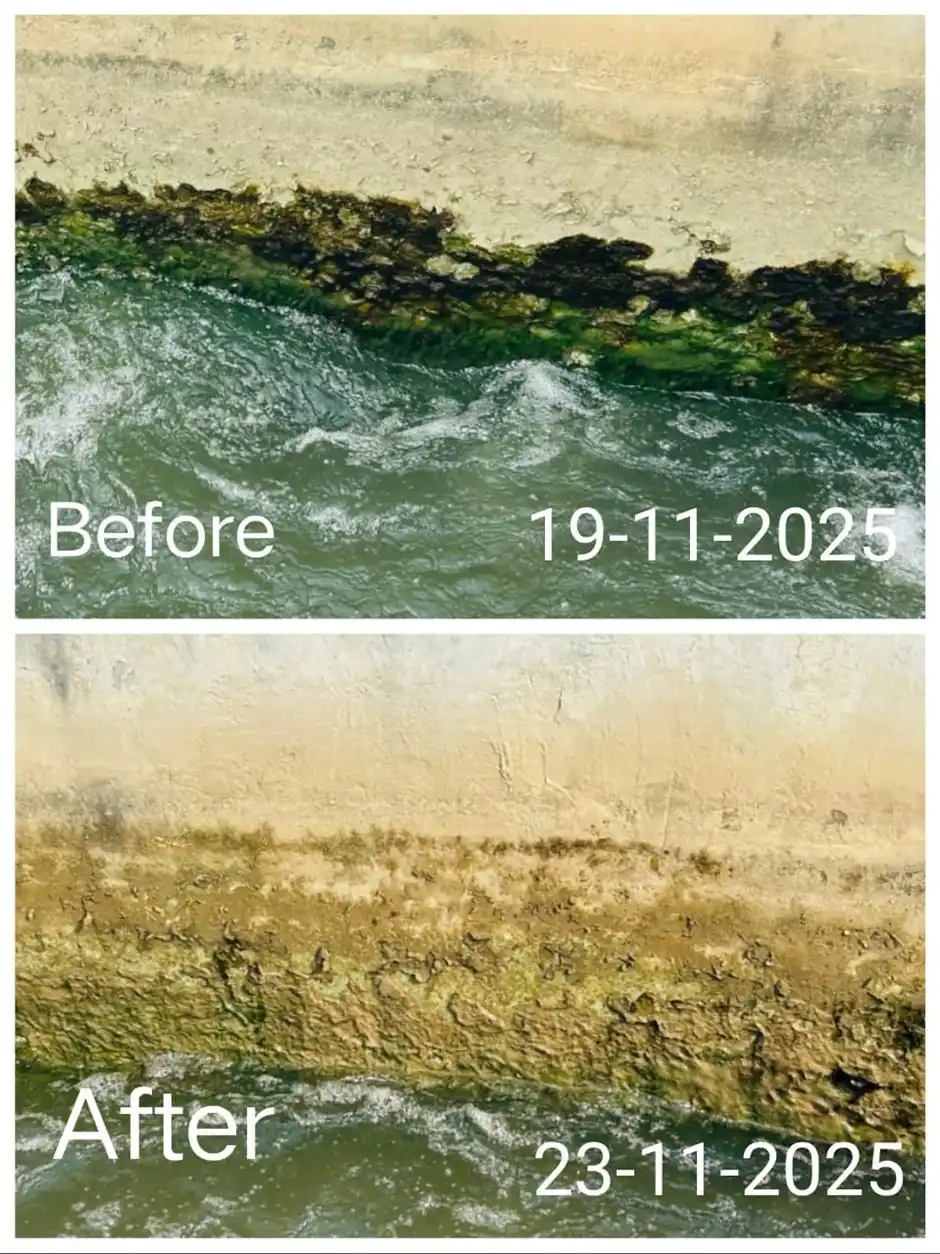
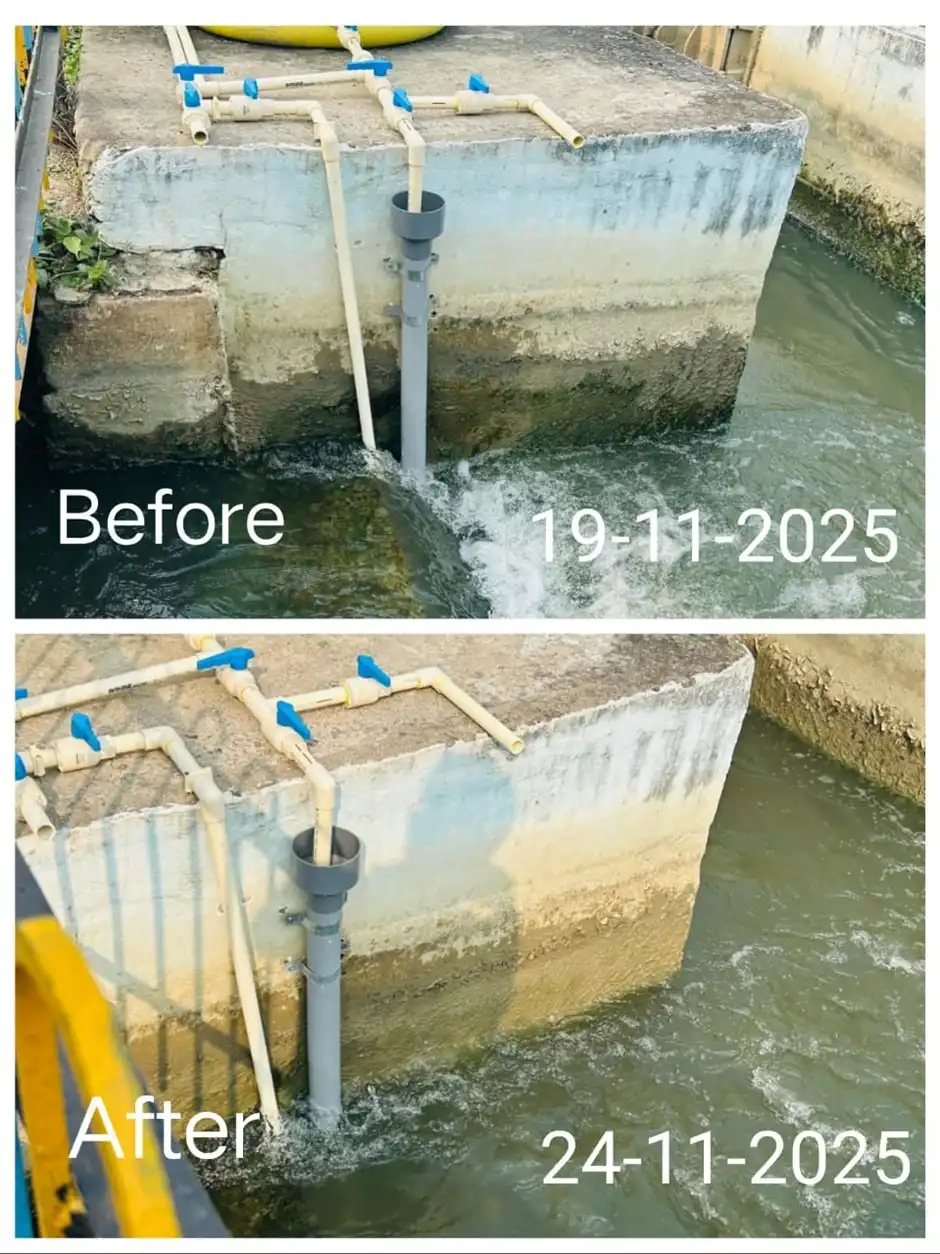
- Rapid removal and control of visible algal growth
- Noticeable improvement in water colour and clarity
- Effective reduction of unpleasant odour
- Improved treated water acceptability
- Enhanced overall process stability
Key Water Quality Improvements (After Treatment):
- pH Stabilisation: Improved pH stability was observed, indicating reduced chemical stress on the system.
- Colour Improvement: Significant reduction in colour was noted, contributing to clearer and more aesthetically acceptable water.
- Ammonia Reduction Impact: Improved disinfection performance was observed even in the presence of ammonia, confirming that CDD 5000 effectiveness was not compromised.
The results were technically validated during routine plant operations. Based on the successful outcomes, SVS Aqua Technology LLP was recognised as a results-driven technical partner, and the customer approved an extended trial for further evaluation.
Stabilisation Of pH – After Treatment

Improvement In Colour- After Treatment

Ammonia Reduction- After Treatment

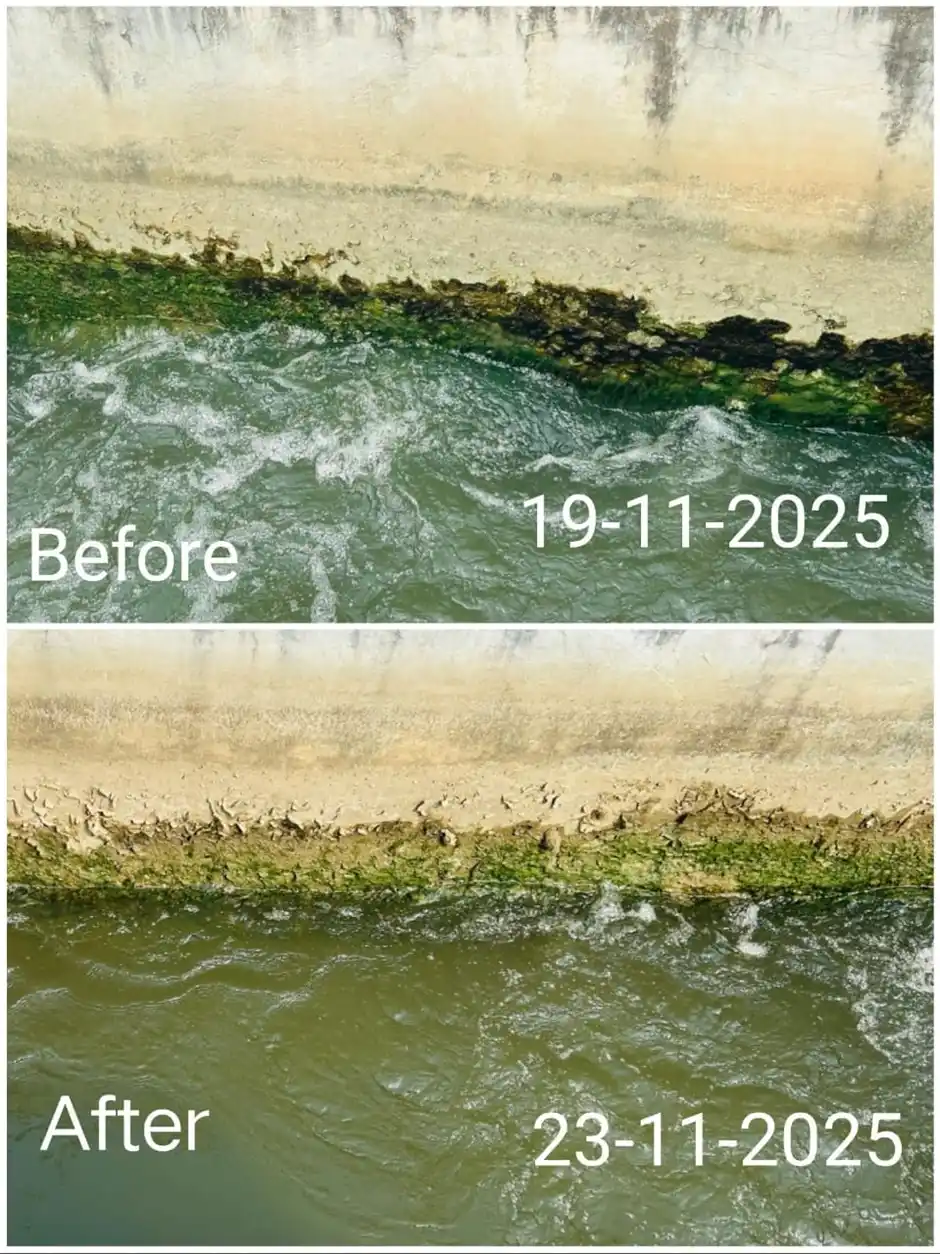
| PARAMETER | BEFORE | AFTER |
|---|---|---|
| pH Stability | Fluctuating | Stabilized |
| Colour | High | Reduced |
| Odour | Strong | Controlled |
| Algae Growth | Visible | Eliminated |
Public Health and Environmental Advantages of Using CDD 5000
The application of CDD 5000 offers several critical public health advantages when compared to conventional chlorine-based disinfection:
- Unaffected by ammonia presence
Chlorine dioxide does not react with ammonia to form chloramines, ensuring consistent and effective disinfection even in ammonia-rich waters. - Effective control of algae and cyanobacteria
Rapid oxidation of algae and toxin-producing organisms helps reduce the risk of exposure to harmful algal toxins, protecting liver and neurological health. - Improved taste and odour quality
Chlorine dioxide effectively neutralises odour-causing organic compounds, improving consumer acceptance and confidence in drinking water quality. - Enhanced microbial and biofilm control
Strong penetration into biofilms reduces bacterial regrowth within pipelines, lowering the risk of secondary contamination. - Lower formation of harmful disinfection by-products
Unlike high-dose chlorination, chlorine dioxide minimises the formation of chlorinated by-products associated with long-term health concerns. - Reduced corrosion-related health risks
Lower chemical stress on infrastructure helps minimise metal leaching into drinking water, supporting safer long-term consumption. - Improved operator and public safety
Reduced dependence on chlorine gas lowers handling risks, improving safety for plant personnel and surrounding communities.
Conclusion: A Safer Alternative to Chlorine Gas
- The on-site demonstration confirmed that CDD 5000 is an effective, low-dose, and operationally safe alternative to conventional chlorine gas disinfection. The solution delivered measurable improvements in water quality, operational stability, and public health protection without requiring infrastructure changes or process disruption.
- Based on the demonstrated performance, the customer approved an extended evaluation phase, positioning SVS Aqua technology LLP as a long-term technical partner for water treatment optimisation and water quality management.
Looking for a reliable alternative to chlorine gas in your water treatment plant? Contact SVS Aqua Technology LLP for on-site evaluation and technical consultation.