
Biosecurity and Infection Control During Viral Outbreaks Using CHLORITAB Chlorine Dioxide Technology
Viral outbreaks in poultry farms, livestock facilities, veterinary hospitals, hatcheries, food-processing industries, and environmental hygiene sectors can spread rapidly and cause significant operational, economic, and public-health challenges. Pathogens such as Avian Influenza, Newcastle Disease, Swine Flu viruses, and other infectious microorganisms can survive on contaminated surfaces, water systems, equipment, footwear, and organic matter, resulting in rapid cross-contamination across operational areas.
In such situations, a strong biosecurity and infection-control program becomes essential to minimise microbial transmission and maintain hygienic operating conditions. Effective outbreak-control strategies require scientifically validated disinfectant technologies capable of reducing viral and bacterial contamination across multiple application environments.
CHLORITAB is a disinfection solution developed to support high-level environmental hygiene, microbial reduction, and biosecurity management during outbreak conditions. CHLORITAB technology is widely recognised for its strong oxidation capability, broad-spectrum antimicrobial activity, and effectiveness in demanding sanitation applications.
CHLORITAB Importance of Biosecurity During Viral Outbreaks
Biosecurity involves preventive operational practices designed to reduce the introduction, survival, and spread of infectious pathogens within a facility or production environment.
During outbreak situations, viruses and microorganisms can spread through several contamination routes, including:
- Contaminated floors, walls, and operational surfaces
- Water systems and storage tanks
- Equipment and processing tools
- Personnel handling and movement
- Footwear and vehicle traffic
- Airborne droplets and aerosols
- Organic contamination and biofilm buildup
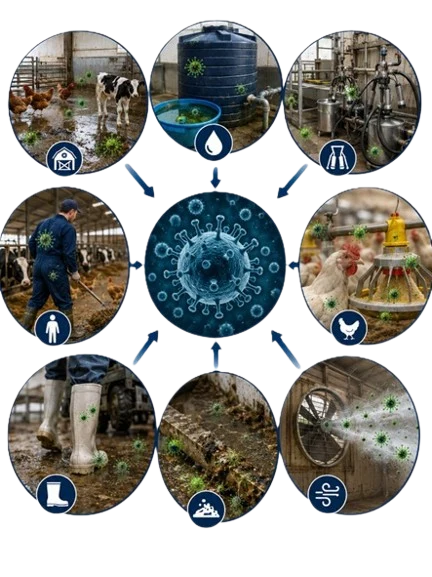
In poultry and livestock facilities, inadequate sanitation can rapidly lead to cross-infection among animals and contamination of operational areas. Similarly, in food-processing environments, poor hygiene management can compromise product safety and processing efficiency.
Therefore, an effective infection-control program should include:
- Surface sanitation
- Equipment disinfection
- Water hygiene management
- Environmental microbial control
- Entry and exit biosecurity
- Routine environmental disinfection
- Controlled personnel movement
- Odour and waste-area hygiene management

Role of CHLORITAB in Infection Control
CHLORITAB is a disinfectant solution formulated for broad-spectrum microbial control in veterinary, poultry, industrial, food-processing, and environmental hygiene applications.
CHLORITAB functions as a highly effective oxidising biocide capable of disrupting microbial cellular activity and reducing contamination across surfaces, water systems, and operational environments.
Key Properties of CHLORITAB Technology
- Strong Virucidal Activity – CHLORITAB demonstrates effective oxidation against viral proteins and microbial structures, helping reduce viral contamination during outbreak situations.
- Rapid Microbial Reduction – Its fast oxidation mechanism supports rapid microbial kill and improved sanitation performance.
- Broad pH Effectiveness – Unlike conventional chlorine systems, chlorine dioxide remains effective over a wider pH range, improving operational flexibility.
- Reduced Formation of Harmful Chlorinated By-products – CHLORITAB generally produces fewer chlorinated organic compounds compared to traditional chlorine-based disinfectants.
- Better Biofilm Penetration – Biofilms protect microorganisms from disinfectants and contribute to persistent contamination. CHLORITAB demonstrates improved penetration into biofilm structures.
- Performance Under Organic Load – Chlorine dioxide maintains effective microbial reduction even in environments with moderate organic contamination.
Applications During Viral Outbreaks

Surface Disinfection
CHLORITAB can be applied for routine sanitation of:
- Floors
- Walls
- Tables
- Processing areas
- Animal housing facilities
- Veterinary environments
- Poultry sheds
- Storage and handling areas
Routine environmental disinfection helps reduce microbial contamination and interrupt transmission pathways.

Spraying Applications
CHLORITAB solutions can be applied through manual or automated spraying systems for large-area sanitation and rapid environmental hygiene management.
Common Spraying Applications Include:
- Poultry sheds and livestock areas
- Veterinary hospitals
- Food-processing environments
- Transport vehicles
- Entry and exit corridors
- Waste handling areas
- Equipment surfaces
- Packaging zones
Spraying helps achieve uniform disinfectant coverage over operational surfaces and high-contact areas.

Fogging Applications
Fogging applications help disperse fine disinfectant particles into enclosed environments for improved environmental sanitation and airborne microbial control.
Fogging Can Be Used In:
- Poultry farms
- Hatcheries
- Veterinary clinics
- Warehouses
- Processing rooms
- Animal holding areas
- Storage facilities
Fogging supports environmental hygiene by helping reduce airborne contamination and microbial deposition on exposed surfaces.

Dipping Applications
CHLORITAB solutions may also be used in dipping systems designed for outbreak-control biosecurity protocols.
Common Dipping Applications Include:
- Foot dip stations
- Wheel dip systems
- Tool dipping tanks
- Crate sanitization dips
- Boot sanitization units
- Entry-point hygiene systems
Dipping systems help reduce pathogen transfer between contaminated and controlled operational zones.

Equipment and Tool Sanitation
Microbial contamination on operational equipment can contribute significantly to disease transmission.
CHLORITAB can be used for sanitising:
- Conveyors
- Farm tools
- Crates and bins
- Feed containers
- Water containers
- Processing machinery
- Utility systems
- Handling equipment
This helps minimise cross-contamination across production and hygiene-sensitive areas.
Waterline and Drinking Water Hygiene
Water systems can become major reservoirs for microbial contamination and biofilm development during outbreak conditions.
CHLORITAB may support microbial management in:
- Drinking water systems
- Utility water lines
- Cooling water systems
- Process water applications
- Water storage tanks
Maintaining hygienic water conditions helps improve overall environmental biosecurity.

Odor and Environmental Hygiene Control
Organic contamination and microbial decomposition often generate unpleasant odors and contribute to poor environmental hygiene.
CHLORITAB applications can help support:
- Odor reduction
- Waste-area sanitation
- Air hygiene improvement
- Organic contamination management
- Environmental microbial control
Virucidal Efficacy and EN Standard Validation
The effectiveness of disinfectants used during outbreak situations should ideally be supported by internationally recognised validation standards.
EN 14476 - Virucidal Activity Standard
EN 14476 evaluates the virucidal activity of chemical disinfectants and antiseptics under controlled conditions.
A disinfectant demonstrating ≥4 Log reduction indicates strong virucidal efficacy. 99.999% viral reduction. This level of reduction demonstrates significant antiviral performance during laboratory testing.
EN 1656 - Veterinary Disinfection Standard
EN 1656 evaluates the bactericidal activity of disinfectants used in veterinary and animal husbandry environments.
A disinfectant achieving ≥5 Log reduction demonstrates high-level bactericidal efficacy. Such validation supports use in high-risk veterinary and outbreak-control environments.

Patented Technology & Global Compliance
CHLORITAB is supported by advanced chlorine dioxide disinfection technology designed for high-performance microbial control and biosecurity applications. The technology is backed by proprietary innovation and internationally recognised validation standards supporting its application across veterinary, poultry, food-processing, industrial hygiene, and water-treatment sectors.
The product platform is supported by globally recognized compliance and testing standards, including:
- EN 14476 Virucidal Validation
- EN 1656 Veterinary Disinfection Validation
- NSF-related quality compliance (if applicable)
- International hygiene and sanitation application standards
With expanding global acceptance and application support across multiple industries, CHLORITAB continues to support biosecurity and infection-control programs in demanding operational environments worldwide.


GLOBAL CERTIFICATIONS
ISO 9001
Quality Management
ISO 14000
Environmental Management
ISO 45000
Occupational Health and Safety
WHO-GMP
Good Manufacturing Practices
FDA APPROVALS
Across 5 Countries
Our products are manufactured under pharmaceutical-grade API standards, compliant with DIN 12671, BSEN 12671, and APHA 4500 guidelines
GLOBAL REACH & INDUSTRY TRUST
We proudly serve clients across UAE, USA, Thailand, Indonesia, South Africa, Botswana, Colombia, Bhutan, Sri Lanka, and beyond. Recognized for quality and integrity, we’ve built strong global partnerships by delivering consistent, compliant, and eco-conscious solutions.
Our state-of-the-art facility, spread over 18,000 square feet, is equipped with the latest technology for precision formulation, quality testing, and safe packaging of Chlorine Dioxide-based products.

Advantages of CHLORITAB
- Broad-Spectrum Antimicrobial Performance: Effective against-
- Viruses
- Bacteria
- Fungi
- Biofilm-associated microorganisms
- Multiple Application Flexibility: Can be used in-
- Spraying systems
- Fogging systems
- Dipping applications
- Surface sanitation
- Waterline hygiene programs
- Environmental disinfection systems
- Superior Biofilm Penetration: Helps penetrate microbial biofilms that commonly reduce the effectiveness of conventional disinfectants.
- Effective Under Organic Load: Maintains performance in practical field conditions with moderate organic contamination.
- Reduced Corrosiveness: Compared to some oxidising disinfectants, chlorine dioxide may provide improved material compatibility under controlled operational usage.
- Broad pH Operational Stability: Maintains effectiveness over wider pH conditions compared to conventional chlorine systems.
- Lower Chlorinated By-product Formation: Supports safer and cleaner operational hygiene programs by reducing the formation of certain chlorinated compounds.
- Odour Control Benefits: Helps reduce odour-causing organic compounds and supports improved environmental hygiene conditions.
Suitable for Large-Scale Outbreak Management
Can support:
- Poultry biosecurity programs
- Veterinary hygiene systems
- Hatchery sanitation
- Food-industry disinfection
- Industrial hygiene management
- Water treatment applications
Conclusion
Effective outbreak management requires a combination of validated disinfectant technology, environmental hygiene management, and structured biosecurity protocols. Chlorine dioxide–based sanitation systems provide a practical and scientifically supported approach for reducing microbial contamination across veterinary, poultry, food-processing, industrial, and environmental applications.
Supported by internationally recognised standards such as EN 14476 and EN 1656, CHLORITAB offers a reliable chlorine dioxide–based solution for spraying, fogging, dipping, water hygiene, environmental sanitation, and infection-control applications during viral outbreak situations.
By combining advanced chlorine dioxide disinfection with strong biosecurity, organisations can improve hygiene, lower contamination risks, and support safer environments during outbreaks.