
AFM vs SAND FILTERS – WHICH IS BETTER FOR WATER TREATMENT?
Engage With Us
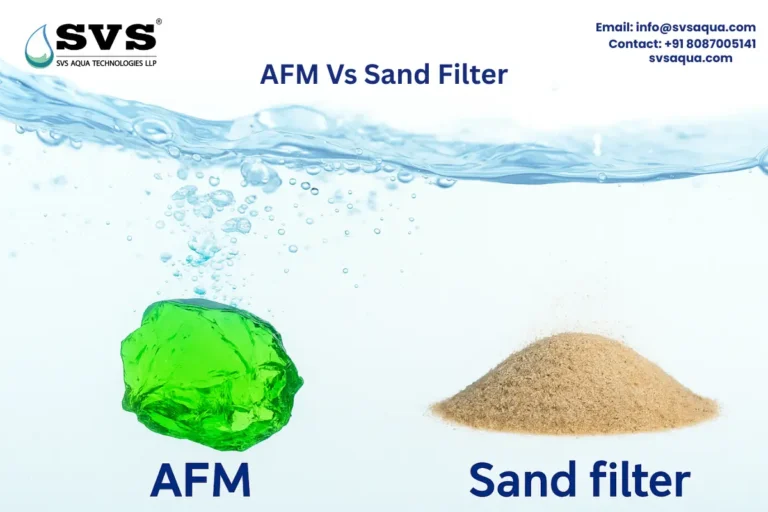
When it comes to industrial water treatment, the efficiency of your filtration system directly impacts performance, compliance, and sustainability. Traditionally, sand filters have been used to remove suspended solids and contaminants from water. But with growing demands for cleaner, more reliable water, Activated Filter Media (AFM) is quickly gaining attention as a superior alternative.
Engage With Us
WHAT IS AFM (ACTIVATED FILTER MEDIA)?
Activated Filter Media, or AFM, is a highly engineered filtration media made from recycled green and brown glass. It undergoes a special activation process that changes the surface structure of the glass to make it self-sterilizing, more adsorptive, and more efficient than sand.
Unlike ordinary glass or quartz sand, AFM is designed to:
- Reduce bacterial growth
- Prevent channeling
- Increase filtration performance
- Require less backwashing
HOW DO SAND FILTERS WORK?
Sand filters operate by passing water through a bed of silica sand. As water flows through, particles are trapped between the grains. While this method works well for basic applications, it has several drawbacks:
- Biofilm Formation: Over time, bacteria build up, reducing performance.
- Channeling: Water finds the path of least resistance, leading to uneven filtration.
- Limited Filtration Fineness: Standard sand removes particles only down to 20–30 microns.
AFM vs Sand filters – KEY DIFFERENCES
| Feature | Sand Filters | Activated Filter Media (AFM) |
|---|---|---|
| Filtration Efficiency | 20–30 microns | Down to 4–5 microns (without flocculant) |
| Bio-Resistance | Biofilm builds over time | Self-sterilizing; prevents biofouling |
| Backwashing Frequency | Frequent | Less frequent, more effective |
| Longevity | 3–5 years | 10+ years |
| Environmental Impact | Neutral | Made from recycled glass, sustainable |
| Water Savings | Moderate | Up to 50% less water used for backwash |
BENEFITS OF AFM FILTRATION IN INDUSTRIAL WATER TREATMENT
- Superior Water Quality
AFM removes finer particles than sand, providing crystal-clear water that meets stricter discharge standards or reuse criteria. - Bacteria & Biofilm Control
AFM’s activated surface resists bacterial growth, keeping filters cleaner for longer and reducing the risk of contamination. - Cost Savings Over Time
Though initial costs may be slightly higher, AFM requires less maintenance, backwashing, and media replacement, resulting in long-term savings. - Eco-Friendly Solution
AFM is made from 100% recycled glass and offers reduced water and chemical use — supporting your company’s sustainability goals. - Longer Media Life
Unlike sand that degrades and needs replacing every few years, AFM can last over a decade with proper maintenance.
IDEAL INDUSTRIES FOR AFM FILTRATION
AFM is used across various sectors where high-quality water filtration is essential:
- Textile and Dyeing Units: Removes microfibers and color residues
- Food & Beverage Manufacturing: Ensures hygienic processing water
- Chemical Processing: Handles variable pH and chemical loads
- Power Plants: For cooling tower and boiler feed water
- Pharmaceutical Industries: For ultrapure and pre-treatment processes
WHY CHOOSE SVS AQUA TECHNOLOGIES FOR AFM FILTRATION?
At SVS Aqua Technologies, we bring cutting-edge water treatment solutions backed by technical expertise and customized service. Our AFM-based filtration systems are designed to:
- Maximize throughput with compact footprints
- Reduce operational and maintenance costs
- Meet the strictest water quality standards
- Deliver high ROI with eco-efficiency
Activated filter media (AFM) is made from recycled glass and has a self-sterilizing surface, unlike sand which can harbor bacteria. SVS Aqua offers AFM that filters finer particles and reduces biofouling.
AFM typically lasts 3–5 years, much longer than sand. SVS Aqua recommends periodic backwashing but fewer replacements overall.
Yes. SVS Aqua’s AFM is certified safe for potable water and offers better turbidity control and microbial safety than traditional sand filters.
You can. In most cases, AFM can directly replace sand in existing filters without equipment modification.
Not as quickly. AFM resists clumping and has a higher filtration rate, meaning lower pressure loss and cleaner water with less maintenance.
Must Read

Industrial Wastewater Treatment Made Better with Chlorine Dioxide
Chlorine Dioxide Applications
Chlorine Tablets for Drinking Water: Simple, Safe, and Effective Purification
Chlorine Dioxide Applications