
AQUACULTURE WATER TREATMENT: A FRESH DISINFECTION APPROACH USING CHLORINE DIOXIDE BY SVS AQUA
- Why is water quality in Aquaculture Essential?
- Traditional Disinfectants Vs Chlorine Dioxide
- SVS Aqua's Chlorine Dioxide Solution Line Up
- How Chlorine Dioxide Functions In Aquaculture Water Treatment
- Real-World Advantages For Aquaculture Operators
- Factors Impacting Suspended Solids Production
- Why Choose SVS Aqua?
- Use Cases By Farm Type
- FAQ's
Engage With Us
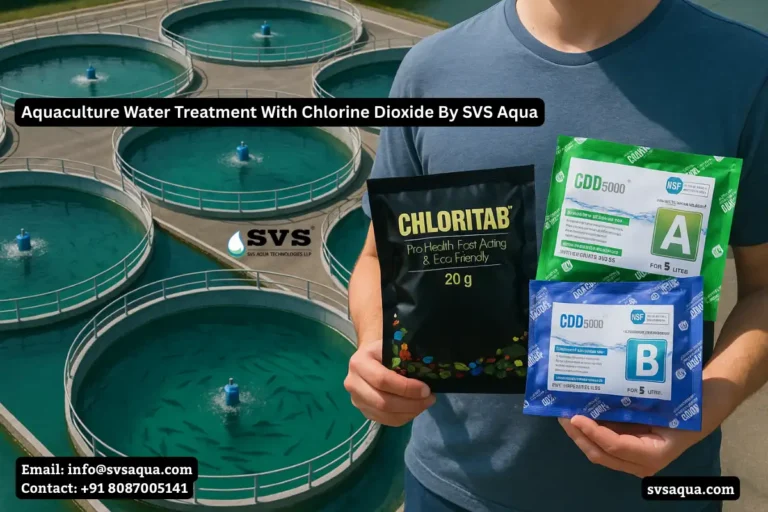
Aquaculture goes beyond just raising fish; it’s about establishing a meticulously managed aquatic setting that reflects nature while avoiding its unpredictability. Clean water is fundamental to this system. However, in high-density farming, with varying temperatures, leftover feed, fish waste, and the risk of disease outbreaks, maintaining water quality becomes both a science and a strategy. SVS AQUA enters this arena with a contemporary solution: chlorine dioxide (ClO₂)-based water treatment for aquaculture. Let’s explore how it functions, why it’s important, and what sets it apart from traditional disinfection techniques.
- Why is water quality in Aquaculture Essential?
- Traditional Disinfectants Vs Chlorine Dioxide
- SVS Aqua's Chlorine Dioxide Solution Line Up
- How Chlorine Dioxide Functions In Aquaculture Water Treatment
- Real-World Advantages For Aquaculture Operators
- Factors Impacting Suspended Solids Production
- Why Choose SVS Aqua?
- Use Cases By Farm Type
- FAQ's
Engage With Us
WHY IS WATER QUALITY IN AQUACULTURE ESSENTIAL?
No matter if you’re raising tilapia, shrimp, catfish, or decorative fish, bad water conditions can lead to:
- High death rates
- Slow growth and poor feed efficiency
- Outbreaks of disease
- Biofilm accumulation that blocks filters and equipment
- Bad smells and murkiness
Keeping the levels of Dissolved Oxygen (DO), pH, ammonia, nitrite, and microbial load just right is super important. Filtration alone isn’t enough—you need disinfection that removes harmful organisms without affecting beneficial microbes or altering the pH.
TRADITIONAL DISINFECTANTS VS CHLORINE DIOXIDE
A lot of aquaculture farms still use bleach (sodium hypochlorite), potassium permanganate, or formalin. These are powerful oxidizers, but they have their downsides:
- Unstable pH: They can unpredictably change the water chemistry.
- Toxic byproducts: Especially with chlorination, you might end up with trihalomethanes and chloramines.
- Biofilm resistance: They struggle to penetrate the microbial layer where pathogens hide.
Chlorine dioxide, however, oxidizes selectively without reacting with organic matter to create harmful byproducts. It works well across a broad pH range (4–10), making it ideal for systems that require pH stability.
SVS AQUA’s CHLORINE DIOXIDE SOLUTION LINE UP
SVS AQUA has a variety of ClO₂-based products tailored for aquaculture use:
- CDD 5000
This is a high-purity chlorine dioxide generator, perfect for continuous dosing in large recirculating aquaculture systems (RAS). It’s built for automatic generation and can easily integrate with current water systems.
A tablet-based solution that’s super easy to use in tanks, ponds, or hatcheries. These are great for smaller operators or quick disinfection tasks.
- CHLORONE
This is a stabilized liquid formulation that’s flexible and simple to measure, making it ideal for farm managers who need quick dosing without the hassle of complicated equipment.
All three products are NSF/ANSI 60 certified, which means they comply with international safety standards for water treatment—even safe for human consumption.
HOW CHLORINE DIOXIDE FUNCTIONS IN AQUACULTURE WATER TREATMENT
Here’s what sets ClO₂ apart from traditional chemicals:
- Biofilm Disruption: Chlorine dioxide can get through biofilm—a sticky layer where harmful bacteria like Aeromonas, Pseudomonas, and Vibrio lurk.
- Pathogen Control: It effectively eliminates bacteria, viruses, fungi, and protozoa quickly, without harming fish when used at recommended levels.
- Oxygen Balance: Unlike other disinfectants, it doesn’t reduce oxygen levels. It enhances water clarity and lowers biological oxygen demand (BOD).
- Residue-Free: It decomposes into harmless salts, leaving no toxic residues that could stress fish.
REAL-WORLD ADVANTAGES FOR AQUACULTURE OPERATORS
- Fewer Disease Outbreaks
Farms that utilize SVS AQUA products see a noticeable drop in bacterial and parasitic infections.
- Enhanced Growth Rates
Healthier water means healthier fish. This leads to improved feed conversion ratios and quicker harvesting.
- Lower Chemical Dependency
With a decrease in antibiotics and a reduced need for pH-correcting chemicals, you save money and lessen environmental impact.
- More Efficient Operations
Clean systems need less upkeep. Biofilms clog pipes and filters less frequently.
FACTORS IMPACTING SUSPENDED SOLIDS PRODUCTION
A variety of factors influence the production of suspended particles in a fish farm, including:
- Feed quality
- Feeding rate
- Feeding method
- Water exchange rate – Tank hydrology
- Fish stocking density
- Dissolved oxygen level
- Farm management efficiency and staff skills.
WHY CHOOSE SVS AQUA?
SVS AQUA is more than just a supplier; it’s your partner in water science. Their solutions are utilized across India, Southeast Asia, and the Middle East. Their expertise goes beyond aquaculture, covering industrial water treatment, food processing, and municipal water systems.
When you go with SVS AQUA, you’re getting:
- Consistently dosed, high-purity chlorine dioxide
- Assistance in designing and automating treatment systems
- Products that are globally certified and tested
- Tech support and service after installation
USE CASES BY FARM TYPE
Shrimp Ponds (Open Systems)
- Problem: Issues with Vibrio infections, elevated ammonia levels, and crashes from algal blooms.
- Solution: Start with CHLORITAB and keep up with regular maintenance using CHLORONE.
Tilapia and Pangasius (Semi-intensive)
- Problem: Insufficient oxygen and a high load of bacteria.
- Solution: Use CDD 5000 for steady background disinfection.
Ornamental Fish Hatcheries
- Problem: Fragile species that are sensitive to any residues.
- Solution: Administer controlled tablet doses with low ppm concentrations.
In the high-stakes business of aquaculture, poor water quality can mean wiped-out harvests, lost revenue, and irreversible damage to stock health. Relying on old-school chemicals just doesn’t cut it anymore.
SVS AQUA provides chlorine dioxide-based solutions that are a step up: a scientifically supported, residue-free, and fish-friendly disinfection method that delivers long-lasting results. Whether you’re running a shrimp farm by the coast, an inland closed-loop tilapia system, or a unique ornamental hatchery, water quality isn’t just a checkbox; it’s the very basis of your operation.
By the time the increase in filter media size is noticed, it is usually too late to correct bynormal operational procedures, except by applying more drastic measures.
FAQ's
Unlike bleach or chlorine, chlorine dioxide doesn’t form harmful byproducts, works across a wide range of pH levels, and penetrates biofilms better, making it more effective in aquaculture.
It’s great for:
• Ponds and recirculating systems
• Hatcheries and larval rearing tanks
• Water used in live-fish transport
• Cleaning tanks, pipes, and equipment
• Seafood processing areas
Frequency depends on water quality and farm conditions, but regular dosing — weekly or biweekly — helps maintain good water conditions and reduce disease risk.
It helps prevent disease outbreaks and can reduce dependence on antibiotics, but it’s best used as part of an overall health management plan.
No — when used correctly, it breaks down into harmless salts with no negative effect on fish or shrimp quality.
Must Read

Solving Color and Odor Issues in Drinking Water with CDD 5000
Product Insights
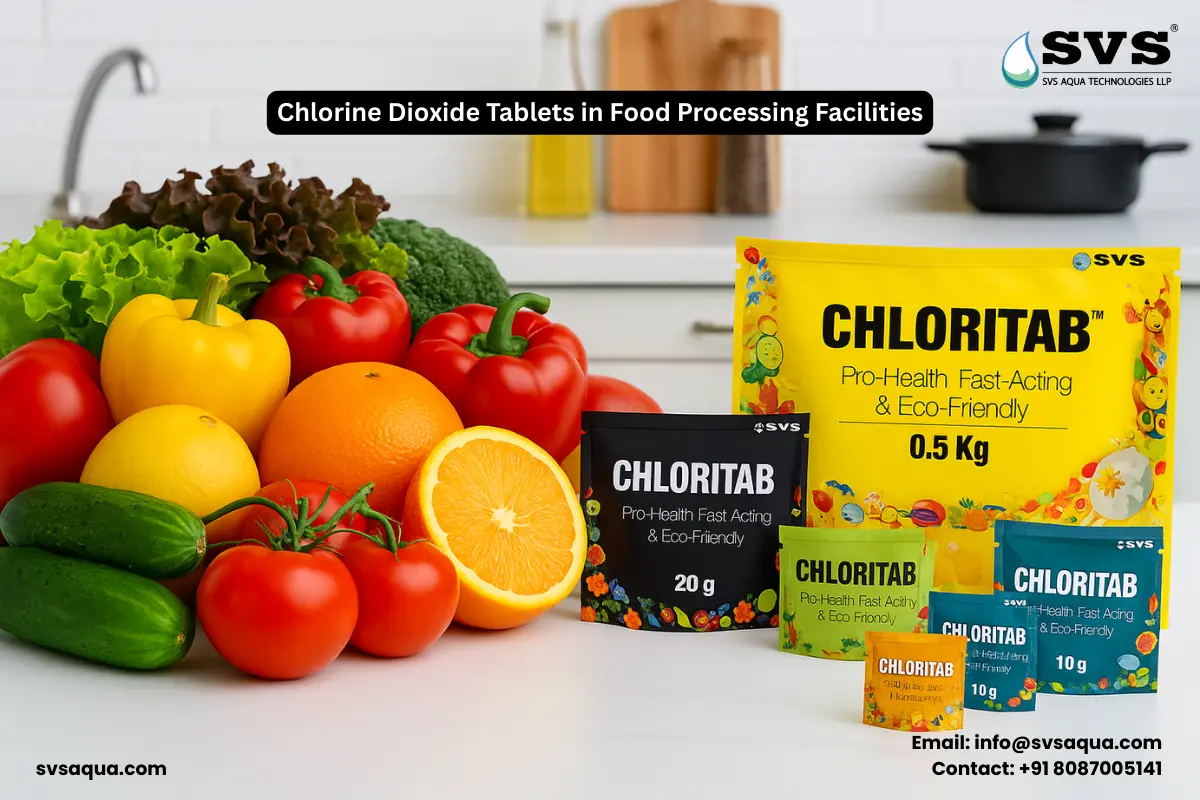
How to Use Chlorine Dioxide Tablets in Food Processing Facilities
Chlorine Dioxide Applications