
Chlorine Dioxide for Fruit Sanitation and Food Safety
Engage With Us
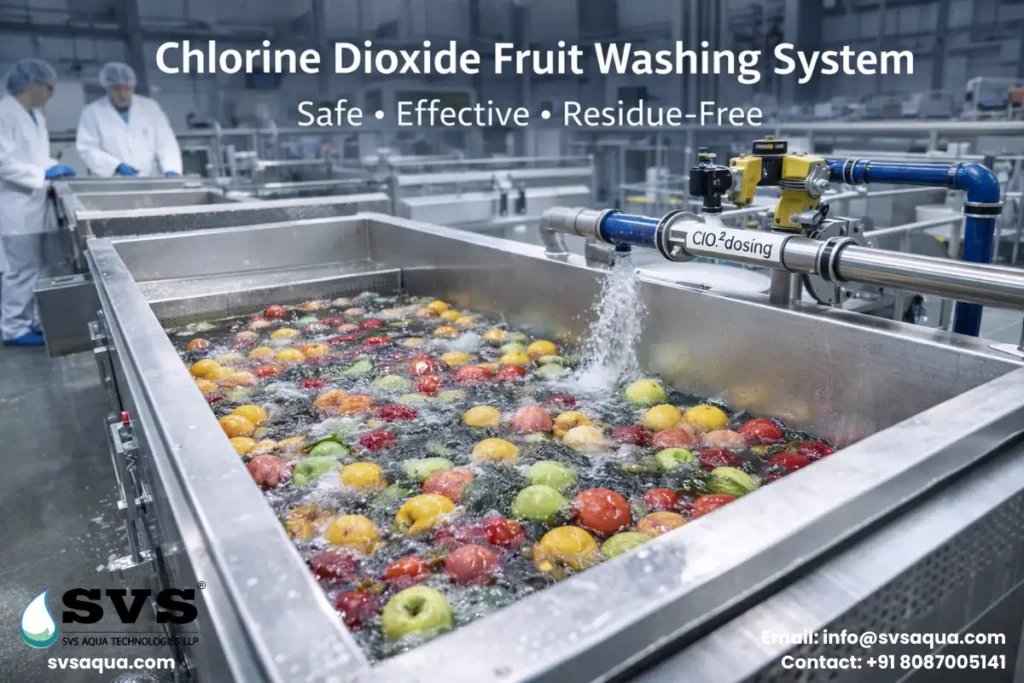
Ensuring food safety has become a critical priority for fruit processing industries worldwide. With increasing consumer awareness, strict export regulations, and rising microbial contamination risks, fruit sanitation is no longer optional — it is essential.
Traditionally, chlorine-based disinfectants have been used in fruit washing and dump tank disinfection. However, research has revealed several limitations and harmful effects associated with chlorine use. As a result, industries are shifting toward safer and more effective alternatives like Chlorine Dioxide (ClO₂) for fruit sanitation and food safety.
In this article, we explore how chlorine dioxide works, why it is superior to chlorine, and how it enhances post-harvest fruit sanitation processes.
Engage With Us
The Evolution of Fruit Washing and Water Disinfection
The science of water disinfection in the fruit industry has significantly evolved over the past few decades. Around 30 years ago, chlorine began to be widely used in apple washing and pear dump tanks. Approximately 20 years ago, the introduction of chlorine in fruit dump tanks dramatically reduced fruit decay during storage and transportation.
However, while chlorine helped reduce microbial load, it also introduced several concerns:
- Formation of harmful chlorinated by-products
- Reduced effectiveness in the presence of organic matter
- Strong odour and residue concerns
- Narrow effective pH range
- Increasing microbial resistance
With stricter food safety standards and export compliance requirements, the industry now demands a safer, more stable, and more effective fruit washing disinfectant.
This is where chlorine dioxide water treatment solutions offer a powerful advantage.
CURRENT FRUIT WASHING TECHNIQUES:
- Fruits are received in a truck in unripe condition, which are then laid in the fruit pickling rooms for the predefined period.
- The pickling room consists of cooling pads through which air is recirculated to maintain specific temperature and humidity conditions to achieve optimum ripening in the shortest possible time.
- Ripe fruits are immersed in a dump tank, which is laced with 40 to 50 ppm chlorine. The fruits are kept in the dump tank for 1 to 2 minutes, then carried forward on conveyor belts for further processing.
However, due to increasing concerns about chlorine residues, pesticide contamination, and microbial resistance, we recommend a safer and more effective alternative – Chlorine Dioxide (ClO2) treatment.
Why Chlorine Dioxide for Fruit Sanitation?
Chlorine Dioxide (ClO₂) is a powerful oxidising biocide that provides superior microbial control without producing harmful chlorinated by-products.
Unlike chlorine, chlorine dioxide:
- Works effectively across a wide pH range
- Remains stable even in the presence of organic matter
- Does not form harmful trihalomethanes (THMs)
- Has minimal odour
- Offers stronger microbial reduction
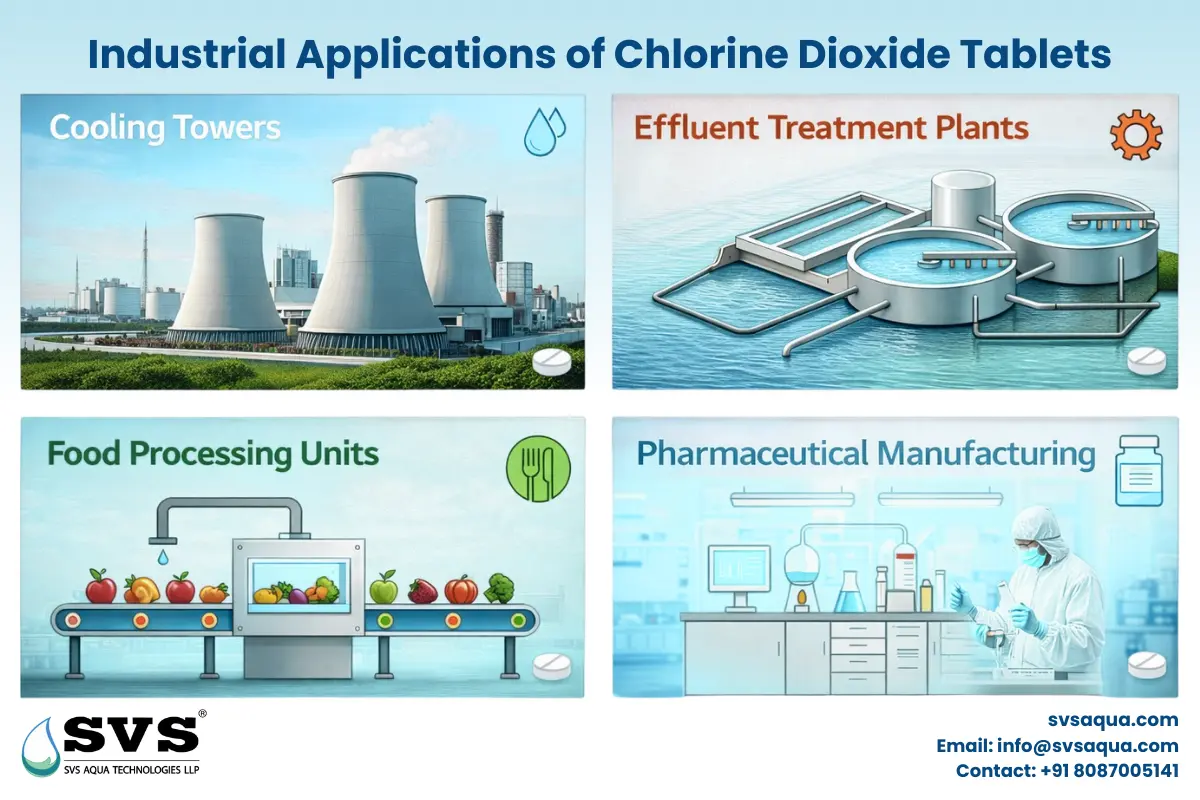
Because of these properties, chlorine dioxide is increasingly used in:
- Post-harvest fruit sanitation
- Dump tank disinfection
- Vegetable washing systems
Food processing water treatment
Introducing CHLORITAB™ for Fruit Disinfection
CHLORITAB™ is an advanced chlorine dioxide-based fruit disinfection solution designed to replace traditional chlorinated products in dump tanks and hold-up tanks.
Benefits of CHLORITAB™
- Easy to add directly to dump tanks or washing systems.
- Provides strong oxidising biocidal action.
- Eliminates fungal, bacterial, and viral contaminants.
- Helps reduce pesticide residues and surface contamination.
- Improves overall food safety compliance.
- Enhances fruit shelf life during storage and transportation.
By switching to chlorine dioxide tablets like CHLORITAB™, processing units can improve sanitation standards without compromising fruit quality.
Recommended Chlorine Dioxide Dosage for Fruit Washing
Proper dosing is essential for effective disinfection. Below are general guidelines:
- 1 g for 5 litres of water
- 5 g for 30 litres of water
- 10 g for 60 litres of water
- 20 g for 90 litres of water
Always follow manufacturer recommendations and adjust dosage based on contamination levels and system capacity.
Consistent monitoring ensures optimal microbial control and safe fruit processing.
The fruit processing industry has evolved significantly over the past decades. While chlorine once revolutionised fruit sanitation, modern food safety challenges require more advanced and safer solutions.
Chlorine dioxide stands out as a highly effective alternative for dump tank disinfection, fruit washing, and post-harvest sanitation. Its strong oxidising properties, reduced residue formation, and superior microbial control make it the preferred choice for food processing industries.
If you are looking to enhance fruit sanitation standards and ensure compliance with modern food safety regulations, chlorine dioxide solutions like CHLORITAB™ provide a reliable and efficient answer.
Invest in safer fruit sanitation. Invest in chlorine dioxide.
FAQs
Chlorine dioxide works as a strong oxidising agent that destroys microbial cell walls. It effectively controls pathogens such as E. coli, Salmonella, and Listeria, reducing cross-contamination in fruit processing systems.
Typical dosage guidelines include:
- 1 g for 5 litres of water
- 5 g for 30 litres
- 10 g for 60 litres
- 20 g for 90 litres
Dosage may vary depending on contamination levels and manufacturer recommendations.
Chlorine dioxide helps reduce surface pesticide residues and microbial contamination. However, effectiveness may depend on contact time, concentration, and the type of pesticide present.
Chlorine dioxide is widely used in:
- Apple and pear processing units
- Mango ripening facilities
- Banana export houses
- Vegetable processing plants
- Cold storage warehouses
It is especially preferred in export-oriented fruit processing industries.
Yes. Chlorine dioxide is considered safer because it does not form harmful chlorinated by-products like trihalomethanes (THMs). It is effective across a wide pH range and performs better in water containing organic matter.
Must Read

Top Uses of Chlorine Dioxide in Water Treatment in India
Chlorine Dioxide Applications
Chlorine Dioxide Tablets for Odour Removal in Water & Industrial Systems
Chlorine Dioxide Applications