
How to Use Chlorine Dioxide Tablets in Different Applications
Engage With Us
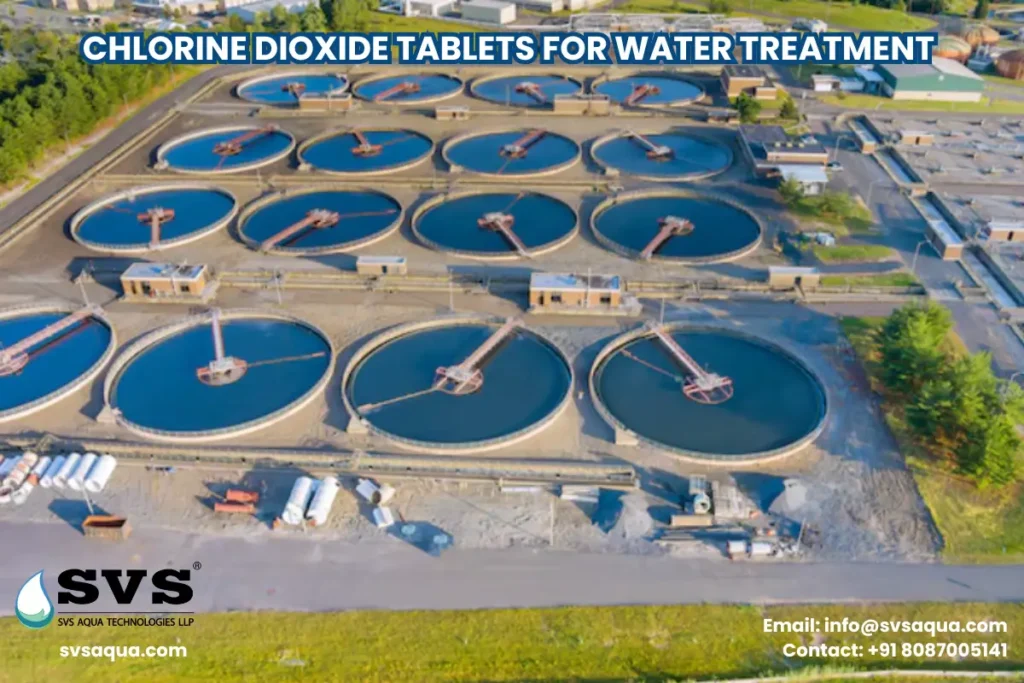
Across India, access to clean and safe water remains one of the most pressing challenges for households, industries, and municipalities. One of the most reliable solutions for water safety today is chlorine dioxide tablets, widely used for drinking water treatment, industrial water disinfection, and food sanitation.
Chlorine dioxide tablets are quickly becoming the answer for Indian industries and everyday users alike. Easy to store, simple to use, and highly effective against bacteria, viruses, and biofilm — but knowing how to use them correctly across different applications is what makes all the difference.
Engage With Us
Background
Water contamination in India is not just an environmental issue; it is a health, safety, and business risk. From villages dependent on borewell and tanker water to large manufacturing facilities in MIDC zones, poor water quality leads to disease, equipment damage, and compliance failures under BIS and FSSAI standards.
Traditional methods like plain chlorine have long been used in India but come with well-known limitations; they leave behind harmful by-products, lose effectiveness at varying pH levels, and fail almost entirely when biofilm is present. India’s industries and water authorities today need something more reliable. That is exactly where chlorine dioxide steps in.
What Are Chlorine Dioxide Tablets?
Chlorine dioxide (ClO₂) is a powerful, broad-spectrum disinfectant increasingly being adopted across Indian industries for water treatment, sanitation, and surface disinfection. Unlike regular chlorine, it does not form harmful chlorinated by-products, making it safer for human health and the environment.
Chlorine dioxide tablets are a solid, pre-measured form of this compound. They are compact, easy to transport, and simple to dose without any complex mixing equipment, making them ideal for use in remote locations, municipal water treatment, emergencies, and large-scale industrial processes across India.
How Do Chlorine Dioxide Tablets Work?
The process is straightforward:
- Drop the tablet into the required volume of water
- It dissolves and releases ClO₂ gas into the solution
- ClO₂ attacks and destroys the cell walls of pathogens
- It oxidises organic contaminants and breaks down biofilm
Because ClO₂ works through oxidation rather than chlorination, it stays effective across a wide pH range and does not react with organic matter to form toxic by-products resulting in cleaner, safer water without the trade-offs of older methods.
Key Benefits
Health & Safety
- Approved by India’s Jal Shakti Mantralaya, the WHO, and the US EPA for chlorine dioxide tablets for drinking water use
- Effectively eliminates E. coli, Legionella, Salmonella, viruses, and protozoa. common waterborne pathogens in Indian water sources
- Safe for human contact at correct doses
Operational Benefits
- Works faster than many alternative disinfectants used in Indian industrial setups
- Remains active in water longer with no strong odours or residues
- Highly effective even at low concentrations, ideal for high-volume municipal and industrial use
Cost & Efficiency
- Pre-measured tablets reduce the risk of over- or under-dosing
- Less chemical wastage means better cost control, especially relevant for Indian MSMEs and large-scale treatment plants
How to Use Chlorine Dioxide Tablets: Application Guide
- Drinking Water Treatment: Chlorine dioxide tablets for drinking water are widely used in rural water supply systems, housing societies, and emergency drinking water treatment. The tablet should be dissolved according to the recommended chlorine dioxide dosage for water treatment, ensuring adequate contact time to eliminate bacteria and viruses.
- Industrial Water Treatment: For industrial water disinfection in cooling towers, process tanks, or storage systems, common in Indian manufacturing hubs like Pune, Nashik, Surat, and Chennai, dissolve the tablet in a small volume of water first, then introduce the solution evenly into the system. Dose regularly to prevent microbial buildup and maintain compliance with Indian industrial water safety norms.
- Food & Vegetable Sanitation: India’s food processing and export sector faces strict FSSAI and export-market hygiene standards. Prepare a diluted solution using the tablet and use it as a wash for fruits, vegetables, and food contact surfaces. Effective against surface pathogens at low concentrations, without affecting the taste, smell, or nutritional value of the produce.
- Odour Control: For wastewater pits, processing floors, fish markets, slaughterhouses, or storage rooms, common odour-challenge environments across Indian cities and industrial zones, dissolve a tablet in water and apply it as a spray or rinse. ClO₂ neutralises the sulphur and organic compounds, causing foul smells; it does not just mask them.
- Biofilm Removal in Pipelines: Biofilm is a stubborn bacterial layer that builds up inside ageing pipelines, a significant issue in older Indian municipal and industrial distribution systems. For water disinfection tablets targeting biofilm, prepare a higher concentration solution, flush the pipeline system, and allow adequate dwell time for the ClO₂ to fully penetrate and break down the biofilm layer.
Why Choose SVS Aqua?
SVS Aqua Technologies is Asia’s leading chlorine dioxide manufacturer, proudly made in India, operating since 2012 from its GMP and ISO-certified facility in Pune, Maharashtra. The Chloritab® is the only chlorine dioxide tablet in Asia to hold NSF ANSI 60 certification for safe drinking water. Key credentials include:
- Approved by Jal Shakti Mantralaya (Indian Government) and the FDA of five countries
- ISO 9001:2015, ISO 14001:2015, and GMP certified
- Trusted by the Indian Navy, Indian Army, Indian Railways, NTPC, Cipla, Tata Power, and Pune Municipal Corporation
Whether you are treating drinking water for a housing society in Mumbai, managing process water in a Pune factory, or sanitising produce for export, chlorine dioxide tablets offer a versatile, proven, and easy-to-use solution built for Indian conditions. The key is using the right dosage and method for each application. With the correct approach, these tablets protect water quality, prevent contamination, and solve problems that traditional disinfectants simply cannot handle.
FAQs
Most chlorine dioxide tablets dissolve within a few minutes, depending on the water temperature and volume. Once dissolved, the solution starts releasing chlorine dioxide that begins disinfecting the water.
For most applications, a contact time of 15–30 minutes is recommended to allow the chlorine dioxide to neutralise bacteria, viruses, and other microorganisms.
When used at the recommended dosage, chlorine dioxide generally does not produce a strong chlorine taste or odour, making it more acceptable in drinking water than traditional chlorine.
Yes. Chlorine dioxide remains effective across a wide pH range and in hard water, which makes it suitable for many Indian water sources like borewell and groundwater systems.
They should be stored in a cool, dry place away from direct sunlight and moisture, preferably in their original sealed container to maintain stability and effectiveness.
Must Read
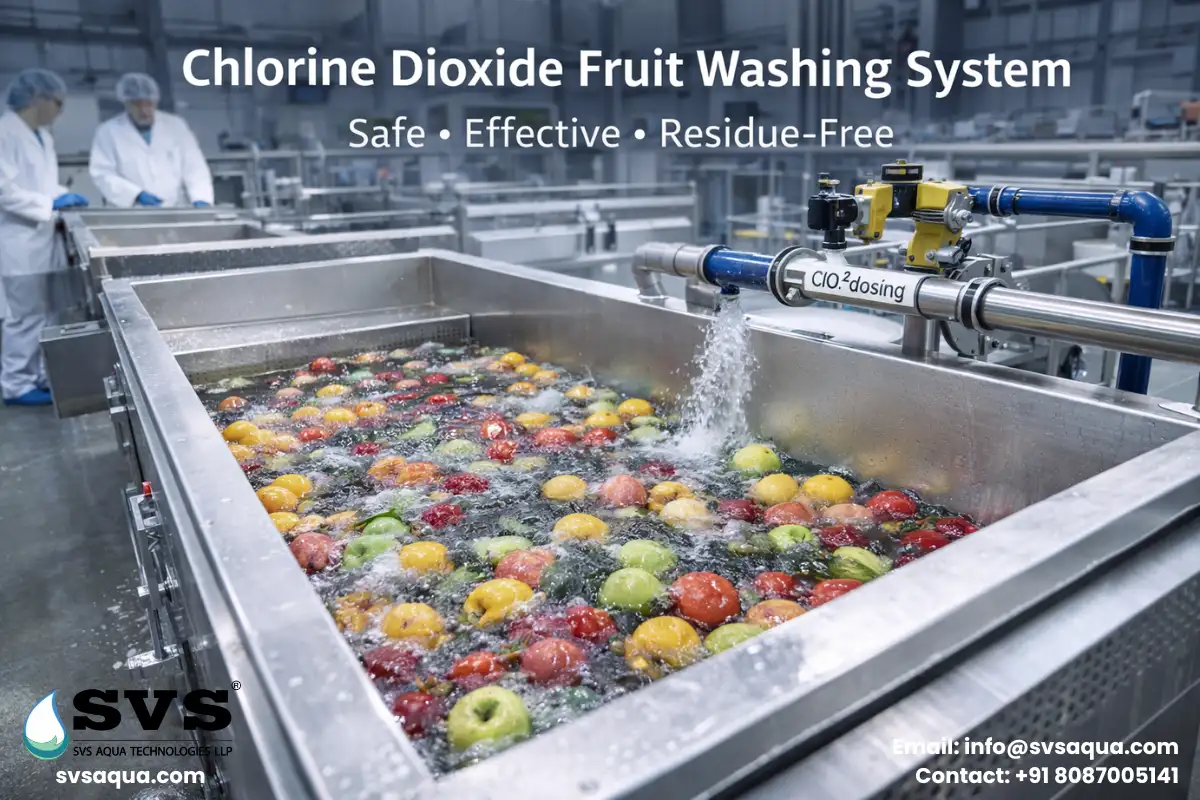
Chlorine Dioxide for Fruit Sanitation and Food Safety
Chlorine Dioxide Uses in Water Treatment

Top Uses of Chlorine Dioxide in Water Treatment in India
Chlorine Dioxide Uses in Water Treatment