
Equipment Sanitation: Guide to Clean Industrial Equipment
Engage With Us
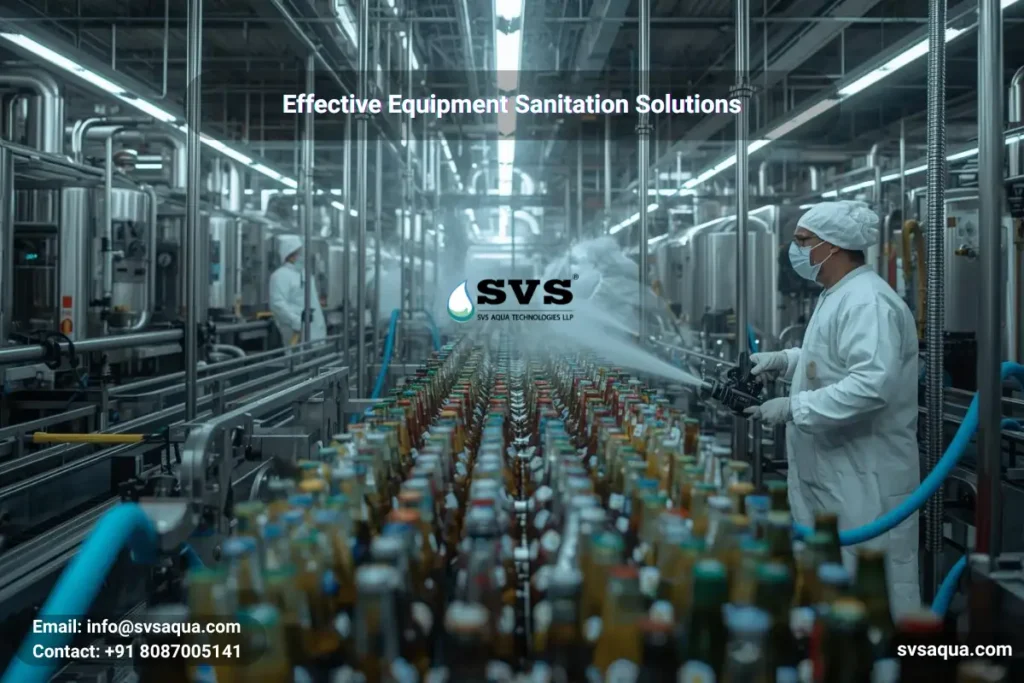
Maintaining cleanliness in industrial equipment goes beyond mere aesthetics. It is crucial for the safety, quality, and seamless operation of your business. Proper sanitation of equipment safeguards your products against contamination, ensures the safety of your employees, and assists in compliance with essential health regulations. When executed effectively, it averts expensive recalls, prolongs the lifespan of equipment, and preserves your brand’s reputation. Let us delve into all the necessary information regarding equipment sanitation and its significance for your facility.
Engage With Us
WHAT IS EQUIPMENT SANITATION?
Equipment sanitation refers to the process of cleaning and disinfecting industrial machinery to eliminate dirt, germs, and contaminants. It involves more than merely wiping surfaces; it is a comprehensive procedure that ensures the safety of your products and the proper functioning of your equipment.
Reasons Why Equipment Sanitation is Important:
- Prevents contamination in your products
- Ensures the safety and health of workers
- Complies with health and safety regulations
- Safeguards your brand’s reputation
- Minimizes expensive recalls and operational shutdowns
- Prolongs the lifespan of equipment
Common Equipment Sanitation Challenges
Industrial machinery presents distinct cleaning and disinfection of equipment challenges that conventional methods may not effectively address. Contemporary equipment features narrow corners, intricate piping arrangements, and concealed areas where pollutants can accumulate.
These inaccessible regions can turn into hotspots for bacteria and biofilms that are resistant to standard cleaning techniques.
Difficult-to-Clean Locations:
- Narrow corners and crevices
- Within pipes and tubing
- Rubber seals and gaskets
- Intricate machinery components
- Concealed dead spaces
Biofilms represent a significant challenge in the sanitation of equipment. These viscous layers of bacteria adhere to surfaces, shielding germs from standard cleaning agents. They develop in pipes, tanks, and crevices, leading to persistent contamination issues, even post-cleaning. Conventional sanitizers frequently fail to infiltrate these protective layers, allowing bacteria to endure and proliferate.
Other Persistent Issues:
- Mineral accumulation due to hard water
- Residual products that are difficult to rinse away
- Bacteria concealed in tight spaces
- Corrosion caused by aggressive chemicals
- Extended cleaning durations between production batches
THE THREE STEPS OF EQUIPMENT SANITATION
Step 1: Pre-Cleaning
Pre-cleaning readies your equipment for thorough sanitation. This initial phase eliminates loose dirt, product residues, and adhered materials. It is crucial since organic matter can protect bacteria from disinfectants, thereby diminishing their efficacy.
What Occurs:
- Eliminate loose dirt and debris
- Rinse off product residues
- Dislodge adhered materials
- Prepare surfaces for intensive cleaning
Step 2: Main Cleaning
The primary cleaning stage employs detergents and mechanical action to eliminate adhered soils. This process must reach all surfaces, including those concealed areas where contaminants tend to accumulate. Numerous facilities utilize CIP (Clean-in-Place) systems that automatically circulate cleaning solutions through equipment, guaranteeing uniform coverage without the need for disassembly.
Methods Used:
- Manual scrubbing for smaller equipment
- CIP (Clean-in-Place) for larger systems
- Foam cleaning for vertical surfaces
- High-pressure washing as required
Step 3: Disinfection
Disinfection is the most critical step because it determines if your equipment is truly sanitary. After cleaning removes visible soil, disinfection eliminates the microscopic bacteria, viruses, and spores that can contaminate your products. The sanitizer you choose makes all the difference in achieving thorough disinfection.
What Gets Eliminated:
- Bacteria (including E. coli and Salmonella)
- Viruses and fungi
- Bacterial spores
- Biofilms and hidden contaminants
WHY CHLORINE DIOXIDE IS THE BEST CHOICE FOR EQUIPMENT SANITATION
Traditional sanitizers have serious limitations. Bleach corrodes equipment and loses power in certain conditions. Quaternary ammonium compounds leave residues and can’t penetrate biofilms. Chlorine dioxide for equipment sanitation . Solve these problems and deliver superior results across all conditions.
Powerful Germ-Killing Action
Chlorine dioxide destroys bacteria, viruses, fungi, and spores more effectively than traditional sanitizers. Unlike bleach, which weakens in hot water or alkaline conditions, chlorine dioxide maintains its germ-killing power regardless of temperature or pH levels. This consistency means you get reliable results every time you sanitize.
Works In All Conditions:
- Hot or cold temperatures
- High or low pH levels
- Hard or soft water
- With or without organic matter present
Removes Tough Biofilms
Chlorine dioxide truly excels in its function. Unlike other sanitizers that merely eliminate surface bacteria, chlorine dioxide infiltrates the deeper layers of biofilms. It dismantles the protective slime that conceals germs, eradicates the bacteria residing within, and inhibits the reformation of biofilms. This distinctive capability addresses one of the most challenging issues in the sanitation of industrial equipment.
How It Operates:
- Infiltrates deep into biofilm layers
- Dismantles the protective slime
- Eradicates bacteria within biofilms
- Inhibits the reformation of biofilms
Safe For Your Equipment
Numerous potent disinfectants can cause damage to equipment over time. They tend to corrode stainless steel, deteriorate plastics, and wear down rubber seals. However, chlorine dioxide stands apart. When used at appropriate concentrations, it is gentle on all standard equipment materials while remaining effective against germs.
Will Not Cause Damage:
- Stainless steel surfaces
- Food-grade plastics
- Rubber seals and gaskets
- Chrome and metal finishes
- Electronic components
This compatibility with equipment ensures that your machinery has a longer lifespan, reduces maintenance costs, and prevents unexpected failures due to sanitizer-related damage. Over time, these savings can accumulate significantly.
Clean and Safe
Chlorine dioxide is decomposed into simple, safe compounds that do not leave harmful residues. You will not encounter toxic by-products, chemical flavors in your products, or hazardous fumes in your facility. This clean decomposition also results in less rinsing, conserving water, and accelerating your sanitation process
Benefits:
- No toxic by-products
- No chemical taste or smell in products
- Less rinsing needed
- Safer for workers to handle
- Reduced injury risk
INDUSTRIAL EQUIPMENT SANITATION SOLUTIONS FROM SVS AQUA
We understand that every facility is different. Your equipment, products, and challenges are unique. That’s why we create custom chlorine dioxide solutions designed specifically for your needs. Whether you run a small processing operation or a major manufacturing plant, we have systems that fit.
Our Chlorine Dioxide Systems
Our systems produce chlorine dioxide on-site as required. This method removes the necessity of storing hazardous chemicals and guarantees that you consistently have fresh, effective sanitizer at the appropriate concentration. The systems can be integrated with current CIP equipment or offer manual application alternatives based on your configuration.
What We Provide:
- On-site generation of chlorine dioxide
- Custom-sized systems tailored for any facility
- Integration with existing CIP systems
- Options for manual application
- Automated dosing and monitoring
System Benefits:
- Generate sanitizer when you need it
- No storage of dangerous chemicals
- Consistent concentration every time
- Reduced chemical costs
- Simple operation
Complete Support Services
Installing equipment is just the beginning. We provide comprehensive Cleaning and disinfection of equipment support to ensure your success. Our team helps develop sanitation protocols tailored to your specific equipment and contamination risks. We train your operators thoroughly, so they understand not just what to do, but why they’re doing it. And we stay with you to optimize performance over time.
We Help With:
- System design and installation
- Sanitation protocol development
- Operator training programs
- Validation and testing
- Ongoing optimization
- Troubleshooting support
Reach out to SVS Aqua Technologies today to:
- Arrange a facility assessment
- Address your sanitation issues
- Explore tailored solutions
- Receive a comprehensive proposal
- Initiate enhancements to your sanitation program
Our team of specialists is prepared to assist you in achieving exceptional equipment sanitation outcomes. We possess extensive experience in addressing sanitation issues in facilities similar to yours. Let us collaborate to safeguard your products, meet your customers’ needs, and expand your business.
Hydrolyzed metals that precipitate as hydroxides are often used as coagulants in conventional drinking water treatment. These processes require addition of chemicals such as hydrated lime to the water to attain the optimum pH for the minimum solubility of the target contaminants and optimal formation of floc particles. The hydroxide compounds formed are generally sticky, gelatinous particles that are easily trapped on the filter media and once there, may not always be easily removed by normal cleaning procedures.
FAQ's
Equipment sanitation means cleaning and disinfecting machines, tools, surfaces and fittings so that microbes (bacteria, viruses, fungi) and biofilms are removed or killed. It ensures your equipment is hygienic and safe to use, especially in industries like food, beverage, dairy, pharmaceuticals, and water treatment.
Any equipment that contacts products, water, food, air, or is part of a processing line. This includes tanks, conveyors, packaging machines, pipes, hoses, valves, laboratory equipment, cooling towers, and more.
Yes. Our solutions are designed for industrial use, including food, beverages, and pharmaceutical environments. They’re effective and engineered to reduce damage to equipment, unlike harsher chemicalS.
Simply get in touch with us! Provide us with information about your equipment (type, size, surface material, usage), your industry and sanitation challenges. We’ll propose a tailored solution and walk you through implementation. Visit our contact page on svsaqua.com.
Must Read

Disinfection of Drinking Water: Ensuring Safe Water for Every Home
Water Disinfection & Hygiene

Effective Odour Removal in Wastewater Treatment: The Power of Chlorine Dioxide
Chlorine Dioxide Applications