
What is Filter Bed Sanitation & Why It Is Important in Water Treatment
- What Is Filterbed Sanitation?
- How the Water Filtration Process Works?
- Why Filterbed Sanitation Is Important?
- Methods Used for Filterbed Sanitation
- Signs Your Filter Bed Needs Sanitation
- Best Practices for Filter Bed Maintenance
- The Impact on Public Health
- Environmental Benefits
- Cost Considerations
- The Future of Filter Bed Technology
- FAQ's
Engage With Us
Clean water is essential for daily life, industries, and public health. But behind every reliable water treatment system is a critical process that often goes unnoticed — Filterbed Sanitation.
Over time, water filtration systems trap dirt, bacteria, organic matter, and other contaminants. If these filter beds are not cleaned and sanitised regularly, water quality can decline, and system efficiency can suffer. That’s why proper filterbed sanitation plays a vital role in maintaining safe and effective water treatment operations.
- What Is Filterbed Sanitation?
- How the Water Filtration Process Works?
- Why Filterbed Sanitation Is Important?
- Methods Used for Filterbed Sanitation
- Signs Your Filter Bed Needs Sanitation
- Best Practices for Filter Bed Maintenance
- The Impact on Public Health
- Environmental Benefits
- Cost Considerations
- The Future of Filter Bed Technology
- FAQ's
Engage With Us
What Is Filterbed Sanitation?
Filter bed sanitation refers to the procedure of cleaning and disinfecting the filter media utilised in water treatment systems. It can be likened to the process of cleaning a coffee filter – as time progresses, particles accumulate and diminish its effectiveness. A similar phenomenon occurs with water filters, albeit on a significantly larger scale.
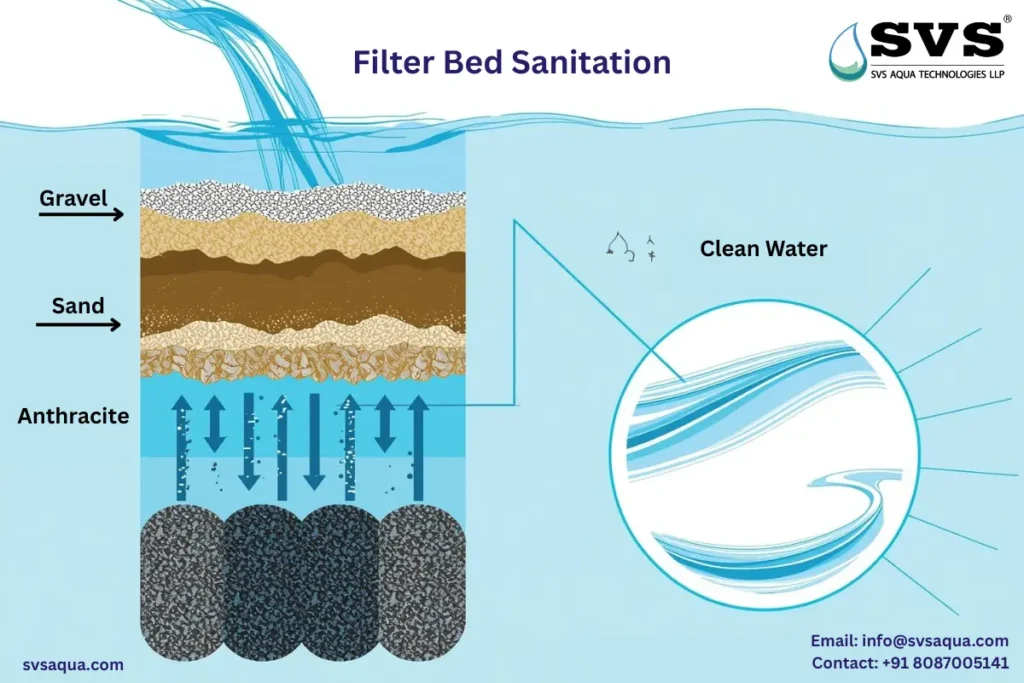
In water treatment facilities and filtration systems, filter beds comprise materials such as sand, gravel, or activated carbon. These substances capture dirt, bacteria, and various contaminants as water flows through. Over time, the accumulation of these trapped particles forms a layer of buildup that necessitates regular cleaning.
How the Water Filtration Process Works?
To comprehend the significance of sanitation, we must examine the functioning of water filtration:
- Water Entry: Untreated water flows into the filtration system, which contains a variety of impurities such as dirt, bacteria, and chemicals.
- Filtration: As the water passes through the filter bed, the filter media captures the contaminants. For instance, sand filters trap particles within the minute spaces between the grains of sand.
- Collection: Clean water is collected from the bottom of the filter bed, prepared for additional treatment or distribution.
- Maintenance Cycle: Routine maintenance of the filter bed ensures that this process operates efficiently.
Why Filterbed Sanitation Is Important?
- Maintains Water Quality
The primary reason for regular water filtration system cleaning is maintaining water quality. When filter beds become clogged with contaminants, they are unable to effectively remove new impurities. This means harmful bacteria, viruses, and chemicals might pass through into the treated water.
- Prevents Bacterial Growth
Dirty filter beds become breeding grounds for bacteria. The organic matter trapped in the filter media provides food for microorganisms. Without proper sanitation of the sand filter, these bacteria can multiply and contaminate the water that is meant to be purified.
- Extends Equipment Life
Regular filter media cleaning protects your investment. Clean filter beds experience less strain and wear, meaning pumps work more efficiently, and equipment lasts longer. This saves money on repairs and replacements over time.
- Ensures Efficient Operation
Clogged filter beds force water treatment systems to work harder. Pumps must push water through blocked media, consuming more energy and increasing operational costs. Clean filter beds allow smooth water flow, reducing energy consumption and improving overall system efficiency.
- Meets Safety Standards
Water treatment facilities must meet strict safety regulations. Regular filterbed sanitation ensures compliance with health and safety standards, protecting public health, and avoiding potential legal issues.
Methods Used for Filterbed Sanitation
- Backwashing
This is the most common cleaning method. Water flows backward through the filter bed at high pressure, lifting and agitating the filter media. This action releases trapped particles, which are then flushed away.
- Chemical Disinfection
Sometimes backwashing alone is not enough. Chemical treatments using chlorine or other disinfectants kill bacteria and break down organic buildup in the filter media.
- Physical Cleaning
For severely clogged systems, physical removal and cleaning of filter media may be necessary. This involves draining the filter bed, removing the media, cleaning it thoroughly, and replacing it.
- Air Scouring
This advanced technique uses compressed air bubbles combined with water to scrub filter media clean. The bubbles create turbulence that dislodges stubborn particles.
Signs Your Filter Bed Needs Sanitation
Look out for these warning signs:
- Reduced water flow
- Increased pressure readings
- Cloudy or discoloured filtered water
- Unpleasant odours
- Higher energy consumption
- Visible buildup on filter media
Ignoring these signs can lead to system failure and poor water quality.
Best Practices for Filter Bed Maintenance
- Regular Inspection
Check your filter beds weekly for signs of clogging or contamination. Early detection prevents major problems.
- Scheduled Cleaning
Create a maintenance schedule based on your system’s usage. High-volume systems may need daily backwashing, while smaller systems might require weekly or monthly cleaning.
- Water Quality Testing
Regular testing of filtered water confirms that sanitation efforts are working. If water quality drops, immediate filter bed maintenance is needed.
- Documentation
Keep records of all cleaning activities, water quality tests, and maintenance procedures. This helps track system performance and identify patterns.
- Professional Service
While basic water filtration system cleaning can be done in-house, periodic professional inspection ensures nothing is missed.
The Impact on Public Health
Clean filter beds are essential for protecting public health. Proper filtration removes disease-causing pathogens responsible for illnesses such as cholera, typhoid, and dysentery. During outbreaks or emergencies, well-maintained filtration systems act as a critical defense against waterborne diseases.
Environmental Benefits
Effective filter media cleaning improves environmental sustainability. Efficient systems use less energy, reduce water waste, and operate longer without replacement. This lowers the environmental impact associated with manufacturing and disposing of filtration equipment.
Cost Considerations
While regular sanitation requires investment, the costs of neglecting filter beds are much higher. Consider these expenses:
- Emergency repairs from system failures
- Replacement costs for damaged equipment
- Health costs from waterborne illness outbreaks
- Fines and penalties for regulatory violations
- Energy waste from inefficient operations
Regular filterbed sanitation is a smart financial decision that prevents these expensive problems.
The Future of Filter Bed Technology
Advancements in water treatment continue to improve filterbed sanitation:
- Modern filter media resist clogging and require less frequent cleaning
- Automated systems identify when sanitation is needed
- Smart sensors monitor water quality in real time
These innovations are making sand filter sanitation more efficient and reliable than ever before.
Filterbed sanitation is not just a maintenance task; it is a critical component of safe and effective water treatment. From improving water quality and preventing bacterial growth to reducing costs and protecting public health, its importance cannot be overstated.
Whether managing a large municipal facility or a smaller filtration system, prioritising filterbed sanitation ensures reliable performance and long-term efficiency. Clean filter beds mean clean water, which means healthier communities.
FAQ's
Filterbed sanitation is the process of cleaning and disinfecting the filter media — like sand or gravel — in water filtration systems. It removes trapped particles, microorganisms, and buildup so the system continues to produce clean water efficiently
Filterbed sanitation helps maintain high water quality, prevents bacterial growth, extends equipment life, reduces energy use, and ensures compliance with health and safety standards. Neglecting it can lead to clogged filters and poor treatment performance.
The frequency depends on water quality and system usage. High-demand systems may need frequent cleaning, while others might require weekly or monthly sanitation as part of regular filter bed maintenance.
Proper sanitation helps remove harmful microbes before water is distributed or reused. This reduces risks of diseases and ensures treated water meets safety standards required by regulators and communities.
Filter cleaning often refers to routine backwashing, while filterbed sanitation includes deeper cleaning and disinfection to remove biological buildup and harmful contaminants — a more thorough maintenance practice.
Must Read

EN 14476 Certified Virucidal Tablets for Effective Virus Protection
Chlorine Dioxide Applications

Chloritab – EN 13727:2015 Validated Medical-Grade Disinfectant
Chlorine Dioxide Applications