
Chlorine Dioxide for Nematode Control in Water Treatment
Engage With Us
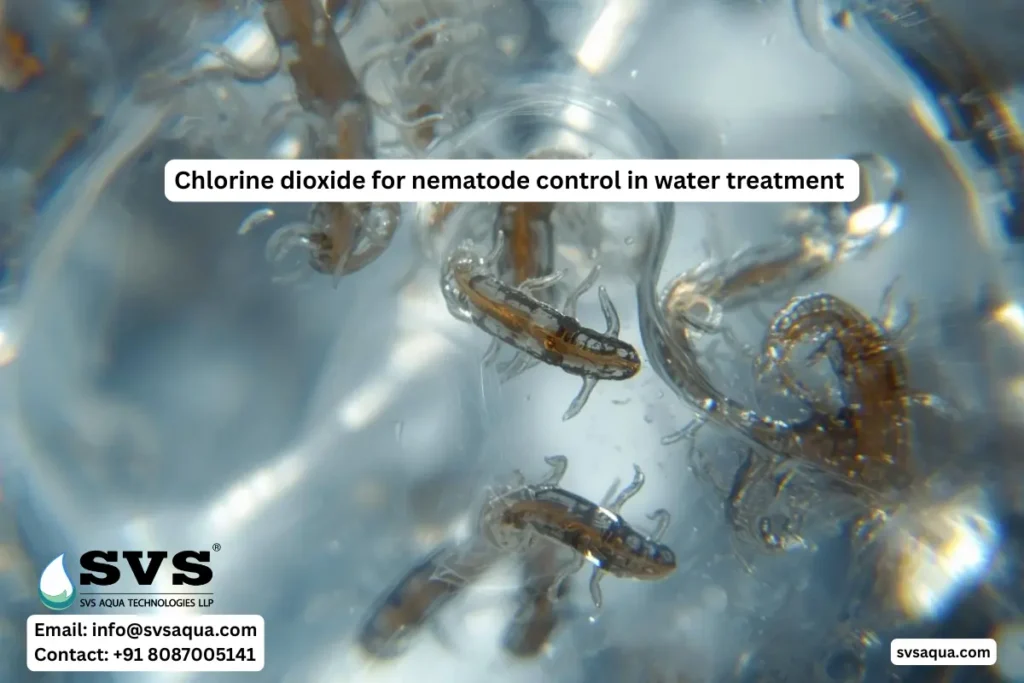
Water systems used in industrial, commercial, and utility applications are designed to deliver clean and safe water. However, nematodes—microscopic worm-like organisms—can enter water systems and create serious operational and hygiene issues if not treated properly. This is where nematode worm treatment using advanced water disinfection methods becomes essential.
Engage With Us
How Nematodes Enter Water Systems
Nematodes frequently infiltrate water systems through untreated groundwater, rivers, lakes, and borewells. Inadequate filtration, damaged pipelines, or inefficient disinfection procedures might also allow them to enter systems.
Once inside, nematodes thrive and proliferate in pipelines, storage tanks, low-flow areas, and filter media—particularly in the presence of organic waste. Nematodes can spread throughout the entire system if the water is not properly disinfected.
Problems Caused by Nematodes in Water Pipelines, Tanks, and Filters
The presence of nematodes in water treatment systems can lead to several issues, including:
- Blockage and fouling of pipelines and valves
- Reduced efficiency of filters and membranes
- Contamination of process water and storage tanks
- Hygiene risks in industrial, food, beverage, and process applications
- Customer complaints due to visible worms in water outlets
Over time, untreated nematode infestation contributes to industrial water contamination, operational downtime, and increased maintenance costs
Why Chemical & Disinfection Treatment Is Required
Physical filtration alone is often not sufficient to eliminate nematodes. These organisms can pass through or survive within filter beds and biofilms. That is why chemical treatment for nematodes is required as part of a comprehensive water treatment strategy.
Advanced water disinfection methods help:
- Kill live nematodes and larvae
- Prevent regrowth within pipelines and tanks
- Break biofilms where nematodes survive
- Maintain long-term microbiological control
Among modern solutions, chlorine dioxide for nematode control is widely used due to its strong oxidising properties and deep penetration ability.
Safety and Regulatory Considerations
Although chemical treatment for nematodes utilising chlorine dioxide is highly effective, it necessitates adherence to appropriate safety protocols. Precursor chemicals should be stored in cool, dry environments, and automated generation systems must always be employed. It is essential to install gas detection alarms and to ensure sufficient ventilation in areas where generators are located.
Water disinfection for nematodes must adhere to the drinking water standards outlined in India. The Bureau of Indian Standards (BIS) stipulates that the maximum allowable residual limit of chlorine dioxide in drinking water is 0.8 ppm. In contrast, treatment of industrial water contamination may permit the use of higher concentrations in applications that are not intended for potable use.
Cost-Effectiveness Analysis
Chlorine dioxide systems require a higher upfront investment of ₹3-8 lakhs for mid-size facilities. However, monthly chemical costs of ₹15,000-30,000 are comparable to regular chlorine when factoring in required doses and treatment frequency.
Real savings come from reduced equipment damage, lower maintenance frequency, energy savings from clean pipes, avoided downtime, and prevented health issues. Most facilities recover from their investment within 18-36 months. A pharmaceutical plant in Gujarat saved over ₹12 lakhs annually after implementing chlorine dioxide for nematode control.
How SVS Aqua Solutions Help in Nematodes Worm Treatment
SVS Aqua offers advanced disinfection and chemical treatment solutions designed to effectively control nematodes in water treatment systems. Their solutions focus on safe, controlled, and efficient disinfection suitable for industrial and commercial applications.
SVS Aqua solutions help by:
- Providing chlorine dioxide-based disinfection systems for effective nematode control
- Ensuring uniform disinfection across pipelines, tanks, and filters
- Reducing biofilm formation that supports nematode survival
- Offering scalable solutions for industrial water contamination treatment
- Supporting compliance with water quality and safety standards
With SVS Aqua’s expertise in water disinfection for nematodes, industries can maintain clean water systems, protect infrastructure, and ensure uninterrupted operations.
Nematodes in water systems are more than just a visible nuisance—they pose operational, hygiene, and maintenance challenges. Implementing the right nematodes for worm treatment using advanced chemical and disinfection methods is critical for long-term water safety. With proven solutions like chlorine dioxide disinfection, SVS Aqua helps.
Industries effectively control nematodes and maintain reliable water treatment systems.
FAQ's
What are nematodes in water systems?
They usually enter through untreated raw water, damaged pipelines, ineffective filtration, or inadequate disinfection processes.
While some nematodes are not directly harmful, their presence indicates poor water quality and can cause contamination, blockages, and operational issues.
Filtration alone cannot fully remove nematodes. Chemical and disinfection treatments help eliminate live worms, larvae, and biofilms that support their growth.
Chlorine dioxide penetrates biofilms and kills microorganisms effectively, making it a reliable solution for nematodes control in water systems.
Must Read

Chlorine Dioxide for Dairy Treatment: Safe Disinfection Guide
Chlorine Dioxide Applications
How to Remove Pseudomonas Bacteria from Drinking and Aquaculture Water
Chlorine Dioxide Applications