
Wastewater Odour Control: Why Every Indian City and Industry Needs It Now
- Why Does Wastewater Produce Unpleasant Odours?
- Why Are Odour Problems Increasing Across India?
- Best Wastewater Odour Control Methods for STPs and ETPs
- The Impact of Poor Odour Management
- Understanding Sewage and Industrial Odour Management
- Features of Modern Wastewater Odour Control Systems
- FAQs
- The Way Forward for Wastewater Odour Control
Engage With Us
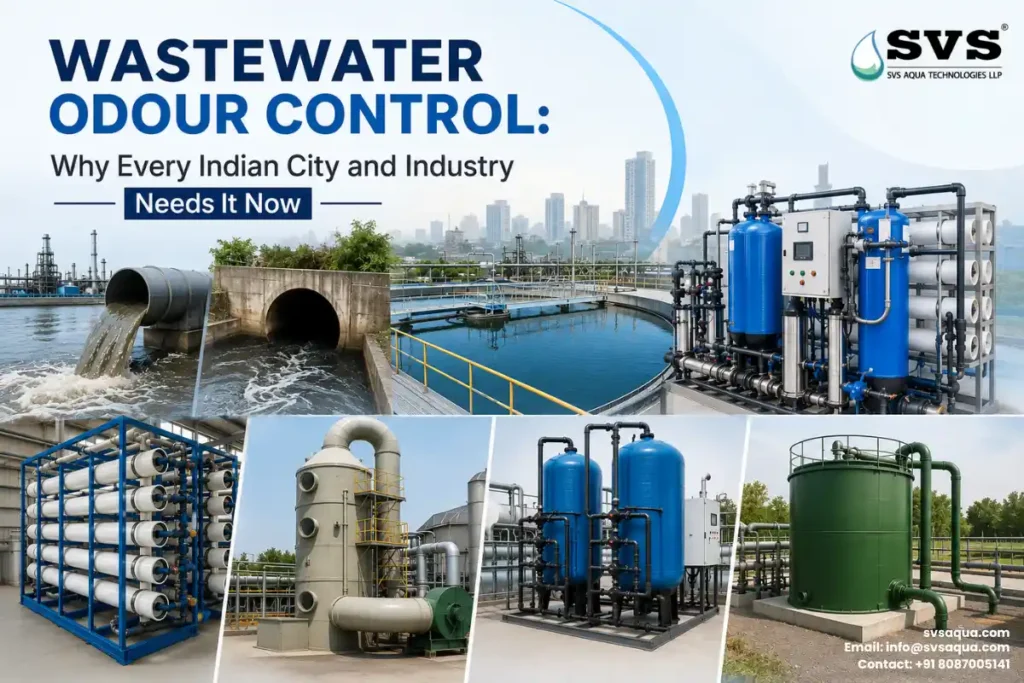
Wastewater Odour Control is becoming one of the biggest challenges for municipalities and industries across India. Anyone who has walked past a drain, sewage treatment plant, or factory outlet knows how unpleasant wastewater odours can be. These foul smells are more than just a nuisance-they indicate that wastewater treatment requires effective odour control solutions.
In a country like India, where cities are growing fast and factories are running round the clock, this topic matters more than most people realise.
- Why Does Wastewater Produce Unpleasant Odours?
- Why Are Odour Problems Increasing Across India?
- Best Wastewater Odour Control Methods for STPs and ETPs
- The Impact of Poor Odour Management
- Understanding Sewage and Industrial Odour Management
- Features of Modern Wastewater Odour Control Systems
- FAQs
- The Way Forward for Wastewater Odour Control
Engage With Us
Why Does Wastewater Produce Unpleasant Odours?
Wastewater carries a mix of organic waste, chemicals, and bacteria. When this waste breaks down, especially in low-oxygen conditions, it releases gases like hydrogen sulphide (the “rotten egg” smell) and ammonia. These gases aren’t just unpleasant; some of them can genuinely affect health if people are exposed for long periods, causing headaches, nausea, or breathing discomfort.
For residents living near a treatment plant, this isn’t a small inconvenience. It affects daily life, from keeping windows shut in summer to avoiding evening walks in the neighbourhood.
Why Are Odour Problems Increasing Across India?
India’s urban population is expanding rapidly, and with it, the pressure on sewage and industrial water systems has multiplied. Many Sewage Treatment Plants (STPs) and Effluent Treatment Plants (ETPs) were built decades ago and were never designed to handle today’s load. As a result, odour complaints near these plants have become common in cities like Delhi, Bengaluru, Pune, and Ahmedabad.
Here’s what typically causes odour problems in Indian setups:
- Overloaded plants – treating more wastewater than they were designed for
- Old infrastructure – pipes and tanks that haven’t been upgraded in years
- Poor ventilation – trapped gases with nowhere to escape properly
- Irregular maintenance – skipped cleaning schedules due to cost or manpower shortage
- Industrial discharge – chemical-heavy effluents that produce stronger smells
Best Wastewater Odour Control Methods for STPs and ETPs
The good news is that this problem is solvable. Facilities across India are now adopting odour control systems that trap or neutralise these gases before they escape into the air. These systems work at different stages, some capture the gas right at the source, while others treat the air before it’s released.
Here’s a simple breakdown of common approaches used today:
| Method | How It Works | Best Suited For |
|---|---|---|
| Biofilters | Uses natural bacteria to break down odour-causing gases | Municipal STPs with moderate loads |
| Chemical scrubbers | Sprays chemical solutions to neutralise gases | Industrial ETPs with heavy discharge |
| Activated carbon filters | Absorbs odour molecules using carbon media | Smaller plants or covered tanks |
| Ozone-based treatment | Breaks down odour compounds using ozone gas | High-load facilities needing fast results |
| Covering and sealing tanks | Physically traps gases before they spread | Any plant as a first-line defence |
Choosing the right method depends on the size of the plant, the type of waste, and the budget available; there’s no single “best” answer for every situation.
The Impact of Poor Odour Management
It’s easy to think of this as only a comfort issue, but the impact goes further:
- Public health – long-term exposure to foul gases can cause respiratory issues, especially in children and the elderly
- Property values – homes and offices near smelly plants often see lower demand
- Regulatory compliance – Pollution Control Boards across India are tightening rules around emissions from treatment plants
- Worker safety – staff at treatment facilities face direct, daily exposure without proper controls
- Community trust – poorly managed plants often face protests and shutdown demands from residents
Addressing odour isn’t just good practice; for many industries, it’s becoming a legal necessity.
Understanding Sewage and Industrial Odour Management
It helps to understand that not all wastewater problems are the same.
Municipal sewage primarily consists of domestic waste, kitchen and bathroom wastewater, and general household discharges. Sewage odour control here usually focuses on managing the natural decomposition of organic matter.
Industries, on the other hand, deal with far more complex effluents, leftover chemicals, dyes, oils, and process waste. Industrial odour control in these cases often needs stronger, more customised solutions because the gases produced can be more concentrated and harder to neutralise with basic methods.
Similarly, when we talk about treatment plants specifically, the terms shift slightly:
- STP odour control refers to solutions built for municipal sewage treatment plants, which handle city and residential waste.
- ETP odour control refers to systems designed for effluent treatment plants, typically used by factories and industrial units to treat their own wastewater before discharge.
Both are essential, but the technology, scale, and intensity of treatment can differ quite a bit.
Features of Modern Wastewater Odour Control Systems
A well-designed system doesn’t just mask the smell; it addresses the root cause. Good wastewater treatment solutions typically combine:
- Proper aeration to avoid low-oxygen conditions that trigger odour
- Regular desludging so waste doesn’t sit and decompose for too long
- Covered or enclosed treatment units to contain gases
- Real-time monitoring to catch problems before they escalate
- Trained staff who follow consistent maintenance schedules
This is where modern odour treatment technologies are making a real difference. Unlike older methods that simply tried to cover up smells, today’s systems focus on breaking down the odour-causing compounds at a molecular level, meaning the problem is actually solved, not just hidden.
For anyone dealing with persistent smell issues, whether from a nearby plant or their own industrial unit, exploring proper wastewater odour removal methods is a much smarter long-term investment than temporary fixes like air fresheners or masking sprays, which do nothing to solve the actual issue.
FAQs
Yes, prolonged exposure to gases like hydrogen sulphide can cause headaches, nausea, and breathing trouble, especially for people with existing respiratory conditions.
Costs vary widely depending on the method chosen. Simple tank covers are relatively affordable, while advanced chemical or ozone-based systems cost more but offer stronger, faster results.
Most systems need regular checks, weekly for basic filters and monthly for advanced equipment, to keep them working effectively.
Yes, State Pollution Control Boards have emission and discharge norms that treatment plants must follow, and non-compliance can lead to penalties or shutdowns.
The Way Forward for Wastewater Odour Control
Effective Wastewater Odour Control is no longer optional. It is essential for protecting communities, ensuring regulatory compliance, improving workplace safety, and maintaining sustainable wastewater treatment operations. Whether for municipal STPs or industrial ETPs, investing in the right odour control system helps create cleaner, healthier environments. SVS Aqua provides customised wastewater odour control solutions that deliver long-term performance, regulatory compliance, and reliable odour management for industries and municipalities across India.
Must Read

Why the Right Water Treatment Plant Chemicals Make All the Difference
Wastewater Treatment Solutions, Water Treatment Products

Why Industrial Water Treatment Solutions Are Essential for Your Business
Industrial Water Treatment Solutions, Industry Specific Applications