
CHLORINE DIOXIDE FOR THE BEVERAGE INDUSTRY
WHY AVOID HYPOCHLORITE IN BEVERAGE PROCESSING?
In brewers, wineries, and bottling plants, even minute amounts of contamination can destroy entire batches. Hypochlorite (OCI)-containing cleaning products should never be used close to areas utilized for production or hospitality, particularly tasting rooms.
And why? There is a chance of contamination when chlorine-based cleansers react with Mould and other substances. For the sanitation of beverages, chlorine dioxide is a safer and more efficient substitute.
HOW CHLORINEDIOXIDE PREVENTS TCA FORMATION
2,4,6–Trichloroanisole (TCA) is the compound responsible for “cork taint”—a musty, moldy odor that spoils wine quality.
- TCA Threshold: As little as 1–5 nanograms per liter can impact flavor.
- Formation Requirements:
- Presence of chlorine
- Presence of molds (common in high-humidity barrel rooms)
When chlorine reacts with mold, it forms chloroanisoles and bromoanisoles, both of which can compromise beverage quality.
Chlorine Dioxide eliminates this risk because it contains no free chlorine while still delivering superior sanitation.
AIRBORNE TCA CONTAMINATION IN BEVERAGE FACILITIES
TCA can become airborne, spreading throughout bottling lines and storage areas. Once in the air, it may settle on corks, caps, and containers—spoiling products before they even reach consumers.
By switching to Chlorine Dioxide in Beverage Sanitation, wineries and beverage plants can prevent airborne TCA and protect their product integrity.
DANGERS OF CHLORINATED CLEANING PRODUCTS
CHLORINE DIOXIDE IN BEVERAGE WATER TREATMENT
Hypochlorite can be found in:
- Dishwashing detergents (tasting glasses)
- Kitchen & bathroom cleaners
- Disinfecting wipes
- Sanitizing sprays
- Chlorine-coated fabrics/textiles
Chlorine often bleaches dirt instead of removing it, leaving a misleading “clean” smell but not true hygiene.
Chlorine Dioxide in Bottling Facilities provides complete sanitation without harmful residues.
Chlorinated municipal water should not be used for:
- Processing grapes or wine
- Rehydrating yeast or malolactic bacteria
- Rinsing destemmer-crushers, tanks, or hoses
If unavoidable, chlorinated water must be pre-treated with high-capacity carbon filters. A more effective approach is Chlorine Dioxide Water Treatment, which ensures safe, residue-free sanitation.
WHY CHLORINE DIOXIDE IS THE BEST DISINFECTANT FOR BEVERAGE BOTTLING
In the food and beverage industry, chlorine dioxide (ClO₂) has emerged as the go-to technique for sterilizing equipment and containers in recent years.
- Gets rid of Mould, bacteria, yeast, and spoiling microbes.
- Produces no hazardous byproducts.
- Preserves the quality of the aroma and flavor
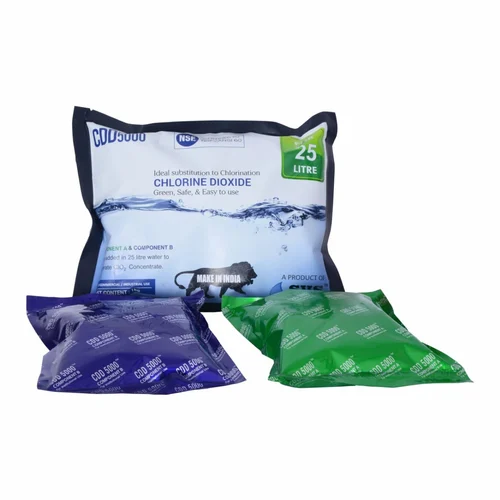
For beverage sanitation, we suggest the CDD 5000®, a pure, free-chlorine-free chlorine dioxide generator.
Were you aware? Despite having the word “chlorine” in its name, chlorine dioxide is a fundamentally distinct chemical. Just as mixing hydrogen and oxygen produces innocuous water, the extra oxygen atom totally alters its behavior and byproducts.
CHLORINE DIOXIDE VS. HYPOCHLORITE – AT A GLANCE
| FEATURE | HYPOCHLORITE | CHLORINE DIOXIDE |
|---|---|---|
| TCA Risk | High | None |
| Residue Left Behind | Yes | No |
| Effectiveness on Microbes | Limited | Broad-spectrum |
| Odor/Taste Impact | Possible | None |
UPGRADE YOUR BEVERAGE SANITATION
Switch to Chlorine Dioxide for Beverage Industry Applications to:
- Protect product quality
- Eliminate TCA contamination risks
- Ensure compliance with WHO water quality guidelines
FAQs ABOUT CHLORINE DIOXIDE FOR BEVERAGE INDUSTRY
Chlorine dioxide (ClO₂) is a disinfectant that kills bacteria, viruses, molds, and yeasts. It’s ideal for sanitizing beverage lines because it doesn’t leave harmful residues or create toxic byproducts
Yes – SVS Aqua’s chlorine dioxide solutions are NSF ANSI 60 certified, meaning they’re approved for safe contact with drinking water and beverage processing
No. Unlike chlorine bleach, chlorine dioxide doesn’t form disinfection byproducts like trihalomethanes or chlorinated residues .
Yes. It oxidizes cleanly without leaving toxic byproducts and can be removed via aeration or activated carbon.
It’s best to use dosing and monitoring equipment designed for chlorine dioxide. If products are NSF ANSI 60 certified, routine use doesn’t require special licenses—just proper handling and training.