
Why the Right Water Treatment Plant Chemicals Make All the Difference
- What Are Water Treatment Plant Chemicals?
- The Price of Choosing the Wrong Chemicals
- Types of Chemicals Used in Water Treatment
- Where Are These Chemicals Actually Used?
- Types of Water Treatment Plant Chemicals and Their Uses
- RO Plants and Wastewater: A Closer Look
- How Do You Choose the Right Water Treatment Solutions?
- Real Impact: A Quick Case Reference
- FAQs
- Ready to Upgrade Your Water Treatment Process?
Engage With Us
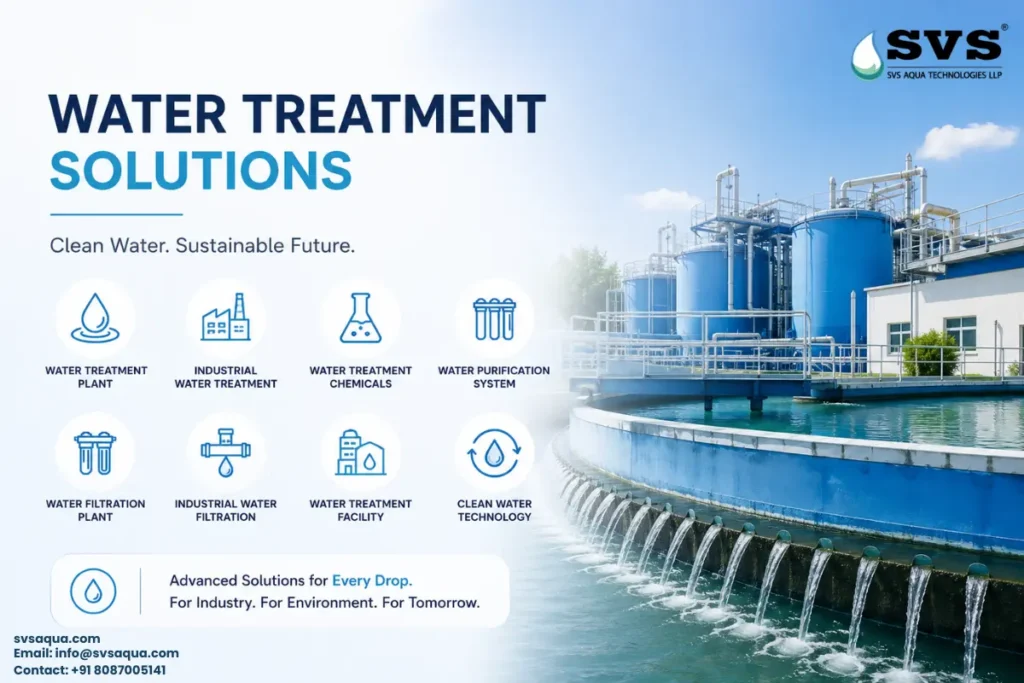
Water treatment plants rely on specialised chemicals to remove impurities, disinfect water, prevent scaling, and ensure regulatory compliance. Whether you manage a municipal treatment facility, an industrial plant, or an RO system, selecting the right water treatment plant chemicals directly impacts water quality, operational efficiency, and equipment life. This guide explains the different types of chemicals used, their applications, and how to choose the right solution.
Safe water doesn’t come about without effort. Water that passes through factories, hospitals, and even pipelines within a city has to undergo an extensive process. This process involves the use of chemicals called Water Treatment Plant Chemicals, which help get rid of bacteria, debris, and other substances from water.
If you have a water treatment plant and you have water in liquid form or otherwise, selecting the right chemical is imperative. In this blog post, you will learn about water treatment plant chemicals and what they can do for you.
- The Water Crisis Is A Big Problem
- Understanding the Real Challenges Cities Face
- The Solution: Why Modern Drinking Water Treatment Solutions Matter
- How Municipal Water Treatment Systems Actually Work
- Real Results: Where This Works in Practice
- Industrial Water Treatment Solutions for Businesses
- The Case for Wastewater Treatment Solutions
- Key Advantages and Safety Standards in Advanced Treatment Systems
- Why Municipal Water Treatment Solutions Are Important
- FAQs
- The Path Forward
Engage With Us
What Are Water Treatment Plant Chemicals?
Chemicals for Water Treatment Plants are compounds that cleanse, disinfect, and neutralise water before its use and disposal. The compounds purify the water by eliminating impurities such as bacteria, algae, metals, and suspended solids from either raw or wastewater.
The chemicals have distinct roles in the process. Some enable the formation of larger particles to make them settle quickly. Others kill the microorganisms in water. A number of the compounds also regulate the pH balance of water so that it is neither acidic nor alkaline.
The Price of Choosing the Wrong Chemicals
Most businesses believe that any chemical would serve the purpose. This is a very expensive blunder. The use of low-quality and unsuitable chemicals may result in:
- Corrosion in pipes and other equipment
- Presence of toxic residue in water after treatment
- Non-conformity to government norms for safety purposes
- Higher costs of operation owing to overdosing
- Unpleasant odour or colour in water after treatment
Especially in sectors such as pharmaceuticals or food processing, or municipal water supplies, the slightest negligence might prove dangerous. This is why sourcing from a trusted water treatment chemical supplier matters so much.
Types of Chemicals Used in Water Treatment
Different water issues require different solutions. Some of the general classes in plants include the following:
1. Disinfectants
These substances eliminate bacteria, viruses, and other organisms. Chlorine dioxide is one of the most reliable disinfectants due to its efficiency in killing the contaminants without generating hazardous by-products like conventional chlorine does.
2. Coagulants and Flocculants
These help tiny suspended particles bond together into larger clumps, called flocs. Once formed, these flocs settle down easily, leaving clearer water above. Imagine trying to catch hundreds of tiny dust particles floating in water- nearly impossible. But once they clump together into bigger, heavier clumps, gravity does the work and pulls them down, making the water look clean and clear.
3. pH Balancers
Water that is too acidic or too alkaline tends to eat through pipes or decrease the efficacy of the disinfecting agent used. This group of additives ensures that water reaches the appropriate and harmless level of pH. Much as our body is sensitive to too much acidity or alkalinity, so are the pipes and equipment.
4. Scale and Corrosion Inhibitors
Scale and corrosion inhibitors prevent scaling of the pipeline as well as machinery and make your equipment last longer. With time, minerals such as calcium contained in water may accumulate on the surface of the pipes, similar to what we see when boiling water in a kettle. These additives protect against scaling and corrosion.
Where Are These Chemicals Actually Used?
Industrial water treatment is not limited to one sector. Chemicals are used across a wide range of applications, including:
- Municipal drinking water plants
- Sewage and wastewater treatment plants
- Cooling towers in factories
- Aquaculture and fish farming
- Food and beverage processing units
- Hospitals and pharmaceutical facilities
Each application demands a slightly different chemical formulation, dosage, and delivery method, depending on the water source and end use.
Types of Water Treatment Plant Chemicals and Their Uses
| Chemical Type | Primary Function | Common Applications | Key Benefits |
|---|---|---|---|
| Disinfectants (Chlorine Dioxide) | Disinfectants (Chlorine Dioxide) | Drinking water plants, hospitals, food processing | Effective disinfection with fewer harmful by-products |
| Coagulants | Bind fine suspended particles together | Municipal and industrial water treatment | Improves sedimentation and water clarity |
| Flocculants | Form larger flocs for easy removal | Wastewater treatment, sewage plants | Faster settling and efficient filtration |
| pH Balancers | Maintain optimal pH levels | RO plants, industrial processes, cooling systems | Prevents corrosion and improves chemical performance |
| Scale & Corrosion Inhibitors | Prevent scale buildup and corrosion | Boilers, cooling towers, pipelines, RO systems | Extends equipment life and reduces maintenance costs |
RO Plants and Wastewater: A Closer Look
RO plant chemicals have a defined function in RO plants. They help prevent membrane scaling, inhibit microbial activity, and optimise filtration efficiency. In their absence, RO membranes would get clogged quickly, increasing the frequency of membrane changes and raising costs substantially.
Just like RO plant chemicals, wastewater treatment chemicals are crucial for industrial plants returning contaminated water back into rivers or municipal systems. According to regulations, the water must be purified to meet certain standards before being discharged into the environment.
How Do You Choose the Right Water Treatment Solutions?
Choosing the right Water Treatment Solutions means matching your chemical choice to your water source, volume, and contamination type. It also means working with a certified Water Treatment Chemical Supplier whose products meet global safety standards.
Here are the key factors to check before choosing a solution:
- Water source: Borewell, river, municipal supply, and industrial effluent each need a different treatment approach.
- Volume of water: Larger volumes often need automated dosing systems instead of manual application.
- Contamination type: Bacterial load, heavy metals, and organic waste need targeted chemical formulas.
- Regulatory requirements: Compliance standards vary by industry and location, so this should guide your final choice.
Certification is just as important as the chemical formula itself. Not every supplier follows strict safety protocols. Look for certifications like NSF ANSI 60, which confirms a product is genuinely safe for drinking water applications. ISO and GMP certifications further prove that the manufacturing process is consistent and quality checked at every stage.
Real Impact: A Quick Case Reference
In one on-site project, SVS Aqua’s chlorine dioxide-based chemical solution was used to resolve complex water quality challenges under real operating conditions, helping the client achieve safer output without overhauling their existing infrastructure. This shows how the right chemical choice, rather than a complete system change, can often solve persistent water quality issues.
FAQs
It depends on your water source and contamination type. A supplier can test your water and recommend a suitable dosage and format.
Yes, when certified under standards like NSF ANSI 60, these chemicals are safe and tested for human consumption applications.
Dosage and packaging can be adjusted for smaller operations without compromising effectiveness.
Most plants test water weekly or monthly, depending on local regulations and how much water the plant processes daily.
Chlorine dioxide kills bacteria effectively while producing fewer harmful by-products compared to traditional chlorine treatment.
Look for NSF ANSI 60, ISO 9001:2015, and GMP certifications. These confirm the product meets recognised safety and quality standards.
Ready to Upgrade Your Water Treatment Process?
Modern Municipal Water Treatment Solutions are essential for delivering safe and reliable water to communities and industries. Advanced technologies such as Chlorine Dioxide Water Treatment, efficient Water Disinfection Chemicals, and sustainable Wastewater Treatment Solutions help municipalities improve water quality, protect public health, and support future water demands. As cities continue to grow, investing in modern Municipal Water Treatment Systems will remain critical for ensuring long-term water security and environmental sustainability
Must Read

Why Industrial Water Treatment Solutions Are Essential for Your Business
Industrial Water Treatment Solutions, Industry Specific Applications

Municipal Water Treatment Solutions: How Modern Systems Keep Tap Water Safe
Water Disinfection Systems, Water Treatment Products, Water Treatment Solutions