
How Chlorine Dioxide Helps Prevent Bacterial Growth in Water Systems
Engage With Us
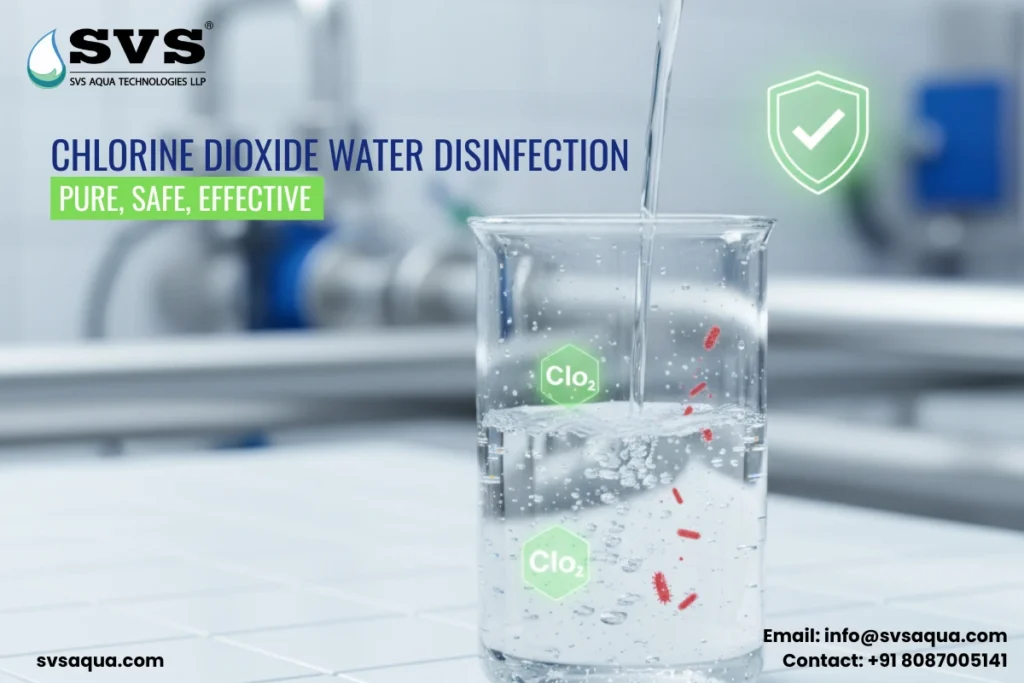
Contaminated water is one of India’s most persistent and underestimated public health challenges. Every day, millions of litres of water flow through pipelines, storage tanks, cooling systems, and distribution networks, and in many of these systems, harmful bacteria are quietly multiplying. Microorganisms like E. coli, Legionella, and Salmonella do not need much to survive. A warm pipe, a stagnant tank, or an untreated water source is all it takes.
The consequences are serious: waterborne illness outbreaks, damage to expensive industrial equipment, regulatory penalties, and, in extreme cases, loss of life. For industries and municipalities across India, this is not a theoretical risk. It is an everyday reality.
Chlorine dioxide for bacteria control is emerging as one of the most reliable and scientifically validated solutions to this problem, and understanding how it works can help industries make more informed, safer choices about water management.
Engage With Us
Overview
India’s water infrastructure is under tremendous strain due to the country’s fast urbanisation and expanding industrial output. In addition to being a civic necessity, clean, safe water is essential to the operations of many different sectors, including:
- Factories and manufacturing units that use large volumes of process water daily
- Hospitals and healthcare facilities where waterborne infections pose serious patient safety risks
- Food processing, dairy, and beverage plants where water quality directly affects product safety and compliance
- Aquaculture and poultry farms, where microbial contamination in water can cause mass losses
- Pharmaceutical companies where highly controlled water purity standards must be maintained at all times
Despite this critical need, many facilities across India still depend on conventional chlorine-based treatments. While chlorine has been used for decades, it comes with significant limitations that are hard to ignore:
- It loses disinfection effectiveness at higher pH levels, which is common in many Indian water sources
- It reacts with natural organic matter in water to form harmful by-products called trihalomethanes (THMs), which are linked to long-term health risks
- It struggles to eliminate biofilm, the protective layer that bacteria build on the inside of pipes and tanks to shield themselves from disinfectants
- It is not effective against certain resistant microorganisms like Cryptosporidium and Giardia
Without a reliable strategy for controlling bacteria in water systems, industries face a cycle of recurring contamination, equipment corrosion, rising maintenance costs, and increasing compliance risks. A more advanced solution is clearly needed.
How Chlorine Dioxide Works
When introduced into a water system, chlorine dioxide for microbial control acts directly on the cellular structure of harmful microorganisms. The process is straightforward but highly effective:
- Cell wall penetration: ClO₂ passes through the outer membrane of bacteria and viruses, something that many conventional disinfectants cannot do effectively
- Enzyme disruption: Once inside, it attacks the proteins and enzymes that microorganisms need to function and reproduce, effectively neutralising them
- Biofilm destruction: ClO₂ is one of the very few disinfectants capable of penetrating and breaking down biofilm, the slimy protective layer that bacteria use to survive in pipes, tanks, and water systems
- Wide pH effectiveness: Unlike regular chlorine, ClO₂ maintains full disinfection power across a pH range of 6 to 10, making it consistent regardless of water chemistry
- Residual protection: After treatment, a measurable residual of ClO₂ remains active in the water as it moves through the distribution system, continuing to suppress microbial growth along the way
This combination of properties makes chlorine dioxide-based water disinfection far more comprehensive and reliable than most conventional treatment methods currently available
Key Benefits
Health and Safety Benefits:
- Safe for use in drinking water at recommended concentrations, with no production of harmful THMs or chlorinated by-products
- Broad-spectrum action against bacteria, viruses, protozoa, fungi, and algae, covering a much wider range of threats than chlorine alone
- Particularly effective against resistant pathogens like Cryptosporidium and Giardia, which are commonly found in surface water sources across India
- Reduces the risk of waterborne disease outbreaks in communities and facilities that depend on treated water
Operational Benefits:
- Prevents biofilm accumulation inside pipelines, storage tanks, and distribution systems, significantly extending equipment lifespan
- Controls Legionella bacteria in cooling towers, which is a major occupational health and safety risk in industrial settings
- Reduces the frequency of system shutdowns for cleaning and maintenance, keeping operations running smoothly
- Works consistently across varying water quality conditions, which is especially important in India, where source water quality changes seasonally
Cost and Efficiency Benefits:
- Highly effective at low concentrations, which means less chemical usage and lower treatment costs over time
- Reduces the need for multiple treatment chemicals by providing broad-spectrum disinfection in a single step
- Lowers long-term maintenance and repair costs by protecting pipes and equipment from microbial corrosion
How to Use / Application Guide
One of the practical advantages of chlorine dioxide water treatment solutions is that they are available in multiple forms, making it easy to match the right product to the right application:
- Tablets: Easy to handle and dose, ideal for smaller systems or field applications
- Powder: Well-suited for large-scale industrial and municipal water treatment
- Liquid: Convenient for continuous dosing systems and automated treatment setups
- Gel: Designed for surface sanitation and prolonged release in specific environments
Application by sector:
- Drinking water systems: ClO₂ is dosed at the water inlet and a safe residual is maintained throughout the distribution network to ensure continuous protection
- Cooling towers: Applied on a scheduled basis as part of an ongoing water treatment programme to control Legionella and prevent scale and corrosion
- Food processing and dairy facilities: Used for equipment sanitation, process water disinfection, and surface treatment in production areas
- Aquaculture and poultry farms: Added to water supplies to reduce microbial loads and protect animal health
Best practices for safe and effective use:
- Always monitor ClO₂ residual levels regularly to ensure consistent protection without over-dosing
- Store all ClO₂ products in a cool, dry place away from direct sunlight and heat sources
- Use appropriate personal protective equipment (PPE) when handling and preparing solutions
- Follow product-specific dosage guidelines carefully, or consult a certified water treatment specialist for site-specific recommendations
Why Chlorine Dioxide Stands Apart
- Easy to add directly to dump tanks or washing systems.
- Provides strong oxidising biocidal action.
- Eliminates fungal, bacterial, and viral contaminants.
- Helps reduce pesticide residues and surface contamination.
- Improves overall food safety compliance.
- Enhances fruit shelf life during storage and transportation.
By switching to chlorine dioxide tablets like CHLORITAB™, processing units can improve sanitation standards without compromising fruit quality.
Recommended Chlorine Dioxide Dosage for Fruit Washing
When compared to conventional chlorine and other common disinfectants, chlorine dioxide bacteria removal stands out on several important fronts:
- Broader effectiveness: Works across a pH range of 6 to 10, while chlorine becomes significantly less effective above pH 7.5, a common condition in Indian water supplies
- No harmful by-products: Does not form THMs or haloacetic acids, making it a much cleaner and safer long-term option for drinking water and food-contact applications
- Biofilm penetration: One of the very few disinfectants that can actively break down and remove biofilm, not just treat the water around it
- Resistant pathogen control: Effective against Cryptosporidium and Giardia, which are chlorine-resistant organisms and a known concern in surface water sources
- Lower dosage requirements: Delivers equivalent or superior disinfection at lower concentrations, reducing chemical costs and environmental load
For facilities that require documented safety compliance, products that meet NSF ANSI 60 certification, the international standard for chemicals used in drinking water treatment, provide an important additional layer of assurance.
Bacterial contamination in water is a challenge that India’s industries and municipalities simply cannot afford to overlook. Conventional treatments, while familiar, are increasingly falling short against modern microbial threats. Chlorine dioxide for bacteria control directly addresses these gaps, offering broader disinfection coverage, cleaner chemistry, and more consistent performance across varying water conditions.
Whether the application is a municipal drinking water network, an industrial cooling tower, a food processing facility, or a dairy farm, bacteria control in water systems using ClO₂ is a proven, practical approach that safeguards both public health and operational efficiency. As water quality standards in India continue to evolve, switching to a more advanced disinfection method is not just a smart choice; it is a necessary one.
FAQs
Yes. When used at recommended concentrations, chlorine dioxide water disinfection is fully approved for drinking water treatment.
No. At correct dosing levels, ClO₂ does not cause any unpleasant taste or smell in water.
Absolutely. Chlorine dioxide for microbial control is widely used in food processing, dairy production, and beverage manufacturing for equipment sanitation, process water treatment, and surface disinfection.
Unlike regular chlorine, chlorine dioxide bacteria removal remains effective at higher pH levels, does not form harmful THMs, and is capable of penetrating and destroying biofilm.
Must Read
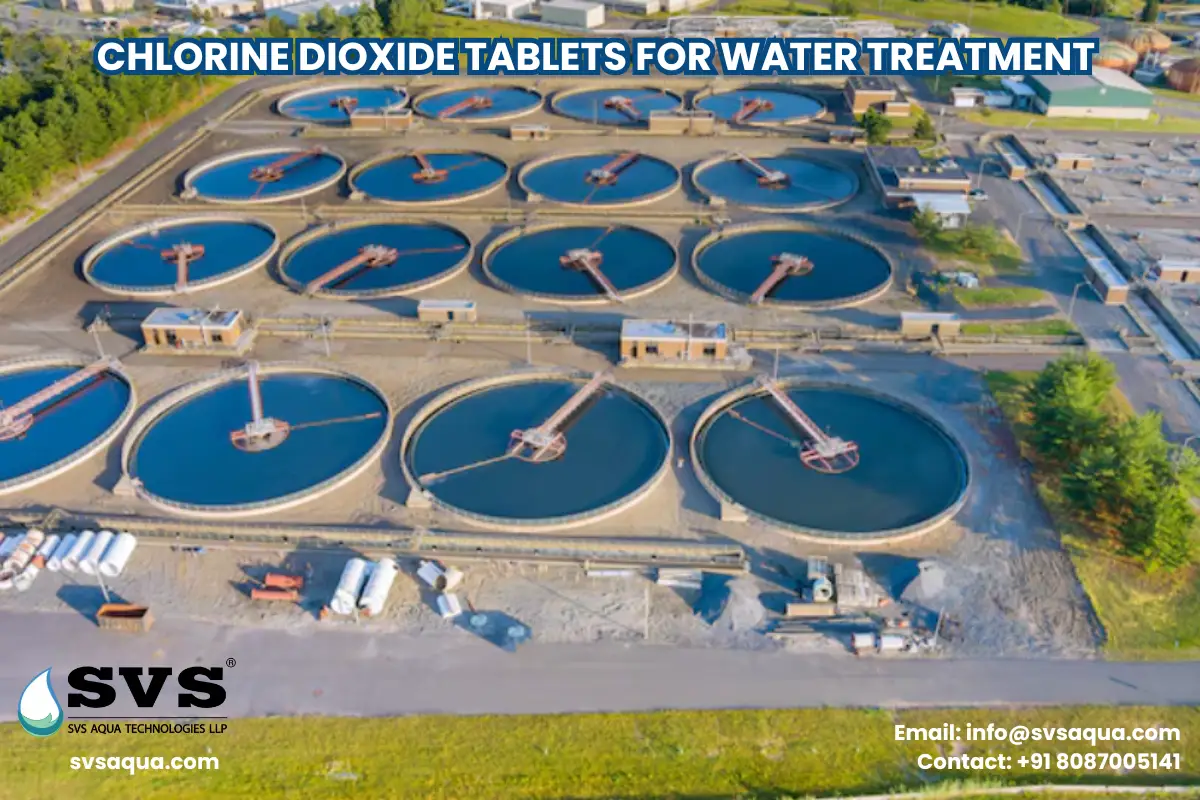
How to Use Chlorine Dioxide Tablets in Different Applications
Chlorine Dioxide Uses in Water Treatment
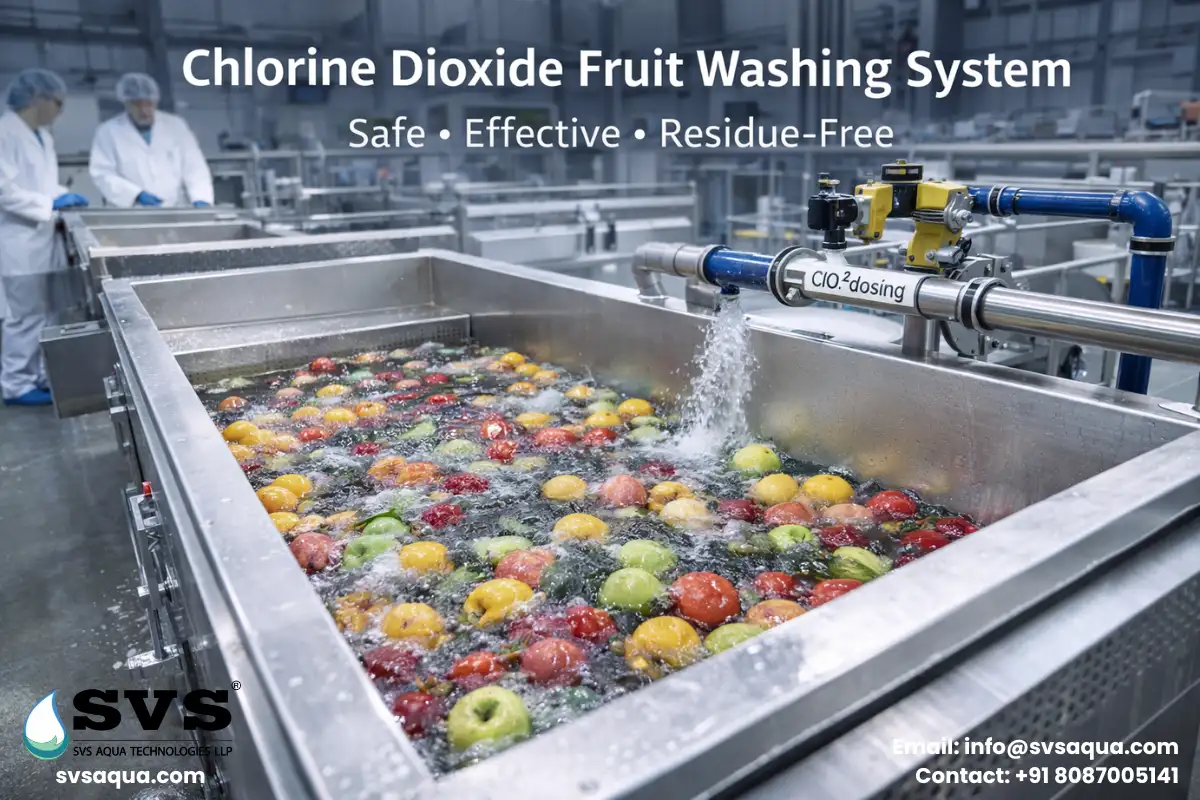
Chlorine Dioxide for Fruit Sanitation and Food Safety
Chlorine Dioxide Uses in Water Treatment