
Why Cooling Tower Water Treatment Is Essential for Industrial Cooling Systems
Engage With Us
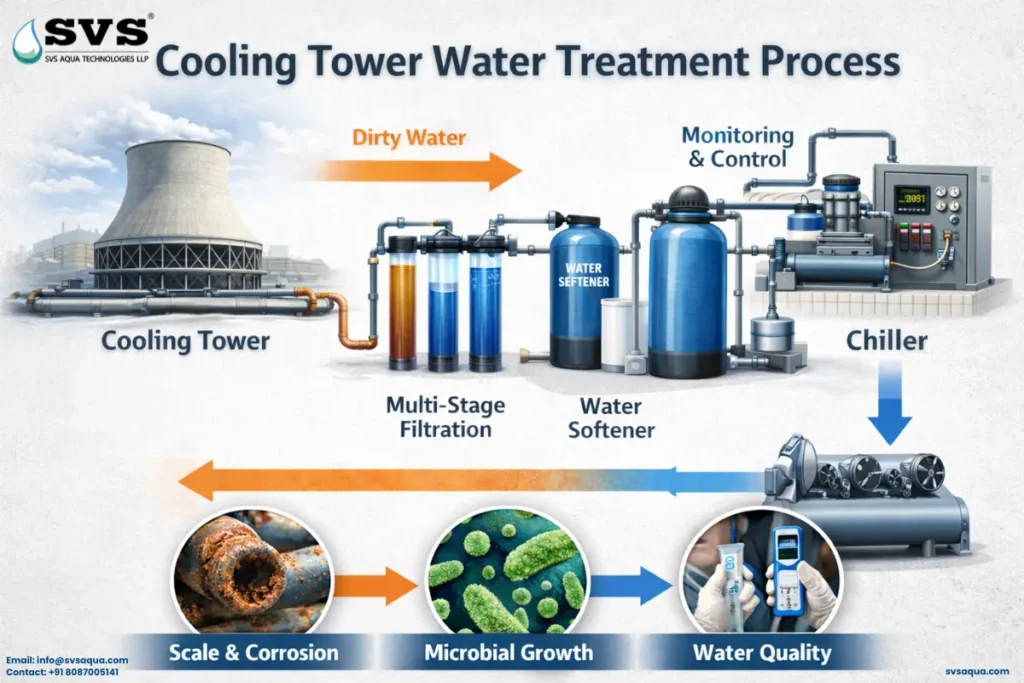
In any industrial facility that uses water-based cooling systems, one of the most important procedures is cooling tower water treatment. Cooling towers become breeding grounds for corrosion, scale, and dangerous germs if they are not properly treated. This can result in equipment failure, excessive energy costs, and major health problems. Knowing how to safeguard your cooling tower is crucial whether you run a manufacturing facility, a power plant, or a commercial HVAC system. Businesses and households throughout India can benefit greatly from knowing the proper treatment strategy.
Engage With Us
Why Cooling Tower Water Treatment Is Important?
Cooling towers work by circulating water to remove excess heat from industrial processes. However, this constant exposure to open air, heat, and minerals creates serious water quality challenges.
Without proper industrial water treatment solutions, facilities face:
- Rapid scale buildup on heat exchange surfaces
- Microbial contamination, including Legionella bacteria
- Corrosion of metal components and pipelines
- Fouling that reduces water flow and efficiency
Additionally, untreated water increases energy consumption significantly. Studies show that just 1 mm of scale can increase energy costs by up to 10%. Therefore, investing in treatment is not just a safety measure but also a cost-saving strategy.
Common Problems in Cooling Tower Systems
Understanding the most frequent issues helps facility managers take preventive action early.
Scale and Mineral Deposits
Hard water carries dissolved calcium and magnesium. When water evaporates inside a cooling tower, these minerals are left behind and form hard scale deposits. Scale acts as an insulating layer, reducing heat transfer efficiency and forcing equipment to work harder.
Key signs of scale buildup:
- Reduced flow rate through pipes
- Higher energy bills without explanation
- Visible white or grey deposits on surfaces
- Corrosion
Corrosion is caused by dissolved oxygen, low pH levels, and aggressive minerals in the water. It slowly eats through metal components, causing leaks and structural damage. Left unchecked, corrosion can destroy an entire cooling system within a few years.
- Biological Growth and Fouling
Warm, open water systems are ideal conditions for algae, biofilm, and dangerous bacteria like Legionella to thrive. Biological fouling clogs distribution nozzles, reduces airflow, and creates serious public health concerns.
Moreover, biofilm acts as a protective layer for bacteria, making them harder to eliminate once established. This is why regular cooling tower maintenance and monitoring are non-negotiable.
- Suspended Solids and Turbidity
Open cooling towers are continuously exposed to dust, debris, and airborne particles. These suspended sediments build up in the basin, lowering the quality of the water and encouraging biological development. This turbidity increases pump wear and produces blockages in the absence of filtration and treatment.
Best Chemicals Used in Cooling Tower Treatment
Using the right cooling tower chemicals at the correct dosages is the foundation of an effective treatment programme. Here are the main categories:
- Scale Inhibitors
These are phosphonate and polymer-based compounds that prevent calcium, magnesium, and silica from forming hard deposits. They work by interfering with crystal growth, keeping minerals suspended in water where they can be removed through blowdown.
Benefits of scale inhibitors:
- Protect heat exchanger surfaces
- Maintain optimal thermal efficiency
- Extend equipment lifespan considerably
- Corrosion Inhibitors
These water treatment chemicals form a thin protective film on metal surfaces, shielding them from oxygen attack and acidic conditions. Common types include molybdate-based and azole-based inhibitors, which are highly effective for both ferrous and non-ferrous metals.
- Biocides and Disinfectants
Biocides are used to control microbial growth, including algae, bacteria, and Legionella. There are two main types:
- Oxidising biocides such as chlorine and bromine compounds (fast-acting)
- Non-oxidising biocides such as isothiazolone and glutaraldehyde (long-lasting)
A dual biocide programme using both types in rotation is the most effective approach. This prevents bacterial resistance and ensures comprehensive microbial control.
- Dispersants and Flocculants
These chemicals keep suspended particles from settling and promote their removal during filtration. They improve water clarity and reduce sludge accumulation in the tower basin.
- pH Adjusters
Maintaining the correct pH range (typically between 7.0 and 8.5) is essential. pH that is too low promotes corrosion, while high pH encourages scale. Acid dosing systems or alkalinity control chemicals help maintain the right balance automatically.
How to Maintain Cooling System Efficiency?
Achieving long-term cooling system efficiency requires a combination of chemical treatment and good operational practices.
Follow these essential maintenance steps:
- Conduct water quality testing at least once a week
- Monitor cycles of concentration (CoC) to manage blowdown frequency
- Inspect and clean fill media, nozzles, and the basin quarterly
- Service mechanical components such as fans, motors, and pumps regularly
- Keep detailed treatment logs for compliance and troubleshooting
Furthermore, installing automatic dosing systems ensures chemicals are added at the right time and in the right quantity, removing the risk of human error.
Why Choose SVS Aqua for Your Cooling Tower Water Treatment Needs?
When it comes to professional, reliable, and scientifically backed water treatment services, SVS Aqua stands out as a trusted partner for industries across India.
Here is why hundreds of industrial clients choose SVS Aqua:
- Pan-India Presence: SVS Aqua provides cooling tower water treatment services to clients across all major industrial zones in India, from Maharashtra and Gujarat to Tamil Nadu, Delhi NCR, and beyond
- Customised Treatment Programmes: Every facility has different water chemistry and operational demands. SVS Aqua designs tailor-made chemical treatment plans based on detailed water analysis
- High-Performance Chemicals: SVS Aqua supplies a complete range of scale inhibitors, corrosion inhibitors, biocides, and dispersants, all tested for industrial-grade performance
- Expert Technical Support: Their team of water treatment specialists provides on-site audits, system analysis, and ongoing support to ensure optimal results
- Regulatory Compliance: SVS Aqua helps facilities meet environmental and safety standards, including Legionella control guidelines and industrial discharge norms
- Cost Reduction Focus: By improving system efficiency and reducing chemical wastage, SVS Aqua helps clients lower their overall operational costs
Proper cooling tower water treatment protects equipment, reduces energy costs, and ensures a safe working environment. From preventing scale and corrosion to controlling harmful bacteria, a well-designed treatment program is essential for any industrial facility.
If you are looking for reliable and high-performance cooling tower water treatment services in India, SVS Aqua offers customised solutions designed to improve system efficiency, reduce maintenance costs, and extend equipment lifespan.
FAQs
Water should be tested at least twice a week for basic parameters such as pH, conductivity, and biocide levels. A full water analysis by a specialist should be done monthly.
Scale formation is the most common issue, followed by biological fouling and corrosion. All three are preventable with a proper chemical treatment programme.
Modern treatment chemicals are formulated to be effective at low concentrations, minimising environmental impact. Responsible blowdown management and proper disposal practices ensure compliance with environmental regulations.
Signs include rising energy costs, visible deposits or discolouration, reduced flow rates, unusual odour from the water, or equipment running hotter than usual.
Yes. SVS Aqua operates across India, including Tier 2 and Tier 3 industrial areas.
Must Read
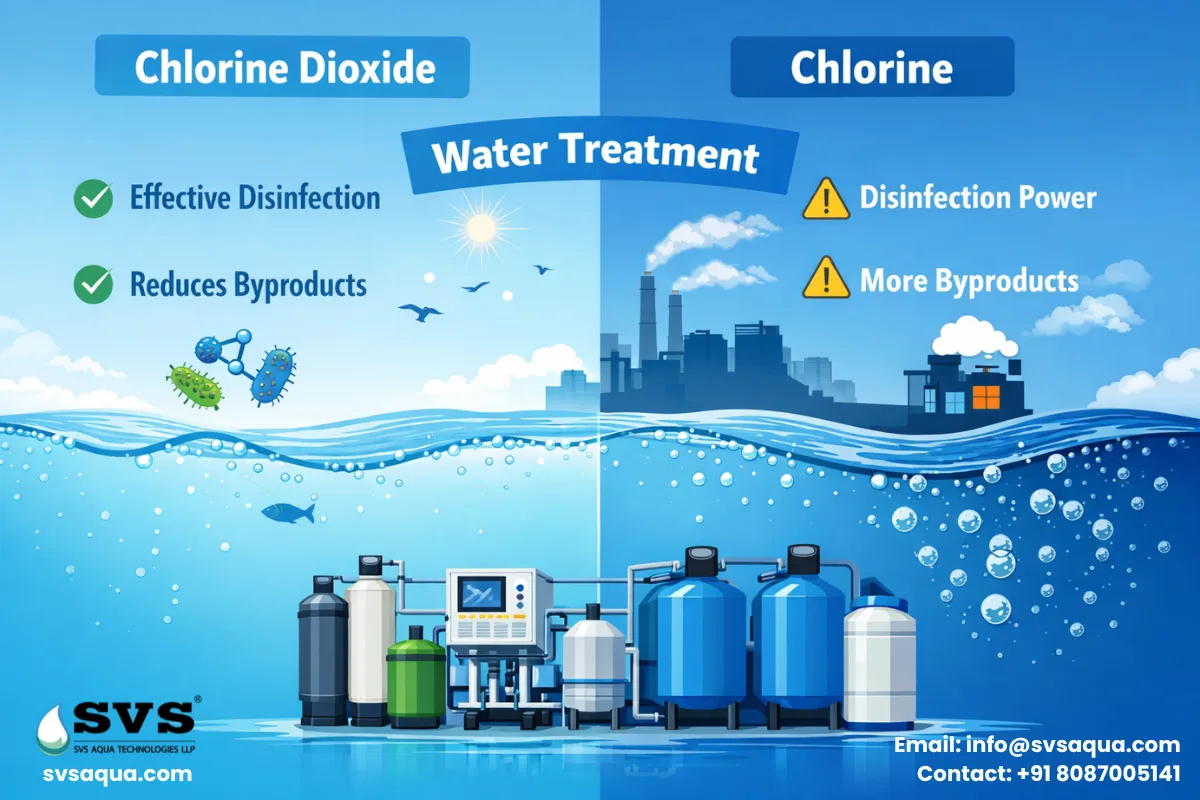
Chlorine Dioxide vs Chlorine: Which Is Better for Water Disinfection?
Chlorine Dioxide Uses in Water Treatment
How Chlorine Dioxide Helps Prevent Bacterial Growth in Water Systems
Chlorine Dioxide Uses in Water Treatment