
Best Poultry Water Treatment & Biosecurity Solutions for Farms
- What Is Poultry Biosecurity and Why Does It Matter for Your Business?
- Why Water Is Your Farm's First Line of Defence
- The Real Cost of Ignoring Water Treatment
- Key Components of a Smart Farm Biosecurity Plan
- Chlorine Dioxide - The Gold Standard for Poultry Water Treatment
- Building Toward Sustainable Poultry Farming
- FAQs
- The Bottom Line: Healthy Water, Healthy Flock, Healthier Business
Engage With Us
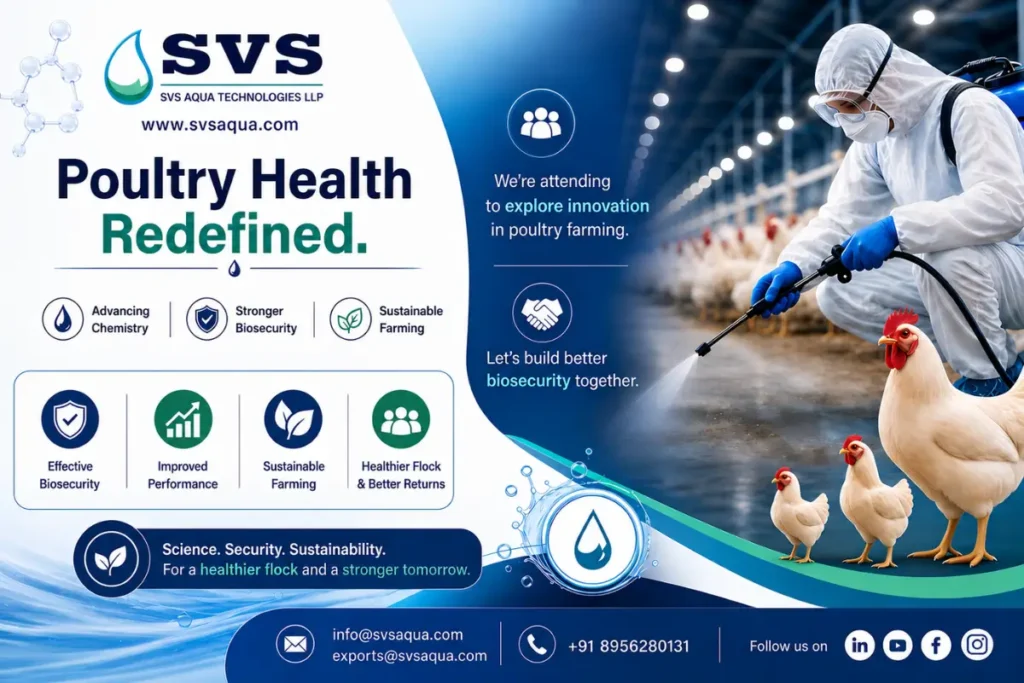
If you’re running a poultry farm, you already know how much it costs to keep your birds healthy. One disease outbreak can wipe out weeks of hard work and cut deep into your margins. That’s exactly why poultry biosecurity is no longer optional; it’s the foundation of a profitable farm. And right at the centre of a strong biosecurity plan sits something most farmers still underestimate: the quality of the water your birds drink every single day.
- What Is Poultry Biosecurity and Why Does It Matter for Your Business?
- Why Water Is Your Farm's First Line of Defence
- The Real Cost of Ignoring Water Treatment
- Key Components of a Smart Farm Biosecurity Plan
- Chlorine Dioxide - The Gold Standard for Poultry Water Treatment
- Building Toward Sustainable Poultry Farming
- FAQs
- The Bottom Line: Healthy Water, Healthy Flock, Healthier Business
Engage With Us
What Is Poultry Biosecurity and Why Does It Matter for Your Business?
Simply put, biosecurity means putting systems in place to keep diseases out of your farm and stop them from spreading if they do get in. Think of it as the fence between your birds and everything that can harm them, contaminated water, wild birds, equipment, visitors, and even the air inside your shed.
Poor biosecurity doesn’t just mean sick birds. It means:
- Higher mortality rates that reduce your sellable output
- Increased spending on medicines and treatments
- Flock downtime that delays your next cycle
- Risk of entire flocks being culled during disease outbreaks like Avian Influenza
The farms that consistently outperform others aren’t necessarily the ones with the fanciest equipment. They’re the ones with the tightest biosecurity routines, and water treatment is a big part of that.
Why Water Is Your Farm's First Line of Defence
Here’s something that surprises many farmers: water treatment for poultry is one of the highest-leverage things you can do for flock performance and disease control.
Birds drink roughly twice the amount of water compared to the feed they consume. That means contaminated water reaches every single bird, multiple times a day. If your water lines carry bacteria, biofilm, or chemical imbalances, your birds are being exposed to health risks constantly, whether you can see it or not.
What makes water dangerous on a poultry farm?
- Biofilm – a slimy layer of bacteria that sticks to the inside of your water pipes and nipple drinkers. It’s invisible but acts as a breeding ground for pathogens like Salmonella and E. coli.
- High iron or mineral content – makes water taste bad, so birds drink less, directly reducing feed intake and growth rates.
- Bacterial contamination – can cause gut infections and respiratory issues, leading to poor feed conversion ratios and higher culling rates.
- Improper pH levels – affects digestion and nutrient absorption, quietly stunting growth across your entire flock.
Clean, treated water isn’t just a health issue; it’s a direct driver of your feed conversion ratio, growth rates, and final profitability.
The Real Cost of Ignoring Water Treatment
Let’s talk numbers. A flock that has access to clean, quality water shows measurably better weight gain and livability. Studies show that farms that invest in maintaining consistent water quality see growth improvements of 8–20%. On a commercial scale, that difference adds up to significant revenue per cycle.
On the other hand, farms dealing with poor water quality face:
- Slower weight gain and uneven flock growth (meaning more culling)
- Higher feed costs because birds are converting nutrients poorly
- More antibiotic use to manage recurring infections, which raises costs AND creates compliance risks if you’re supplying to buyers with antibiotic-free requirements
- Water line blockages from scale and biofilm buildup that require expensive maintenance
When you frame water quality this way, investing in poultry disinfection solutions for your water system isn’t a cost; it’s a return on investment.
Here’s a quick comparison of how water quality directly impacts poultry farm performance:
| Factors | Untreated Water Systems | Properly Treated Water Systems |
|---|---|---|
| Water Line Condition | Biofilm and bacterial buildup | Clean and hygienic pipelines |
| Bird Health | Higher disease risk | Healthier flock performance |
| Feed Conversion Ratio | Poor nutrient absorption | Better feed efficiency |
| Antibiotic Usage | Frequent dependency | Reduced antibiotic usage |
| Mortality Rate | Higher flock losses | Improved livability |
| Water Intake | Reduced due to poor taste | Consistent water consumption |
| Maintenance Costs | Frequent pipe cleaning and repairs | Lower maintenance requirements |
| Farm Profitability | Reduced operational efficiency | Better long-term returns |
Key Components of a Smart Farm Biosecurity Plan
A solid farm biosecurity solution works across three areas:
- Physical Barriers
Keep wild birds out of your sheds. Use proper fencing, controlled entry points, and footbaths at all access areas. Only allow essential personnel on the farm premises.
- Cleaning and Disinfection Between Flocks
After each flock, a thorough clean-down is non-negotiable. This means:
- Removing all litter, feed waste, and organic matter first
- Washing down all surfaces, equipment, and water lines
- Applying a proper disinfectant to all surfaces and water systems
- Flushing water lines with a cleaning solution to remove biofilm before restocking
Poultry hygiene solutions used at this stage determine how clean your environment is for the incoming flock.
- Ongoing Water Line Maintenance
Don’t just clean between flocks. Monitor your water quality regularly and use proven treatments to keep water lines biofilm-free throughout the production cycle.
Chlorine Dioxide - The Gold Standard for Poultry Water Treatment
One of the most effective and widely trusted solutions for water treatment in poultry farming is Chlorine Dioxide (ClO₂). Unlike standard chlorine, it doesn’t just kill bacteria at the point of application; it actively eliminates biofilm inside water lines, something most conventional treatments fail to do.
Why Chlorine Dioxide stands out:
- Destroys biofilm at the source rather than just masking it
- Effective against a broad spectrum of bacteria, viruses, and fungi
- Works at low concentrations, so it’s safe for birds
- Doesn’t leave harmful chemical residues in water
- Maintains water quality throughout the entire distribution line, not just at the tank
At SVS Aqua, we specialise in NSF ANSI 60-certified Chlorine Dioxide solutions purpose-built for poultry farm applications. Our products help farms maintain clean water lines, reduce pathogen load, and support healthier flocks without relying heavily on antibiotics. Whether you need tablet-based, powder, or liquid formats, our range fits different farm sizes and operational setups.
This is what poultry health solutions should look like in practice: targeted, proven, and easy to integrate into your existing farm routine.
Building Toward Sustainable Poultry Farming
More and more buyers, processors, and export markets are demanding farms that operate to high hygiene standards and use antibiotics less. Sustainable poultry farming isn’t just good for the environment; it opens doors to premium markets and protects your farm’s long-term viability.
Farms that build strong water treatment and biosecurity habits are better positioned to:
- Meet antibiotic-free or reduced-antibiotic supply chain requirements
- Pass audits from large processors and certification bodies
- Reduce the overall cost of production through better flock performance
- Manage outbreaks faster and with less damage when they do occur
Poultry disease prevention done right means you’re spending less time reacting to problems and more time running a consistent, predictable operation.
FAQs
You should flush and disinfect water lines between every flock as a minimum. For farms with higher bacterial or mineral issues, a regular treatment programme during the production cycle is also recommended.
Yes. When used at the correct dosage, Chlorine Dioxide is safe for poultry drinking water. It is approved under strict food safety standards (NSF ANSI 60) and leaves no harmful residues in the water.
Absolutely. Water affects feed intake, digestion, growth rates, and immunity. Farms with water quality issues consistently see poorer feed conversion ratios and higher mortality, both of which directly hit your bottom line.
Biofilm is a layer of bacteria that sticks to the inside of pipes and drinkers. It protects the bacteria from standard disinfectants, which is why regular chlorine often doesn't fully solve the problem. Chlorine Dioxide is one of the few treatments proven to penetrate and eliminate biofilm.
If you're experiencing recurring disease issues, uneven flock growth, higher-than-expected antibiotic use, or failing processor audits, your biosecurity plan likely has gaps. A water quality test is often the best starting point.
Yes. SVS Aqua offers Chlorine Dioxide in multiple formats, including tablets and powders, making it practical and cost-effective for farms of all sizes.
The Bottom Line: Healthy Water, Healthy Flock, Healthier Business
Every rupee you invest in water treatment and biosecurity pays you back in better bird weights, fewer disease losses, lower medicine bills, and a farm that buyers and processors are happy to work with.
The farms that struggle are usually the ones waiting for a problem to show up before acting. The farms that thrive are the ones treating clean water and tight hygiene as a daily habit, not an emergency response. Water is the first thing your birds consume every morning. Make sure it’s working for them, not against them.
If you’re ready to take your farm’s biosecurity seriously, SVS Aqua’s Chlorine Dioxide solutions are designed to make that step simple, affordable, and effective, no matter the size of your operation.
Must Read
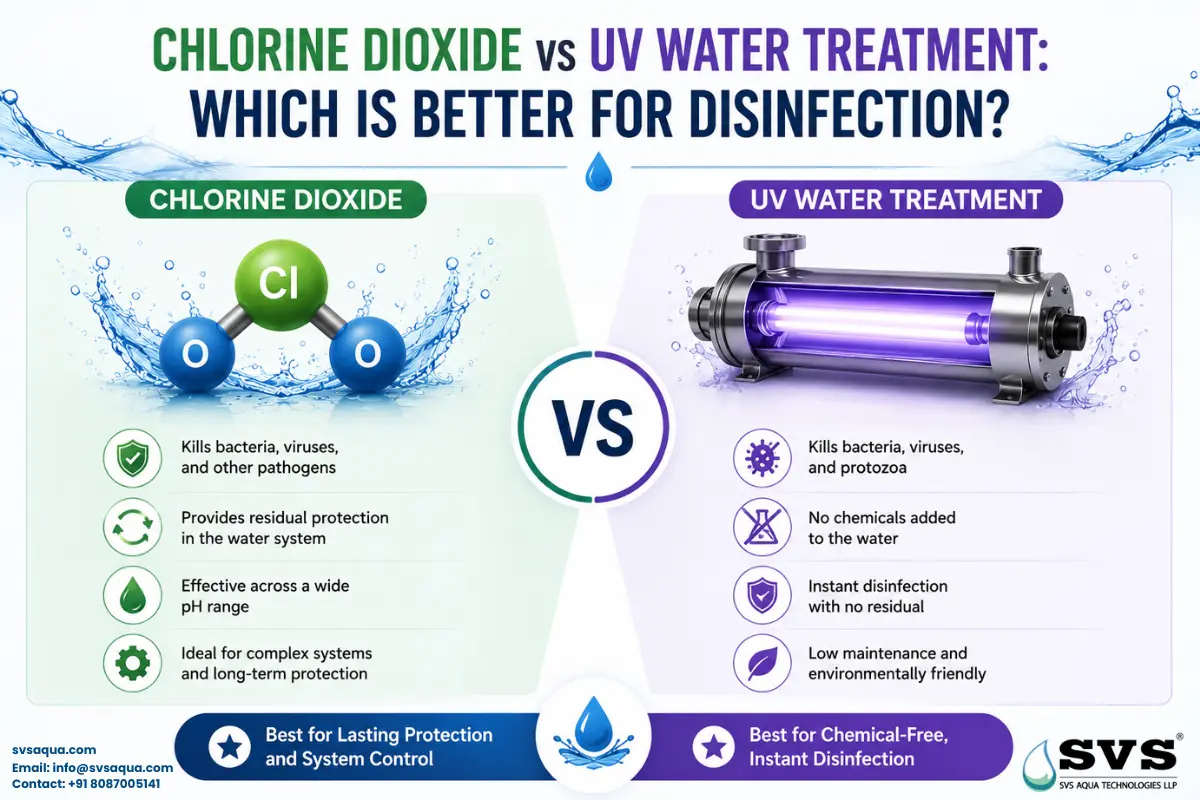
Chlorine Dioxide vs UV Water Treatment: Which Is Better For Disinfection?
Chlorine Dioxide Uses in Water Treatment

Why Choosing the Right Water Treatment Chemicals Manufacturer India Can Save Your Business Lakhs Every Year
Wastewater Treatment Solutions, Water Treatment Products